 Librería Samer Atenea
 Kálamo Books
 Librería Elías (Asturias)
 Librería Kolima (Madrid)
 Librería Proteo (Málaga)
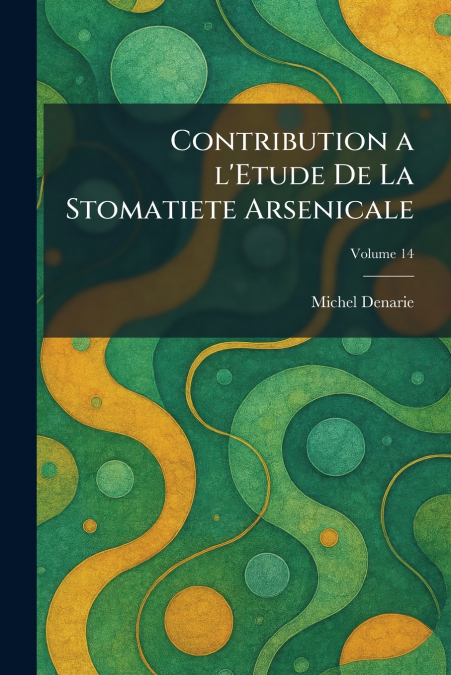
Cet ouvrage médical, intitulé 'Contribution a l’Etude De La Stomatiete Arsenicale', constitue une analyse détaillée d’une pathologie buccale spécifique liée à l’exposition à l’arsenic. Michel Denarie y examine avec rigueur les manifestations cliniques de la stomatite arsenicale, une affection alors observée dans divers contextes thérapeutiques, notamment suite à l’usage de certains médicaments ou de pâtes dentaires contenant des composés arsénicaux.Le texte aborde les aspects physiopathologiques, le diagnostic différentiel et les protocoles de soins préconisés à l’époque pour traiter ces lésions de la muqueuse buccale. En se concentrant sur les effets secondaires de l’arsenic, l’auteur offre une perspective précieuse sur l’histoire de la pharmacologie et de la toxicologie clinique. Ce quatorzième volume apporte une contribution significative à la compréhension des risques iatrogènes en médecine et en chirurgie dentaire, faisant de ce travail une référence historique pour les chercheurs s’intéressant à l’évolution des pratiques médicales et à la gestion des complications toxiques au début du XXe siècle.This work has been selected by scholars as being culturally important, and is part of the knowledge base of civilization as we know it. This work was reproduced from the original artifact, and remains as true to the original work as possible. Therefore, you may see the original copyright references, library stamps (as most of these works have been housed in our most important libraries around the world), and other notations in the work.This work is in the public domain in the United States of America, and possibly other nations. Within the United States, you may freely copy and distribute this work, as no entity (individual or corporate) has a copyright on the body of the work.As a reproduction of a historical artifact, this work may contain missing or blurred pages, poor pictures, errant marks, etc. Scholars believe, and we concur, that this work is important enough to be preserved, reproduced, and made generally available to the public. We appreciate your support of the preservation process, and thank you for being an important part of keeping this knowledge alive and relevant.