 Librería Samer Atenea
 Kálamo Books
 Librería Elías (Asturias)
 Librería Kolima (Madrid)
 Librería Proteo (Málaga)
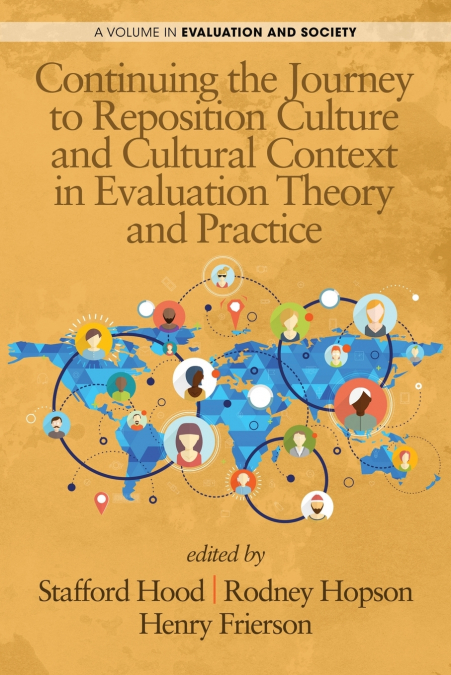
A volume in Evaluation and SocietySeries Editors, Jennifer C. Greene, University of Illinois at Urbana-Champaignand Stewart I. Donaldson, Claremont Graduate UniversityRacial, ethnic, linguistic, and cultural diversity has become of global importance in places where many never wouldhave imagined. Increasing diversity in the U.S., Europe, Africa, New Zealand, and Asia strongly suggests that a homogeneity-based focus is rapidly becoming an historical artifact. Therefore, culturally responsive evaluation (CRE)should no longer be viewed as a luxury or an option in our work as evaluators. The continued amplification of racial,ethnic, linguistic, and cultural diversity and awareness among the populations of the U.S. and other western nationsinsists that social science researchers and evaluators inextricably engage culturally responsive approaches in their work.It is unacceptable for most mainstream university evaluation programs, philanthropic agencies, training institutes sponsoredby federal agencies, professional associations, and other entities to promote professional evaluation practices thatdo not attend to CRE. Our global demographics are a reality that can be appropriately described and studied within thecontext of complexity theory and theory of change (e.g., Stewart, 1991; Battram, 1999). And this perspective requires a distinct shift from 'simple' linear cause-effectmodels and reductionist thinking to include more holistic and culturally responsive approaches.The development of policy that is meaningfully responsive to the needs of traditionally disenfranchised stakeholders and that also optimizes the use of limited resources(human, natural, and financial) is an extremely complex process. Fortunately, we are presently witnessing developments in methods, instruments, and statistical techniquesthat are mixed methods in their paradigm/designs and likely to be more effective in informing policymaking and decision-making. Culturally responsive evaluationis one such phenomenon that positions itself to be relevant in the context of dynamic international and national settings where policy and program decisions takeplace. One example of a response to address this dynamic and need is the newly established Center for Culturally Responsive Evaluation and Assessment (CREA) in theCollege of Education at the University of Illinois at Urbana-Champaign.CREA is an outgrowth of the collective work and commitments of a global community of scholars and practitioners who have contributed chapters to this edited volume.It is an international and interdisciplinary evaluation center that is grounded in the need for designing and conducting evaluations and assessments that embody cognitive,cultural, and interdisciplinary diversity so as to be actively responsive to culturally diverse communities and their aspirations. The Center’s purpose is to address questions,issues, theories, and practices related to CRE and culturally responsive educational assessment. Therefore, CREA can serve as a vehicle for our continuing discourseon culture and cultural context in evaluation and also as a point of dissemination for not only the work that is included in this edited volume, but for thesubsequent work it will encourage.