Inicio > Ciencias de la tierra, geografía, medioambiente, planificación > El medioambiente > Ecología aplicada > Composition and Structure of Eucalyptus Plantation and Woody Vegetation after Logging and Burning
Composition and Structure of  Eucalyptus Plantation and Woody  Vegetation after Logging and Burning

Composition and Structure of Eucalyptus Plantation and Woody Vegetation after Logging and Burning

Benjamín Villa-Castillo / José Javier Corral-Rivas / Nick Reid

38,70 €
IVA incluido
Disponible
Editorial:
Eliva Press
Año de edición:
2026
Materia
Ecología aplicada
ISBN:
9789999350945
38,70 €
IVA incluido
Disponible

Selecciona una librería:

  • Librería Samer Atenea
  • Kálamo Books
  • Librería Elías (Asturias)
  • Librería Kolima (Madrid)
  • Librería Proteo (Málaga)

Eucalyptus saligna plantations with the understorey largely invaded by the introduced pasture Paspalum wettsteinii were included in the expansion of Bongil Bongil National Park (BBNP), NSW. In the 1950s, most of this area was cleared for cattle or dairy pasture, and in 1971 the remainder was cleared for eucalypt plantations. Until its dedication in 1999, this area was used for dairy farming and forestry. The eucalypts were planted for pulpwood and so were never thinned, meaning that the extant plantations are tall and densely stocked. Natural regeneration of native pioneer, secondary or mature forest species is scarce in most of the plantations which appear to be in an arrested state of plant succession. The Park’s Plan of Management states that these plantations will be restored using managed disturbance and that experiments will be implemented to determine appropriate techniques for initiating succession towards endemic communities. Plantation trees suggested intense competition for light and nutrients, providing a significant competitive barrier to the natural regeneration of understorey and alternate canopy species. The experiment consisted of 12 relatively uniform plantation blocks of 80 x 50 m of E. saligna. Three canopy reduction and two burning treatments were carried out (canopy: 0, 50 and 75 % and burning: burnt after logging and not burnt after logging). Based on the vital ecosystem attributes suggested by Aronson et al. (1993), the following variables were measured before (2003) and after treatments (2004): canopy density, understorey light, and tree and shrub composition and spatial structure. Logging and burning had a marked effect on the composition and structure of trees and shrubs in both experimental plantations. Changes were detected in eight of nine response variables (plantation tree and other woody species density, canopy density, photosynthetically active radiation, and structural indices of distance, mingling, diameter, height and uniform angle).
Artículos relacionados

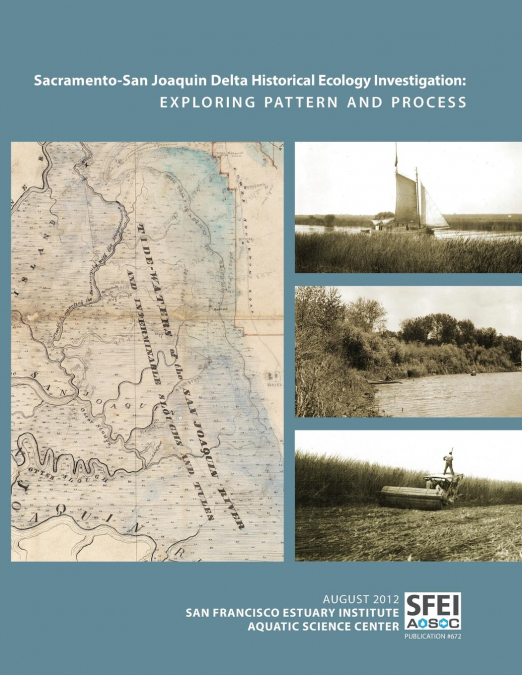
  • Sacramento-San Joaquin Delta Historical Ecology Investigation
    Alison Whipple / Robin Grossinger / San Francisco Estuary Institute
    This report describes the Sacramento-San Joaquin Delta Historical Ecology Study, which was conducted to provide foundation information to develop sound large-scale restoration efforts in the Delta. The report documents early 1800s pattern and process in the Delta. Historical habitat type extent and distribution are described, the landscape context explored, and driving hydrolog...
    Disponible

    57,41 €

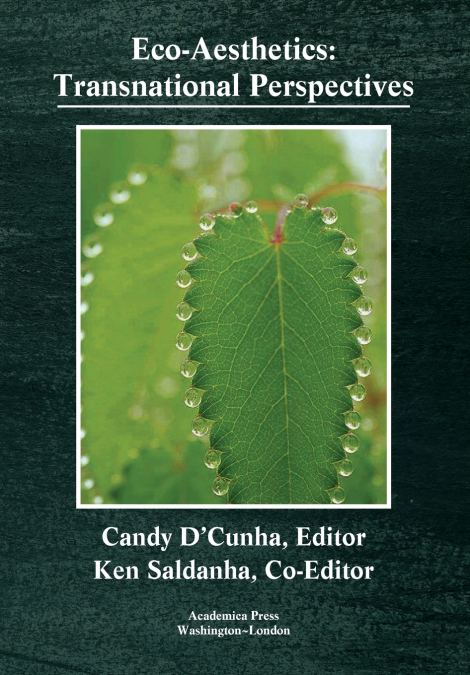
  • Eco-Aesthetics
    Candy D’Cunha
    Eco-criticism, as explored in this volume edited by Sr. Candy D’Cunha, begins with the concept of imagination, in other words, eco-aesthetics through which the power of words, stories, images, essence, and meaning are directly applied to environmental problems that afflict planet earth today. On the other hand, eco-criticism also concurs with the other branches of environmental...
  • Eco-Literature
    Candy D’Cunha
    Awareness of eco-literature has recalled the central ideology of environmentalism - 'to think globally and act locally.' As this volume shows, various tags of contemporary discourse have emerged, including transnational, cosmopolitan, hybridity, diaspora, and generally cultural. These concerns highlight such global environmental problems as biodiversity, climate change, and dev...
  • Revisiting eco-literature
    Candy D’Cunha
    The study of literature and the environment evokes and promotes this highly original eco-critical collection and its contributions to evaluating the preservation of nature and human attachment and to situate it at a local, communitarian, or bio-regional level. Revisiting eco-literature can aid our exploration of numerous global issues and challenges through a literary rendition...
  • Amigos del planeta
    Agustina Barriola / Julieta Mariatti / Sabrina Venturini
    Ecología, medioambiente, amistad... Anita y sus amigos no pueden quedarse de brazos cruzados mientras el planeta se llena de basura. Enterate qué sucede en este cuento, parte de la colección JUNTOS APRENDEMOS. con actividades y juegos sobre ecología. En esta fascinante historia, Sabrina Lorena Venturini captura la atención de lectores de todas las edades, ofreciendo una narrati...
    Disponible

    21,32 €

  • Ecopolitics
    Gerard Kuperus
    Analyzes the different feelings, drives and instincts we have inherited from other species, to suggest a new understanding of ourselves as part of an eco-political community.Against the idea of social contract theories that suggest humans invented the political, Gerard Kuperus argues that we have always been political and that our species came into existence in a world that was...
    Disponible

    47,36 €