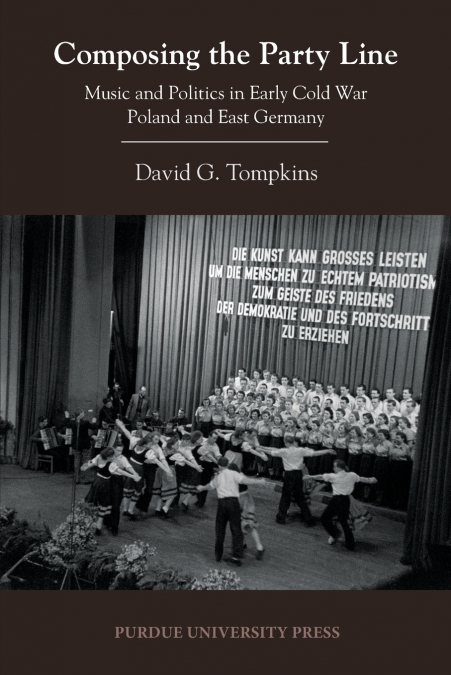
Composing the Party Line

Composing the Party Line

David G. Tompkins / David GTompkins

56,90 €
IVA incluido
Disponible
Editorial:
Purdue Univ Press on behalf of Longleaf
Año de edición:
2013
Materia
Historia general y mundial
ISBN:
9781557536471
56,90 €
IVA incluido
Disponible

Selecciona una librería:

  • Librería Samer Atenea
  • Librería Aciertas (Toledo)
  • Kálamo Books
  • Librería Perelló (Valencia)
  • Librería Elías (Asturias)
  • Donde los libros
  • Librería Kolima (Madrid)
  • Librería Proteo (Málaga)

This book examines the exercise of power in the Stalinist music world as well as the ways in which composers and ordinary people responded to it. It presents a comparative inquiry into the relationship between music and politics in the German Democratic Republic and Poland from the aftermath of World War II through Stalin’s death in 1953, concluding with the slow process of de-Stalinization in the mid-to late-1950s. The author explores how the Communist parties in both countries expressed their attitudes to music of all kinds, and how composers, performers, and audiences cooperated with, resisted, and negotiated these suggestions and demands. Based on a deep analysis of the archival and contemporary published sources on state, party, and professional organizations concerned with musical life, Tompkins argues that music, as a significant part of cultural production in these countries, played a key role in instituting and maintaining the regimes of East Central Europe. As part of the Stalinist project to create and control a new socialist identity at the personal as well as collective level, the ruling parties in East Germany and Poland sought to saturate public space through the production of music. Politically effective ideas and symbols were introduced that furthered their attempts to, in the parlance of the day, 'engineer the human soul.' Music also helped the Communist parties establish legitimacy. Extensive state support for musical life encouraged musical elites and audiences to accept the dominant position and political missions of these regimes. Party leaders invested considerable resources in the attempt to create an authorized musical language that would secure and maintain hegemony over the cultural and wider social worlds. The responses of composers and audiences ran the gamut from enthusiasm to suspicion, but indifference was not an option.

Artículos relacionados

  • The life of Sir Richard Fanshawe, 1608 - 1666
    H C Fanshawe
    Sir Richard Fanshawe (1608-1666), was a diplomat, poet and linguist. As Ambassador to Spain and Portugal he negotiated the marriage of Charles II and Catherine of Braganza. He was also acclaimed for his poetry and his translations of Latin and European works such as the Lusiads by Luis de Camoes and Il Pastor Fido (the Faithful Shepherd) by Giovanni Battista Guarini. Sir Richar...
    Disponible

    17,51 €

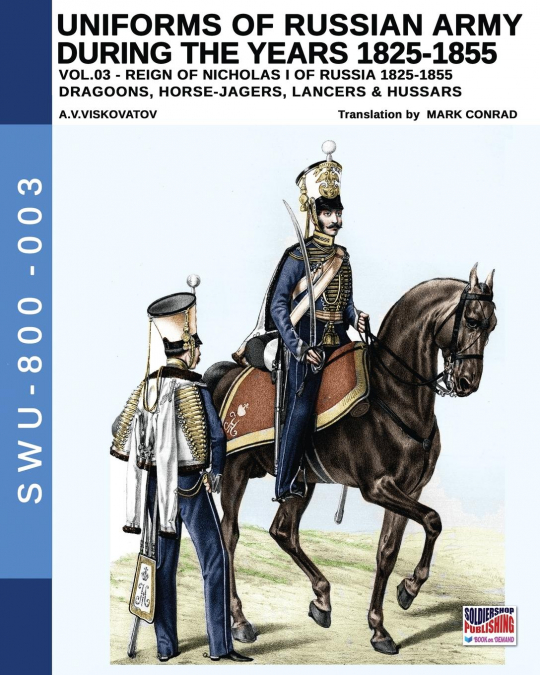
  • Uniforms of Russian Army during the years 1825-1855. Vol. 3
    Aleksandr Vasilevich Viskovatov / Mark Conrad
    This volume is related to the Russian Army during the zar Nicolas Ist era, and are about the uniforms cavalry in use from 1825 to 1855. Compiled at Saint Petersburg during the year from 1837 and 1851, the Historical Description of the Clothing and Arms of the Russian Army has had an enormous impact and great importance for the study on the history of Russian costume and uniform...
    Disponible

    52,04 €

  • Archaeology and Entomology in the Eastern Mediterranean
    Eva Panagiotakopulu
    ...
    Disponible

    74,97 €

  • Luoghi e Architetture della Transizione
    Maria Antonietta Breda
    I sistemi difensivi di confine e la protezione antiaerea nelle città. Storia conservazione riuso / Border defense system and air raid protection in the cities. History conservation reuseThis book collects the papers presented at the Second International Congress on Conoscenza e valorizzazione delle opere militari moderne - Knowledge and development of modern military structures...
    Disponible

    139,91 €

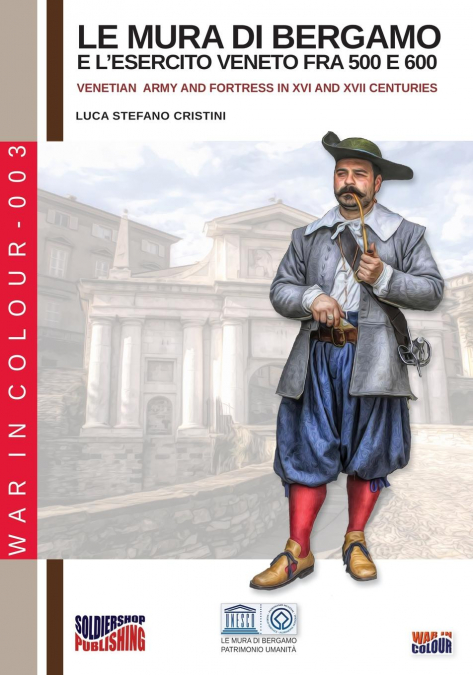
  • Le mura di Bergamo e l’esercito veneto fra 500 e 600
    Luca Stefano Cristini
    Correva l'Anno del Signore 1590. Così scriveva un soddisfatto e pago Alvise Grimani, l'allora comandante veneto della piazza di Bergamo, al termine dei lavori di realizzazione degli oltre cinque chilometri di mura porte e bastioni : 'La città è tutta serrata con baluardi e i suoi membri quasi tutti terrapienati, compite le piazze, i parapetti e le traverse per coprirsi ...
    Disponible

    36,31 €

  • Psychology of Revolution
    Gustave Lebon
    The present age is not merely an epoch of discovery; it is also a period of revision of the various elements of knowledge. Having recognised that there are no phenomena of which the first cause is still accessible, science has resumed the examination of her ancient certitudes, and has proved their fragility. To-day she sees her ancient principles vanishing one by one. ...