 Librería Samer Atenea
 Kálamo Books
 Librería Elías (Asturias)
 Librería Kolima (Madrid)
 Librería Proteo (Málaga)
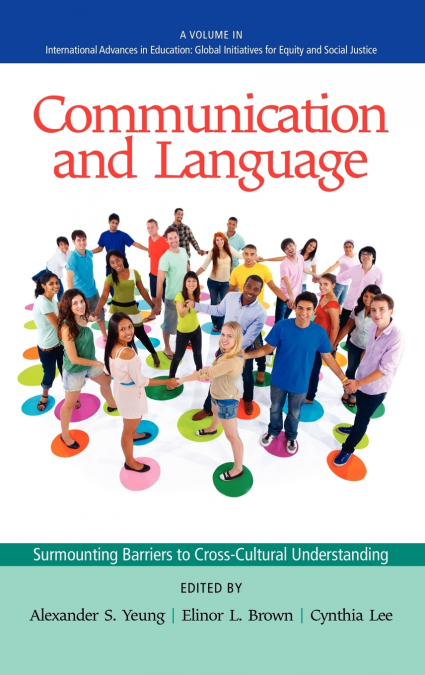
Communication and Language play a foundational role in the overall pursuit of equity and social justice ineducation. This volume does not take up the majority and dominant views which are especially visible indevelopments in the field of linguistic education and English language instruction. Rather, it travels thepath less followed, to attend to the language and communication concerns of populations that possess littlepolitical and economic power and whose academic and social needs are often neglected. The volumeattends to the role of language acquisition in 'levelling the playing field' to enable ALL students todevelop into contented family members, good neighbours, and productive citizens in an increasingly diverse and global society.The issue takes on far greater importance, as it gradually comes to light that the capacity for language corresponds to and even implements the abilityto interrelate with others. Far from being a mere utilitarian tool this is now appreciated as constituting the realm of abilities to take the position of theother, to share a field of meaning, and to project and pursue truly humane and indeed inter-humane attitudes and goals. In this light communication andlanguage, whether verbal or preverbal, constitute the field in which one first attains and progressively evolves one’s humanity.In this volume scholars from ten different countries examine issues related to the influence of language and communication patterns on equity andsocial justice in the lives of disadvantaged and marginalized populations around the globe (i.e., educational opportunities, community stability, economicprospects, and political power). Critical issues addressed include: education in traditional, national, or Western languages; language integrationthrough dialects and code switching; non-verbal academic engagement through art, signing, and photography; cross-cultural engagement through languageequity in higher education; and the influence of Western language acquisition on the self-concepts of disadvantaged students. As the successionof sections in this volume makes clear, success in the realization of language and communication abilitiesis not simple. Rather it reflects human life and interaction in all its complexity.