
Inicio > Sociedad y ciencias sociales > Educación pedagogía > Cognitive Approaches To Automated Instruction
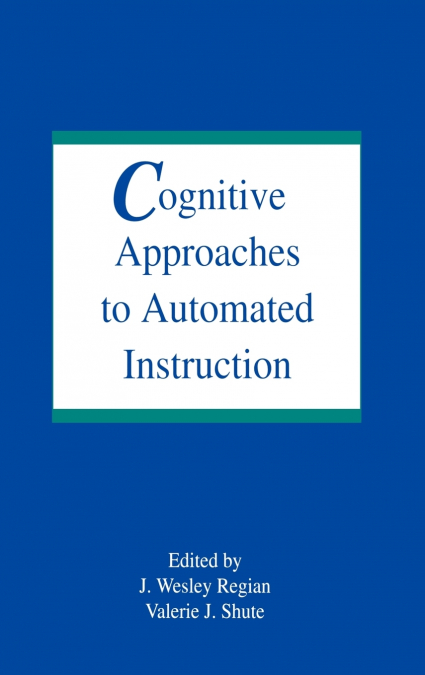
Cognitive Approaches To Automated Instruction

Cognitive Approaches To Automated Instruction


268,13 €
IVA incluido
Consulta disponibilidad
Editorial:
Taylor & Francis Ltd
Año de edición:
1992
Materia
Educación pedagogía
ISBN:
9780805809923

Selecciona una librería:

  • Librería Samer Atenea
  • Librería Aciertas (Toledo)
  • Kálamo Books
  • Librería Perelló (Valencia)
  • Librería Elías (Asturias)
  • Donde los libros
  • Librería Kolima (Madrid)
  • Librería Proteo (Málaga)

Useful to researchers as well as practitioners looking for guidance on designing automated instruction systems, this book provides a snapshot of the state-of-the-art in this research area. In so doing, it focuses on the two critical problems: first, diagnosis of the student’s current level of understanding or performance; and second, selection of the appropriate intervention that will transition the student toward expert performance. Containing a comprehensive set of principled approaches to automated instruction, diagnosis, and remediation, it is the first volume on the topic to provide specific, detailed guidance on how to develop these systems. Leading researchers and practitioners represented in this book address the following questions in each chapter: * What is your approach to cognitive diagnosis for automated instruction? * What is the theoretical basis of your approach? * What data support the utility of the approach? * What is the range of applicability of your approach? * What knowledge engineering or task analysis methods are required to support your approach? Referring to automated instruction as instruction that is delivered on any microprocessor-based system, the contributors to -- and editors of -- this book believe that is it possible for automated instructional systems to be more effective than they currently are. Specifically, they argue that by using artificial intelligence programming techniques, it is possible for automated instructional systems to emulate the desirable properties of human tutors in one-on-one instruction.

Artículos relacionados

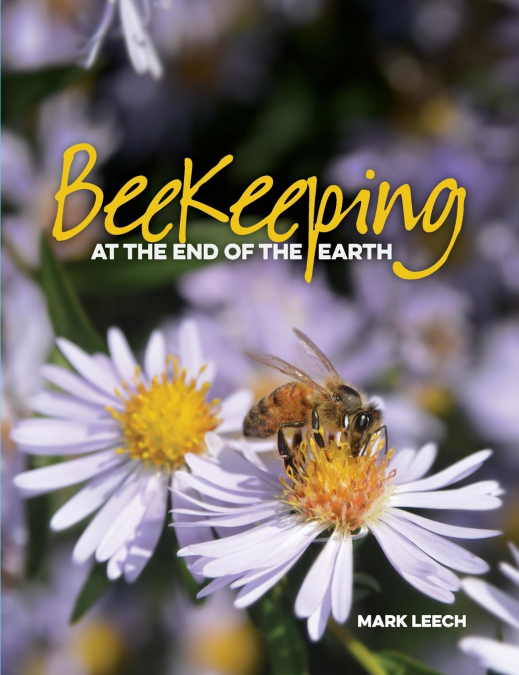
  • Beekeeping At The End Of The Earth
    Mark David Leech
    Beekeeping at the End of the Earth, an essential read for learning about beekeeping in a cool temperate climate with a focus on Tasmania our island home.  One hundred beekeepers one hundred different ways to keep bees.Beekeeping At The End Of The Earth is a practical insight into cool climate beekeeping with a focus on Tasmania, our island home.Richly illustrated with unique di...
    Disponible

    45,16 €

  • Be the One for Kids
    Ryan Sheehy
    One person can make a difference.That person can be you. “I want to show others that one person can make the difference in a child’s life. I want all educators, parents, coaches, and everyone in between to know they have power to Be the One for Kids.” —Ryan Sheehy If you ever feel like you’re all alone or think that no one gets you, just imagine how your students feel. Kids wan...
    Disponible

    27,99 €

  • Handbook of Research on E-Learning Standards and Interoperability
    As the e-learning industry continues to expand and the methods and tools necessary to create and maintain content and infrastructure applications become more complicated, there is an inherent need for these applications to interoperate and exchange data in order to better support the needs of learners and educators. Handbook of Research on E-Learning Standards and Interoperabil...
  • Teaching in the Knowledge Society
    Antonio Cartelli
    ...
  • Enhancing Learning Through Human Computer Interaction
    Elspeth McKay
    ...
  • Learning Objects for Instruction
    Pamela Taylor Northrup
    ...