
Climate Change - An Experimental AI Assessment

Climate Change - An Experimental AI Assessment

VIGIL AI

104,45 €
IVA incluido
Disponible
Editorial:
W. Frederick Zimmerman
Año de edición:
2026
Materia
Cambio climático
ISBN:
9781608887927
104,45 €
IVA incluido
Disponible

Selecciona una librería:

  • Librería Samer Atenea

  • Kálamo Books
  • Librería Elías (Asturias)
  • Librería Kolima (Madrid)
  • Librería Proteo (Málaga)

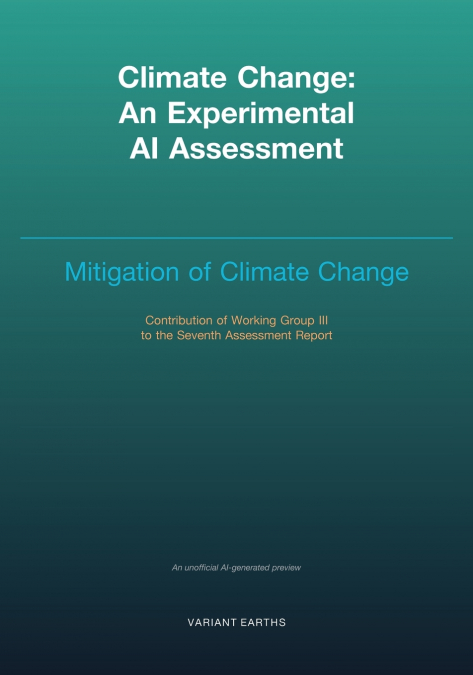
Contribution of Working Group III to the Seventh Assessment Report of the Intergovernmental Panel on Climate Change (IPCC). This AI-generated experimental assessment presents a scientifically rigorous, forward-looking analysis of climate change mitigation pathways, technologies, policies, and economics, grounded in 117 DOI-verified citations drawn from peer-reviewed literature published through early 2026.Across 17 chapters and 423 pages, this volume evaluates the full landscape of mitigation options available to limit global warming to 1.5 degrees C or well below 2 degrees C above pre-industrial levels. Opening with a Summary for Policymakers, the volume proceeds through framing and context chapters examining historical emission trends and drivers disaggregated across regions, sectors, and income groups, projected emission futures under alternative development pathways, and the intersection of mitigation ambition with sustainable development goals and just transition imperatives. Sector-specific chapters provide detailed analysis of decarbonization pathways in energy systems (renewable energy deployment trajectories and learning curves, grid flexibility and long-duration storage, nuclear energy’s evolving role, green and blue hydrogen value chains, and fossil fuel phase-out timelines and stranded asset implications), industry (steel, cement, and chemicals decarbonization routes, process electrification, industrial symbiosis, circular economy approaches, and carbon capture utilization and storage), transport and mobility (light-duty and heavy-duty vehicle electrification, modal shift strategies, sustainable aviation fuels, maritime shipping decarbonization pathways, and urban mobility transformation including 15-minute city concepts), buildings and human settlements (deep energy retrofit strategies, building electrification of heating and cooling, embodied carbon reduction in construction materials, and net-zero building codes and enforcement), and agriculture, forestry and other land uses including soil carbon management, reduced deforestation and degradation, agroforestry systems, livestock emission reduction, and dietary change potential. A dedicated chapter on carbon dioxide removal (CDR) evaluates the potentials, costs, co-benefits, risks, and governance challenges of direct air capture with carbon storage (DACCS), bioenergy with CCS (BECCS), enhanced rock weathering, ocean alkalinity enhancement, biochar, and afforestation/reforestation at scale. Cross-cutting chapters address demand-side transformation and sufficiency strategies, enablers and barriers to rapid decarbonization including institutional capacity and workforce development, governance frameworks and international cooperation including Paris Agreement Article 6 carbon market mechanisms, and climate finance flows, public-private investment gaps, and strategies for mobilizing capital at the trillions-per-year scale required for a net-zero transition.Methodology: Each chapter was generated using Claude (Anthropic) with structured prompts modeled on the IPCC assessment cycle. All scientific claims are anchored to DOI-resolvable references verified against CrossRef. The full methodology, prompts, and verification logs are published at github.com/fredzannarbor/ar7-ai-assessment.Part of the Climate Futures: The Ensemble series - three volumes totaling 1,296 pages, 51 chapters, and 531 DOI-verified citations.IMPORTANT: This is an unofficial AI-generated experimental assessment published by Variant Earths, an imprint of Nimble Books LLC. Not affiliated with or endorsed by the IPCC, the United Nations, or any national government.
Artículos relacionados

  • Handbook of Research on Climate Change Impact on Health and Environmental Sustainability
    Soumyananda Dinda
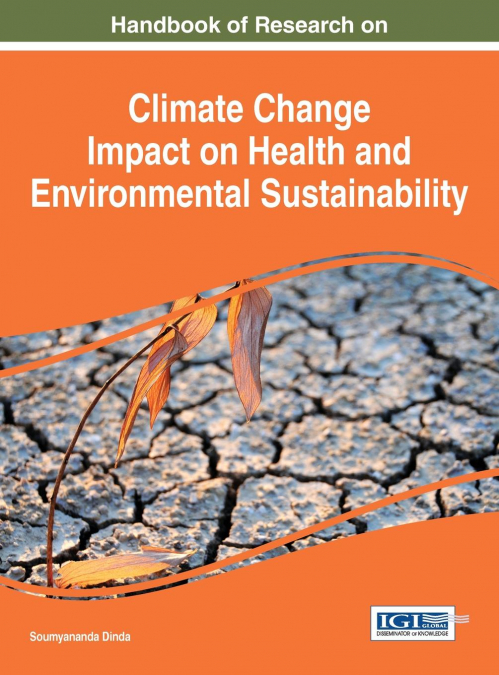
    Climate change is not only one of the greatest threats to modern civilization; it is also a great challenge to economic development in the 21st century. Global warming can lead to periods of both drought and intense rain, causing crops to fail and ruining the livelihoods of many in underdeveloped countries. The Handbook of Research on Climate Change Impact on Health and Environ...
  • Water Resources in a Variable and Changing Climate
    Climate change will bring about significant changes to the capacity of, and the demand on,water resources. The resulting changes include increasing climate variability that is expectedto affect hydrologic conditions. The effects of climate variability on various meteorologicalvariables have been extensively observed in many regions around the world. Atmosphericcirculation, topo...
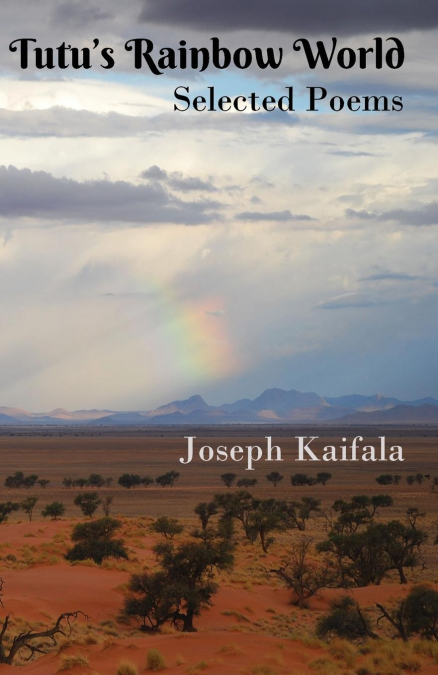
  • Tutu’s Rainbow World
    Joseph Kaifala
    Joseph Kaifala was born in Freetown. Now a Human Rights lawyer in the USA and author of “Free Slaves, Freetown and the Sierra Leonean Civil War” his poetry deals with Africa’s poverty, armed conflicts and the suffering of its child soldiers.   ...
    Disponible

    11,99 €

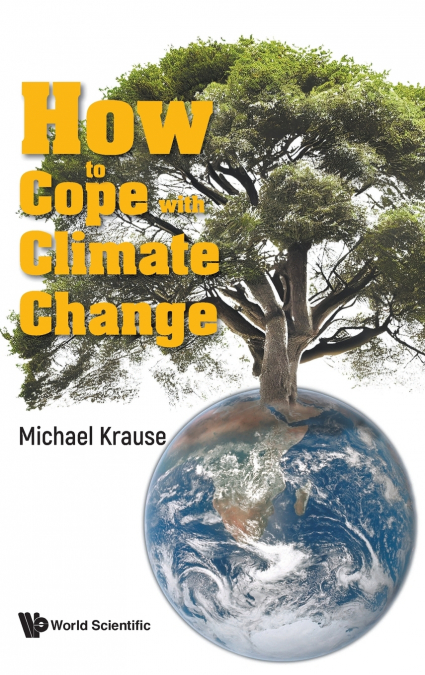
  • HOW TO COPE WITH CLIMATE CHANGE
    KRAUSE MICHAEL / MICHAEL KRAUSE
    How did mankind change Earth from the beginning? How did changes in technologies change our society and the global climate? And how do we have to change to cope with climate change?Climate change is the ultimate threat in the world today, and it can only be addressed through comprehensive technological and societal transformation. This book examines the financial, technical, an...
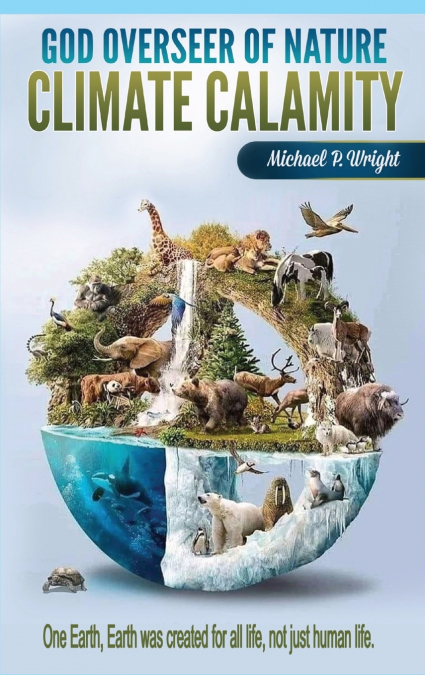
  • God Overseer of Nature
    Michael P Wright
    Let all of us work together to save the Earth. Time is of the essence right now. Everyone needs to be 'all in' to repair the damage of climate change and damage to the environment on our Earth. One Earth, Earth was created for all life not just human life. Never underestimate the backlash of nature. ...
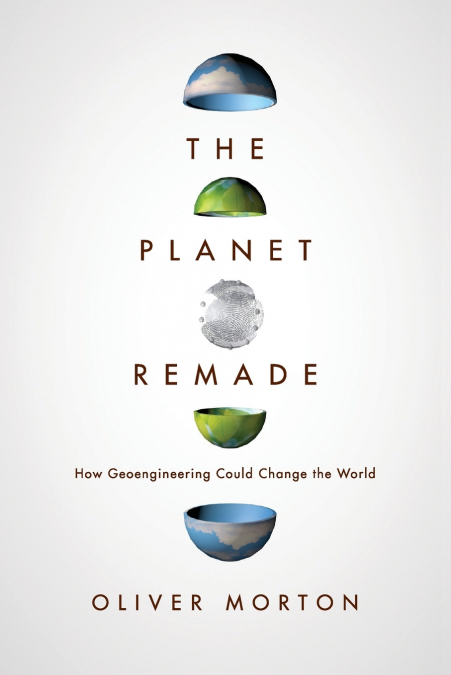
  • The Planet Remade
    Oliver Morton
    A fascinating look at the perils and promise of geoengineering and our potential future on a warming planetThe risks of global warming are pressing and potentially vast. The difficulty of doing without fossil fuels is daunting, possibly even insurmountable. So there is an urgent need to rethink our responses to the crisis. To meet that need, a small but increasingly influential...
    Disponible

    22,50 €

Otros libros del autor

  • Climate Change - An Experimental AI Assessment
    VIGIL AI
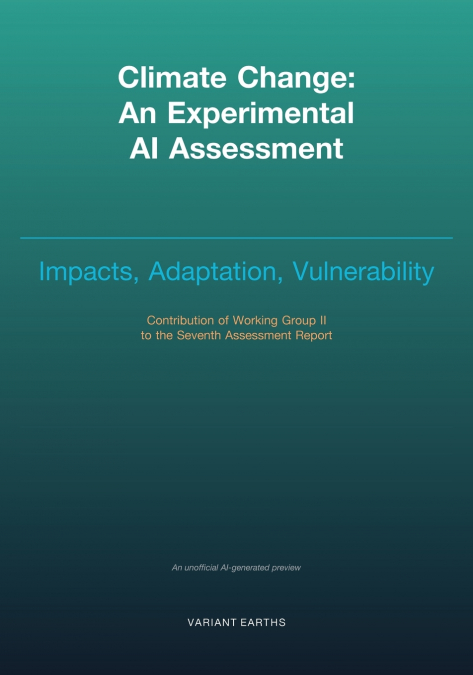
    Contribution of Working Group II to the Seventh Assessment Report of the Intergovernmental Panel on Climate Change (IPCC). This AI-generated experimental assessment presents a scientifically rigorous, forward-looking analysis of climate change impacts, adaptation strategies, and vulnerability patterns across regions and sectors, grounded in 168 DOI-verified citations drawn from...
    Disponible

    108,97 €

  • Climate Change - An Experimental AI Assessment
    VIGIL AI
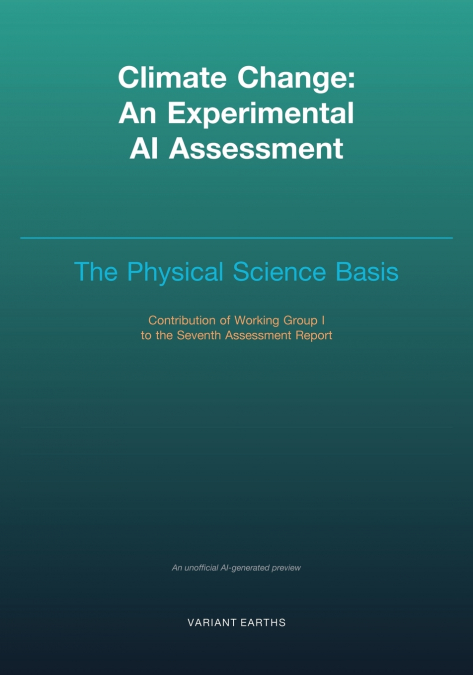
    What will the IPCC’s Seventh Assessment Report say about the physical science of climate change? This volume is an experiment in answering that question before the report exists. Using Anthropic’s Claude and a source-first methodology, we generated a complete Working Group I assessment-10 chapters plus a Summary for Policymakers and Technical Summary-structured to match the off...
    Disponible

    101,09 €