
Inicio > Humanidades > Filosofía > Filosofía social y política > Civic Engagement in Australian Democracy
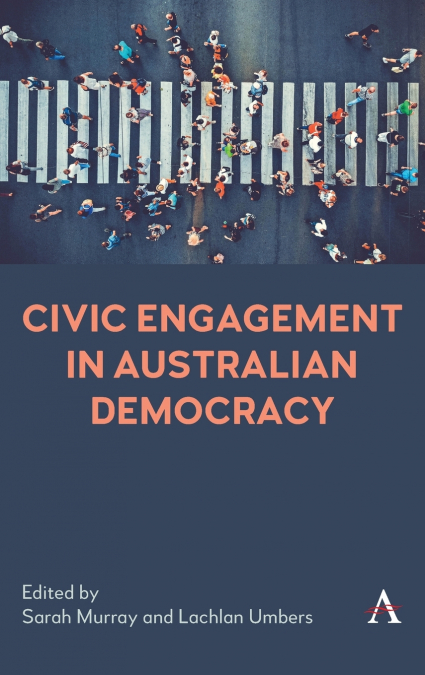
Civic Engagement in Australian Democracy

Civic Engagement in Australian Democracy


158,37 €
IVA incluido
Consulta disponibilidad
Editorial:
Wimbledon Publishing
Año de edición:
2025
Materia
Filosofía social y política
ISBN:
9781839993534

Selecciona una librería:

  • Librería Samer Atenea
  • Librería Aciertas (Toledo)
  • Kálamo Books
  • Librería Perelló (Valencia)
  • Librería Elías (Asturias)
  • Donde los libros
  • Librería Kolima (Madrid)
  • Librería Proteo (Málaga)

The Australian democratic system has long been regarded as one of the most stable and predictable in the world, with an entrenched two-party duopoly, compulsory voting ensuring high levels of electoral participation and relatively high levels of satisfaction with the democratic process. Yet the ways Australians engage with, and participate in, their democracy have shifted substantially in recent times. While a record proportion of Australians are now on the electoral roll, less than 1% belong to a political party, and the share of Australians that have always voted for the same party in Federal elections has declined from 72% in 1967 to 37% in 2022. Turnout in the 2022 Federal Election fell below 90% for the first time since the introduction of compulsory voting in 1924. Over 50% of voters cast their ballots early in 2022, up from around 10% in 2004. The advent of social media has afforded Australians a range of opportunities for political engagement but has also given rise to serious concerns surrounding the dissemination of misinformation. And Australians have also recently been afforded several historically rare opportunities for direct participation in the lawmaking process - particularly, the 2017 same-sex marriage plebiscite and the 2023 referendum on the Aboriginal and Torres Strait Islander Voice to Parliament.These developments give rise to a wide range of deep, difficult questions for Australian democracy, many of which have been under-explored. What, for instance, does the failure of the referendum on the Aboriginal and Torres Strait Islander Voice to Parliament mean for Australian democracy? What sorts of opportunities ought to be afforded to Australians for direct participation in government? How might climate change impact Australian democracy in the coming decades? How might the rise in early voting impact the character of Australian democracy? What opportunities do Australians have for engagement in civic life, and what obstacles do they face in exercising them?This edited collection brings together specialists in the democratic process to consider such questions, alongside many others. Moreover, the collection is uniquely interdisciplinary, insofar as the contributors are drawn from a diverse range of fields - law, philosophy, political science and sociology. The chapters each help bring us a broader understanding of civic participation in Australian democracy, in order that we might evaluate the status quo, and gauge where it might be headed, in the future.

Artículos relacionados

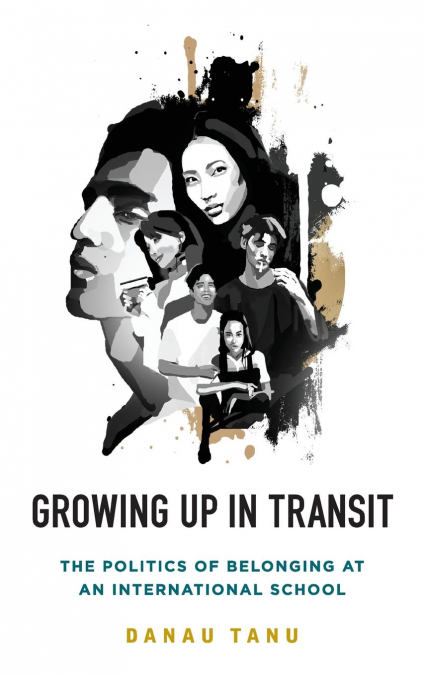
  • Growing Up in Transit
    Danau Tanu
    In this compelling study of the children of serial migrants, Danau Tanu argues that the international schools they attend promote an ideology of being "international" that is Eurocentric. Despite the cosmopolitan rhetoric, hierarchies of race, culture and class shape popularity, friendships and romance on campus. By going back to high school for a year, Tanu befriended transnat...
  • Management and Participation in the Public Sphere
    Mika Markus Merviö
    Public policy has a dynamic effect on multiple facets of modern society. Methods for managing and engaging the public sphere continue to change conceptually across the globe, impacting the ways that governments and citizens interact both within and across borders. Management and Participation in the Public Sphere is a definitive reference source for the latest scholarly researc...
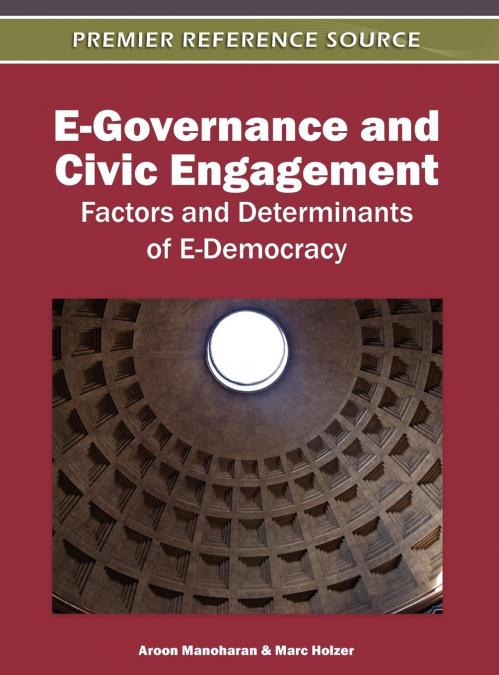
  • E-Governance and Civic Engagement
    Governments are increasingly turning to the Internet to provide public services. The move towards e-governance not only impacts the efficiency and effectiveness of public service, but also has the potential to transform the nature of government interactions with citizens. E-Governance and Civic Engagement: Factors and Determinants of E-Democracy examines how e-government facili...
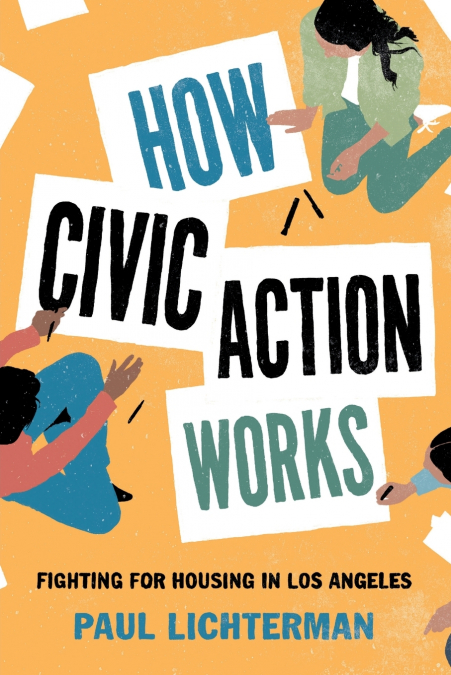
  • How Civic Action Works
    Paul Lichterman
    The ways that social advocates organize to fight unaffordable housing and homelessness in Los Angeles, illuminated by a new conceptual framework for studying collective actionHow Civic Action Works renews the tradition of inquiry into collective, social problem solving. Paul Lichterman follows grassroots activists, nonprofit organization staff, and community service volunteers ...
    Disponible

    45,65 €

  • Changemaker - An Insider’s Guide to Getting Sh*t Done at the California Capitol
    Kristina Bas Hamilton
    Navigating the policy process in Sacramento can be overwhelming and frustrating for many advocates. Changemaker breaks down that process into actionable steps with expert tips and real world lessons on how to win legislative campaigns in California. Authored by veteran labor lobbyist Kristina Bas Hamilton. ...
    Disponible

    19,76 €

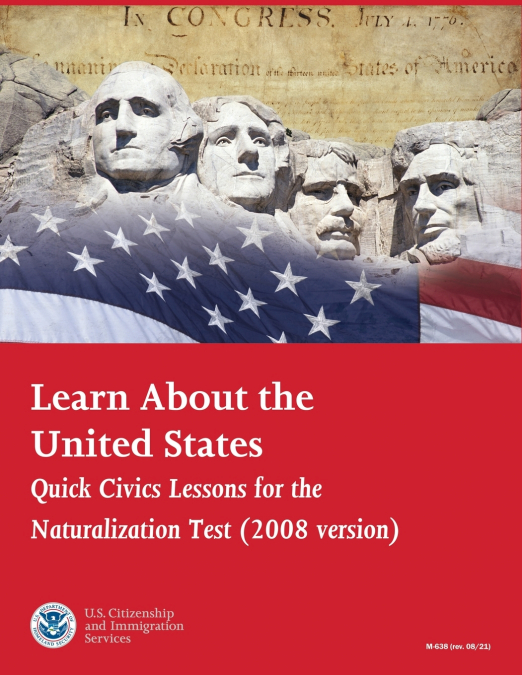
  • Learn About the United States
    Immigration Services USCIS / US Citizenship
    As you prepare for U.S. citizenship, Learn About the United States: Quick Civics Lessons will help you study for the civics and English portions of the naturalization interview. There are 100 civics (history and government) questions on the naturalization test. During your naturalization interview, you will be asked up to 10 questions from the list of 100 questions. You must an...
    Disponible

    5,62 €