 Librería Samer Atenea
 Kálamo Books
 Librería Elías (Asturias)
 Librería Kolima (Madrid)
 Librería Proteo (Málaga)
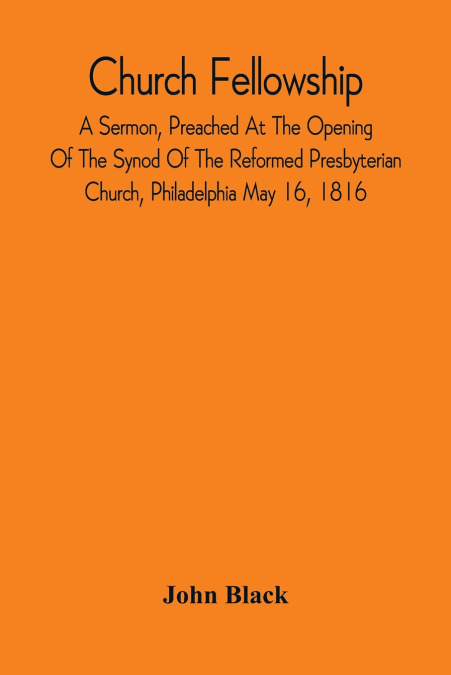
Delivered in Philadelphia on 16 May 1816, this substantial theological sermon examines what it means for professing Christians to live in fellowship while preserving the doctrinal and ecclesiastical order of the church. John Black, pastor of the Reformed Presbyterian Church in Pittsburgh, distinguishes personal Christian fellowship from formal ecclesiastical communion, asking how worship, shared belief, church discipline and recognised standards should shape relationships among believers.Black’s discussion offers a valuable window into early nineteenth-century Reformed Presbyterian thought. He considers the nature and limits of communion, the responsibilities of church members, the authority of church government and the implications of participation in the Lord’s Supper. His arguments address liberal communion, excommunication and the dangers of schism, while repeatedly calling readers towards charity, unity and scriptural order.As a primary source in presbyterian church history, this work will interest students and researchers of historical ecclesiology, Christian communion and unity, confessional theology and early American religious history. Alpha Editions presents this historic theological discourse for readers exploring the development of Reformed Presbyterian convictions and church fellowship theology.