Castiglione’s Allegory

Castiglione’s Allegory

W.R. Albury

301,64 €
IVA incluido
Consulta disponibilidad
Editorial:
Taylor & Francis Ltd
Año de edición:
2014
Materia
Historia general y mundial
ISBN:
9781472432636

Selecciona una librería:

  • Librería Samer Atenea
  • Librería Aciertas (Toledo)
  • Kálamo Books
  • Librería Perelló (Valencia)
  • Librería Elías (Asturias)
  • Donde los libros
  • Librería Kolima (Madrid)
  • Librería Proteo (Málaga)

Castiglione’s Book of the Courtier (Il libro del cortegiano, 1528), a dialogue in which the interlocutors attempt to describe the perfect courtier, was one of the most influential books of the Renaissance. In recent decades a number of postmodern readings of this work have appeared, emphasizing what is often characterized as the playful indeterminacy of the text, and seeking to detect inconsistencies which are interpreted as signs of anxiety or bad faith in its presentation. In contrast to these postmodern readings, the present study conducts an experiment. What understanding does one gain of Castiglione’s book if one attempts an early modern reading? The author approaches The Book of the Courtier as a text in which some of its most important aspects are intentionally concealed and veiled in allegory. W.R. Albury argues that this early modern reading of The Book of the Courtier enables us to recover a serious political message which has a great deal of contemporary relevance and which is lost from sight when the work is approached primarily as a courtly etiquette book, or as a lament for the lost influence of the aristocracy in an age when autocratic nation-states were coming into being, or as an impersonal textual field upon which a free play of transformations and deconstructions may be performed.
Artículos relacionados

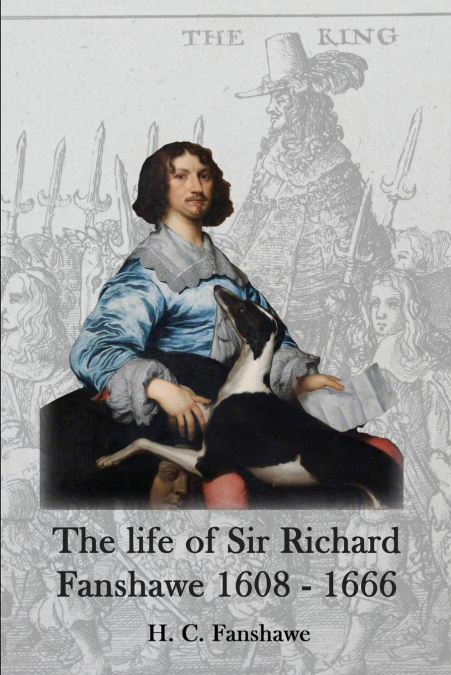
  • The life of Sir Richard Fanshawe, 1608 - 1666
    H C Fanshawe
    Sir Richard Fanshawe (1608-1666), was a diplomat, poet and linguist. As Ambassador to Spain and Portugal he negotiated the marriage of Charles II and Catherine of Braganza. He was also acclaimed for his poetry and his translations of Latin and European works such as the Lusiads by Luis de Camoes and Il Pastor Fido (the Faithful Shepherd) by Giovanni Battista Guarini. Sir Richar...
    Disponible

    17,51 €

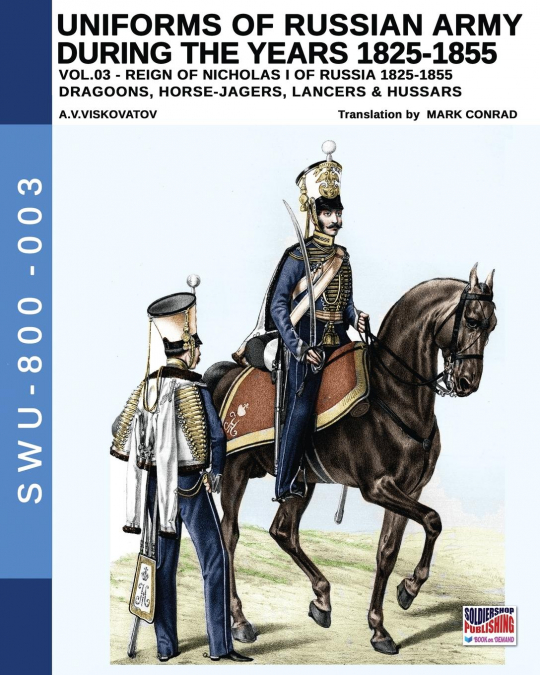
  • Uniforms of Russian Army during the years 1825-1855. Vol. 3
    Aleksandr Vasilevich Viskovatov / Mark Conrad
    This volume is related to the Russian Army during the zar Nicolas Ist era, and are about the uniforms cavalry in use from 1825 to 1855. Compiled at Saint Petersburg during the year from 1837 and 1851, the Historical Description of the Clothing and Arms of the Russian Army has had an enormous impact and great importance for the study on the history of Russian costume and uniform...
    Disponible

    52,04 €

  • Archaeology and Entomology in the Eastern Mediterranean
    Eva Panagiotakopulu
    ...
    Disponible

    74,97 €

  • Luoghi e Architetture della Transizione
    Maria Antonietta Breda
    I sistemi difensivi di confine e la protezione antiaerea nelle città. Storia conservazione riuso / Border defense system and air raid protection in the cities. History conservation reuseThis book collects the papers presented at the Second International Congress on Conoscenza e valorizzazione delle opere militari moderne - Knowledge and development of modern military structures...
    Disponible

    139,91 €

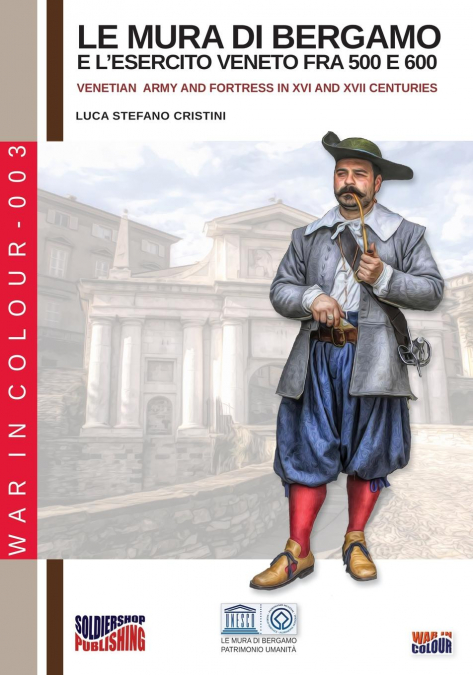
  • Le mura di Bergamo e l’esercito veneto fra 500 e 600
    Luca Stefano Cristini
    Correva l'Anno del Signore 1590. Così scriveva un soddisfatto e pago Alvise Grimani, l'allora comandante veneto della piazza di Bergamo, al termine dei lavori di realizzazione degli oltre cinque chilometri di mura porte e bastioni : 'La città è tutta serrata con baluardi e i suoi membri quasi tutti terrapienati, compite le piazze, i parapetti e le traverse per coprirsi ...
    Disponible

    36,31 €

  • Psychology of Revolution
    Gustave Lebon
    The present age is not merely an epoch of discovery; it is also a period of revision of the various elements of knowledge. Having recognised that there are no phenomena of which the first cause is still accessible, science has resumed the examination of her ancient certitudes, and has proved their fragility. To-day she sees her ancient principles vanishing one by one. ...