T. Dennis Reece / TDennis Reece
 Librería Samer Atenea
 Kálamo Books
 Librería Elías (Asturias)
 Librería Kolima (Madrid)
 Librería Proteo (Málaga)
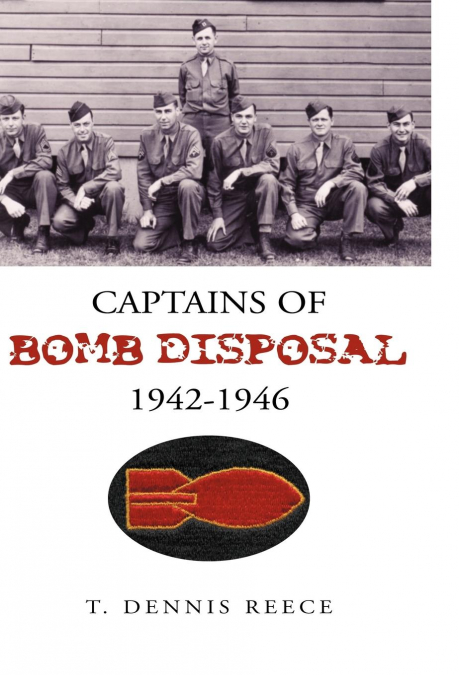
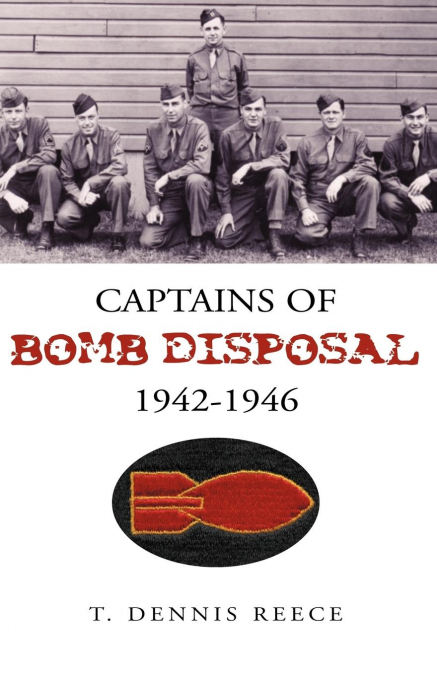
Bomb disposal was the most technically demanding and dangerous job outside of combat during World War II. Fewer than five thousand men did it in the American armed forces. During the war their activities were shrouded in secrecy, so that the Axis would not know what techniques the Allies were using. When they came home the citizen soldiers and officers who had done the work preferred anonymity to publicity. Furthermore, the units they had served in, often squads of six enlisted men and one officer, had been too small and independent to attract much notice by American chroniclers, official or unofficial, of the biggest armed conflict in history. Captains of Bomb Disposal, 1942-1946 attempts to bring some long-overdue public attention to this small group of neglected heroes. It chronicles two of their two most significant achievements during the World War II era: the contributions of the thirty-three bomb disposal squads of the Ninth Air Force, and the top-secret intelligence mission code named Operation ’Hidden Documents.'In 1944 the Ninth Air Force was the most powerful tactical air force the world had ever seen. In the European Theater of Operations (ETO) it controlled more bomb disposal personnel than any other high command. Part I of Captains of Bomb Disposal, 1942-1946 mainly describes training at the Bomb Disposal School at Aberdeen Proving Ground, Maryland, and the support thirty-three bomb disposal squads gave the Ninth Air Force. Interwoven in the narrative covering events after D-Day is the wider context in which those squads, and all of the Ninth Air Force, operated, namely, air and ground forces pioneering a large-scale, close partnership which defeated the Germans in northwest Europe. Also discussed is how Ninth Air Force bomb disposal squads helped handle the problem after V-E Day of up to two million tons of surplus explosive ordnance in the theater.Most of the sources for Part I on bomb disposal operations are unpublished unit histories, Ninth and Eighth Air Force ordnance reports, theater-level reports, and related documents at either the National Archives at College Park, Maryland (NACP), or the Air Force Historical Research Agency (AFHRA), at Maxwell Air Force Base, Alabama. Part I is organized around, but definitely not limited to, the World War II experiences of Capt. Thomas R. Reece. Now deceased and the author’s father, he was one of the four highest-ranking bomb disposal officers in the Ninth Air Force. Some of his official and personal papers are utilized. Background material on the course of the war in the ETO is taken mainly from published official histories, and for the Ninth Air Force, also from unpublished documents at AFHRA.One of the passages in Part I describes how two men in the 80th Bomb Disposal Squad, Sgt. Russell F. McCarthy and T/5 Walter V. Smith, in 1945 won the Soldier’s Medal, America’s highest military award for bravery in action not against the enemy. They were not the only bomb disposal personnel to win that award during the World War II era. Part II revolves around Capt. Stephen A. Richards, who was commanding officer of the 123rd Bomb Disposal Squad, attached during the war to General Patton’s Third Army. Captain Richards and two combat engineers won the award for disarming a cache of booby-trapped documents outside Stechovice, Czechoslovakia in February 1946, as part of Operation ’Hidden Documents.' The trio was apprehended by Czechoslovak authorities while the other mission members took the documents to Germany, and was only released after the documents were returned. Meanwhile, a diplomatic crisis was ignited as Czechoslovakia officially protested the American infringement of its sovereignty. Moreover, the Czechoslovak Communist Party used the controversy for propaganda purposes shortly before the national elections of May 1946.Shortly before the trio was released, the operation received fairly extensive publicity, including an article on page two of Th