 Librería Samer Atenea
 Kálamo Books
 Librería Elías (Asturias)
 Librería Kolima (Madrid)
 Librería Proteo (Málaga)
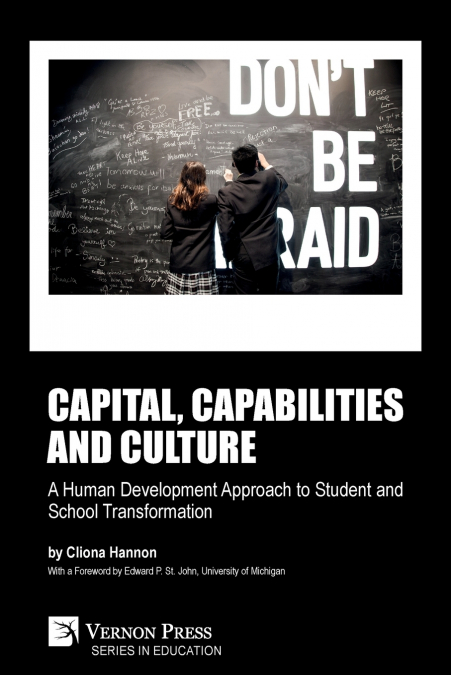
This book applies the capability approach as an evaluative lens through which to explore the range of capabilities that emerged over a three-year period, through the Trinity Access 21 – College for Every Student (TA21-CFES) higher education access project in four schools. Qualitative analysis is presented from a longitudinal study of four schools over a three-year period, drawing on data from four student focus groups involving 21 student participants and 14 individual student interviews. An additional sixteen school personnel contributed in interviews. There are three main findings: first, specific student capabilities emerge because of their engagement in the TA21-CFES core practices of Leadership, Mentoring and Pathways to College. These are: autonomy, practical reason/college knowledge, identity, social relations and networks and hope. Second, students encounter a range of inhibiting social conversion factors in developing capabilities and persisting with higher education aspirations. These are: the negative pull of peer relations; pressure related to the Junior Certificate; limited subject choice and conflicting family expectations. Third, it is the combination of their own emerging capability set along with a network of trusted relationships with others that enables them to overcome potentially corrosive disadvantage and translate their experiences into fertile functionings. It is proposed that these findings have national and international relevance for widening participation interventions. The research makes a methodological contribution as it is the first use of qualitative longitudinal research (QLR) in Ireland within a ‘lived’ project aimed at working-class students over a three-year period. It contributes empirically as it provides new knowledge about the impact of interventions aimed at developing students’ capability set and how these might help them to develop navigational capital and post-secondary educational aspirations. It also makes a conceptual contribution to how we frame the design and evaluation of impact of widening participation initiatives, as it takes a capability approach to considering how students develop higher education aspirations over time, towards what they consider ‘a life of value’. It is useful to researchers, practitioners and policy makers who are interested in taking an evidence-based approach to developing higher education access programmes.