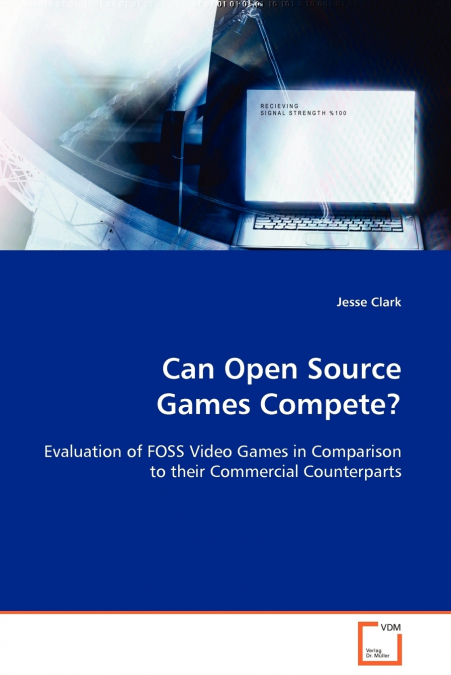

Can Open Source Games Compete?

Can Open Source Games Compete?

Jesse Clark

60,51 €
IVA incluido
Disponible
Editorial:
KS OmniScriptum Publishing
Año de edición:
2008
Materia
Estudios mediáticos
ISBN:
9783639100600
60,51 €
IVA incluido
Disponible

Selecciona una librería:

  • Librería Samer Atenea
  • Librería Aciertas (Toledo)
  • Kálamo Books
  • Librería Perelló (Valencia)
  • Librería Elías (Asturias)
  • Donde los libros
  • Librería Kolima (Madrid)
  • Librería Proteo (Málaga)

The topic of copyrights is a crucial component in understanding today’s media landscape. The purpose of having a copyright system as outlined in the U.S. Constitution is to provide content creators with incentives to create. Copyrights allows revenue to be generated through sales of copies of works; allowing works to be created which otherwise would not be created. Yet it is possible that not all creative projects require the same legal framework. The so called 'copyleft' movement offers an alternative to the industrial mode of cultural production. 'Copylefted' works can be divided into two broad categories: artistic/creative works (which are often protected by 'Creative Commons' licenses), and Free/Open Source Software. This thesis evaluates how open source video games compare to their commercial counterparts and discusses the reasons for any difference in overall quality. The purpose of this evaluation is to determine whether high quality video games can be created without strong copyright protection. In term of technical merit, FOSS games vary widely. The most sophisticated of these games seem to be only a few years behind their commercial counterparts.

Artículos relacionados

  • Impact of Communication and the Media on Ethnic Conflict
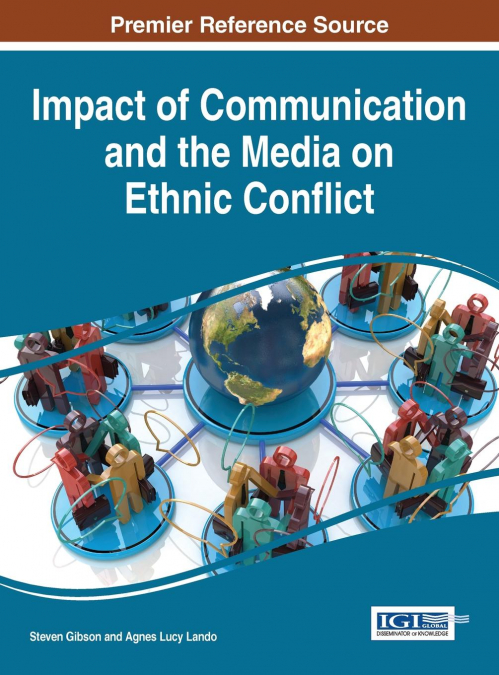
    Throughout the world, cultural and racial clashes remain a major hurdle to development and progress. Though some areas are experiencing successful intercultural communications which pave the way for peaceful negotiations, there are still many regions experiencing severe turmoil. Impact of Communication and the Media on Ethnic Conflict focuses on both the positive and negative o...
  • The Game to Show the Games
    Morgan Wick
    ESPN collects hundreds of millions of dollars in rights fees from cable subscribers, before selling a single advertisement. In The Game to Show the Games, Morgan Wick exposes how this lucrative revenue stream and the competition between media conglomerates has become a billion-dollar boon for sports leagues across the nation and the world, and how this has shaken up the rest o...
    Disponible

    9,42 €

  • Exploring the Benefits of Creativity in Education, Media, and the Arts
    The use of imagination can lead to greater outcomes in problem solving, innovation, and critical thinking. By providing access to creative outlets, productivity increases in schools, businesses, and other professional settings. Exploring the Benefits of Creativity in Education, Media, and the Arts is a pivotal reference source for the latest scholarly research on the stimulatio...
  • Celebrity, Pedophilia, and Ideology in American Culture
    Jason Lee
    Celebrity, Pedophilia, and Ideology in American Culture reveals the connections between rapacious capitalism and the rape of children. The twenty chapters, which span the analysis of childhood, celebrity culture, important books and films on pedophilia and violence, post-9/11 theology and public rhetoric, and killing for fame, in an interrelated fashion cover intrinsically impo...
  • Researching Digital Media and Society
    Moa Eriksson Krutrök / Simon Lindgren
    ...
    Disponible

    86,42 €

  • Researching Digital Media and Society
    Moa Eriksson Krutrök / Simon Lindgren
    ...