
Inicio > Sociedad y ciencias sociales > Educación pedagogía > Can Educators Make a Difference? Experimenting with and Experiencing, Democracy in Education
Can Educators Make a Difference? Experimenting with and Experiencing, Democracy in Education

Can Educators Make a Difference? Experimenting with and Experiencing, Democracy in Education


83,11 €
IVA incluido
Disponible
Editorial:
Emerald Publishing Ltd
Año de edición:
2012
Materia
Educación pedagogía
ISBN:
9781617358135
83,11 €
IVA incluido
Disponible

Selecciona una librería:

  • Librería Samer Atenea
  • Librería Aciertas (Toledo)
  • Kálamo Books
  • Librería Perelló (Valencia)
  • Librería Elías (Asturias)
  • Donde los libros
  • Librería Kolima (Madrid)
  • Librería Proteo (Málaga)

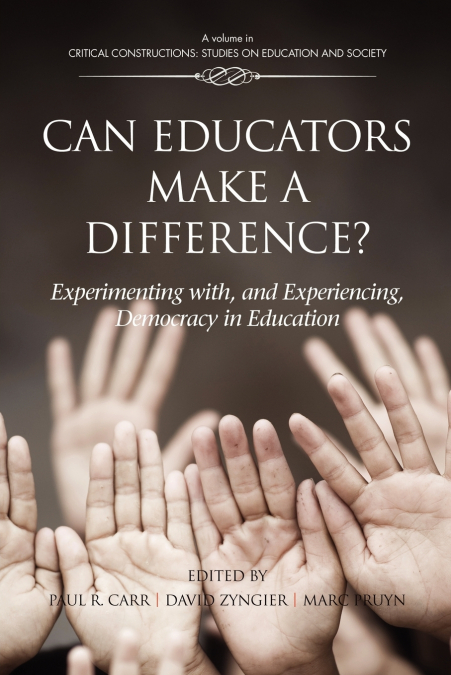
As the title of this book suggests, how we understand, perceive and experience democracy mayhave a significant effect on how we actually engage in, and with, democracy. Within theeducational context, this is a key concern, and forms the basis of the research presented in thisvolume within a critical, comparative analysis. The Global Doing Democracy Research Project(GDDRP), which currently has some 70 scholars in over 20 countries examining how educatorsdo democracy, provides the framework in which diverse scholars explore a host of concerns related to democracy and democraticeducation, including the impact of neoliberalism, political literacy, critical engagement, teaching and learning for and about democracy,social justice, and the meaning of power/power relations within the educational context.Ultimately, the contributors of this book collectively ask: can there be democracy without a critically engaged education, and,importantly, what role do educators play in this context and process? Why many educators in diverse contexts believe that they areunable, dissuaded and/or prevented from doing thick democratic education is problematized in this book but the authors also seek toillustrate that, despite the challenges, barriers and concerns about doing democracy in education, something can, and should, be done todevelop, cultivate and ingratiate schools and society with more meaningful democratic practices and processes.This book breaks new ground by using a similar empirical methodology within a number of international contexts to gage thedemocratic sentiments and actions of educators, which raises a host of questions aboutepistemology, teacher education, policy development, pedagogy, institutional cultures,conscientization, and the potential for transformational change in education.

Artículos relacionados

  • Beekeeping At The End Of The Earth
    Mark David Leech
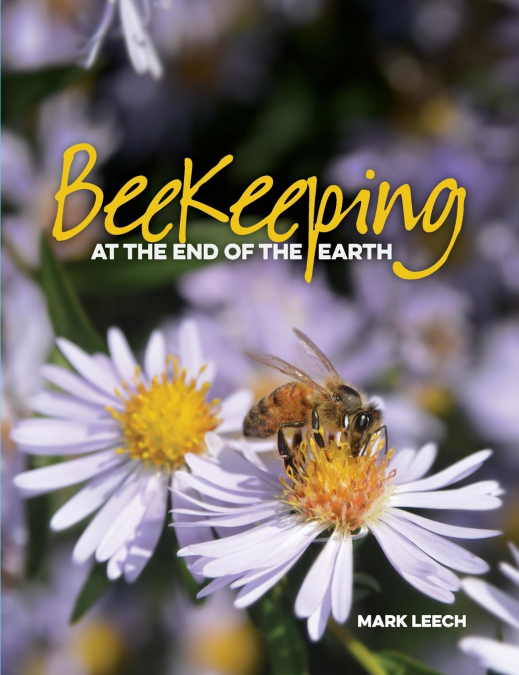
    Beekeeping at the End of the Earth, an essential read for learning about beekeeping in a cool temperate climate with a focus on Tasmania our island home.  One hundred beekeepers one hundred different ways to keep bees.Beekeeping At The End Of The Earth is a practical insight into cool climate beekeeping with a focus on Tasmania, our island home.Richly illustrated with unique di...
    Disponible

    45,16 €

  • Be the One for Kids
    Ryan Sheehy
    One person can make a difference.That person can be you. “I want to show others that one person can make the difference in a child’s life. I want all educators, parents, coaches, and everyone in between to know they have power to Be the One for Kids.” —Ryan Sheehy If you ever feel like you’re all alone or think that no one gets you, just imagine how your students feel. Kids wan...
    Disponible

    27,99 €

  • Handbook of Research on E-Learning Standards and Interoperability
    As the e-learning industry continues to expand and the methods and tools necessary to create and maintain content and infrastructure applications become more complicated, there is an inherent need for these applications to interoperate and exchange data in order to better support the needs of learners and educators. Handbook of Research on E-Learning Standards and Interoperabil...
  • Teaching in the Knowledge Society
    Antonio Cartelli
    ...
  • Enhancing Learning Through Human Computer Interaction
    Elspeth McKay
    ...
  • Learning Objects for Instruction
    Pamela Taylor Northrup
    ...