
Inicio > Sociedad y ciencias sociales > Sociedad y cultura: general > Grupos sociales > Estudios étnicos > Business Leaders and New Varieties of Capitalism in Post-Communist Europe
Business Leaders and New Varieties of Capitalism in Post-Communist Europe

Business Leaders and New Varieties of Capitalism in Post-Communist Europe


54,19 €
IVA incluido
Disponible
Editorial:
Taylor & Francis Ltd
Año de edición:
2016
Materia
Estudios étnicos
ISBN:
9781138652088
54,19 €
IVA incluido
Disponible

Selecciona una librería:

  • Librería Samer Atenea
  • Librería Aciertas (Toledo)
  • Kálamo Books
  • Librería Perelló (Valencia)
  • Librería Elías (Asturias)
  • Donde los libros
  • Librería Kolima (Madrid)
  • Librería Proteo (Málaga)

Business leaders exert extraordinary influence on institution building in market economies but they think and act within institutional settings. This book combines both an elite approach with a varieties-of-capitalism approach. Comparing Poland, Hungary and East and West Germany, we perceive the transformations in East Central Europe and in Germany after 1989 as being intertwined. Based on a joint survey, this book seeks to measure the level of the convergence of ideas among European business leaders, assuming it to be more extensive than the institutional convergence expected under the dominance of neoliberal discourse. Analyzing the institutional framework, organizational features like size, ownership and labour relations, and subjective characteristics like age, social origin, career patterns and attitudes of the recent business elites, we found significant differences between countries and the types of organization. The growing importance of economic degrees and internationalization shows astonishingly little explanatory power on the views of business leaders. The idea of a coordinated market economy is still relatively widespread among Germans, while their Hungarian and Polish counterparts are more likely to display a minimalist view of corporate responsibility to society and adverse attitudes towards employee representation. However, their attitudes frequently tend to be inconsistent, which mirrors the mixed type of capitalism in East Central Europe.

Artículos relacionados

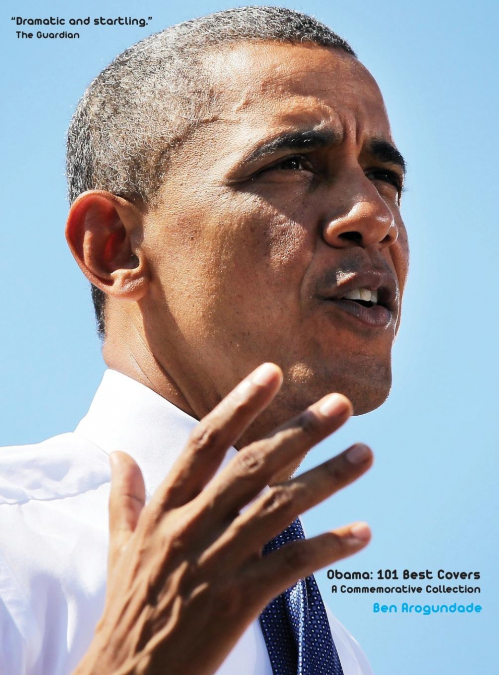
  • Barack Obama
    Ben Arogundade
    Dramatic and startling — The GuardianWitness Barack Obama as you’ve never seen him before — as feminist, communist, fashion model, Jew, Muslim terrorist, Messiah, Superman, George Washington, President Roosevelt, Julius Caesar and Hindu deity Lord Shiva.Obama: 101 Best Covers shows America’s ex-president in all these guises and more, on the front pages of the world’s leading pr...
  • Boxing in Black and White
    Andrew Lindsay
    Professional sports in America offer numerous examples of equal opportunity and broken down racial barriers. These developments call for pride and celebration. Yet skin color continues to have an influence in how Americans experience sport. From Al Campanis’ statement about the under-representation of blacks in baseball front offices to the almost exclusively white ownership...
    Disponible

    42,71 €

  • Merengue and Dominican Identity
    Julie A. Sellers
    The merengue is internationally recognized as the Dominican Republic’s national dance. It is an integral and unifying element of Dominican identity both within that nation and among emigrants abroad. Although Dominicans often make the claim that merengue has always been in their blood, the dance is relatively young, and its popularity among Dominicans of all social classes a...
    Disponible

    42,81 €

  • Some Of Us Are Brave (Vol 1)
    Thandisizwe Chimurenga
    A society born of white supremacy and patriarchy must, by definition, ignore the voices of Black women. We know that unfortunately, such an attitude will also naturally seep into every stratum of that societyPart of the contribution to correct that was the centering and airing of Black women’s voices through Some of Us Are Brave: A Black Women’s Radio Program that aired on Paci...
    Disponible

    23,12 €

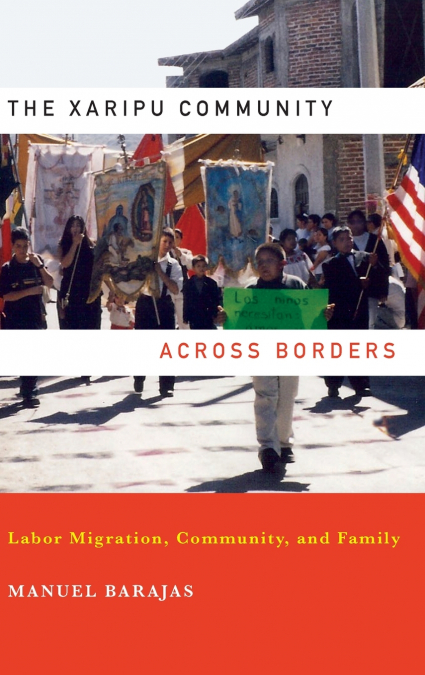
  • The Xaripu Community across Borders
    Manuel Barajas
    The Xaripu Community across Borders presents the first cross-national, comparative study that examines a Mexican-origin community’s experience with international migration and transnationalism. ...
  • Immigration and the Border
    Contributors address immigration and border politics and policies, focusing on the fourth wave of immigration and the lives of Mexican and Latino immigrants. ...