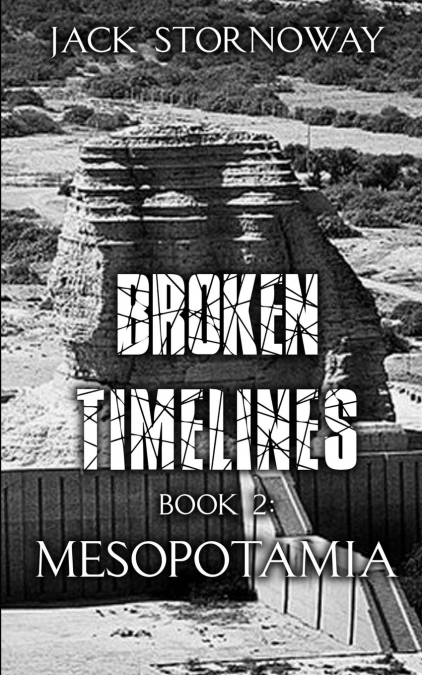

Broken Timelines Book 2 - Mesopotamia

Broken Timelines Book 2 - Mesopotamia

Jack Stornoway

15,91 €
IVA incluido
Disponible
Editorial:
Digital Ink Productions
Año de edición:
2019
Materia
Historia antigua: hasta c. 500 e. c.
ISBN:
9781990289934
15,91 €
IVA incluido
Disponible

Selecciona una librería:

  • Librería Samer Atenea
  • Librería Aciertas (Toledo)
  • Kálamo Books
  • Librería Perelló (Valencia)
  • Librería Elías (Asturias)
  • Donde los libros
  • Librería Kolima (Madrid)
  • Librería Proteo (Málaga)

The current conventional Mesopotamian timeline of dynastic Mesopotamia is impossible. Believing in it means endorsing the idea the Egyptians lagged thousand years behind the Sumerians technologically during the Middle Kingdom. This timeline forces the bronze age Harappan civilization to have existed as recently as 1200 BC, even as an iron age civilization had existed on the Ganges since at least 1800 BC. It is also not what the ancient Sumerians actually recorded, so believing it means believing that modern Assyriologists know more about ancient Sumer than the ancient Sumerians themselves. Given that the ancient Sumerians lived through it, and all Assyriologists have to go on is random bits of clay-tablets and mostly ruined city-mounds, this seems like an incredible stretch of the imagination. The fact is Assyriologists cant’ and don’t need to explain the anachronisms, because the Mesopotamian timeline is synchronized with the Egyptian timeline, which Egyptologists insist on keeping as short as possible.The idea that the ancient Sumerians built their earliest cities in the marshlands of Southern Iraq using stone imported from other countries is entirely illogical, they would have simply built them using mud-bricks as they did in the later periods. As the stone had to have been locally quarried, the region could not have been a marshland when the earliest cities built, meaning that the oldest levels of Uruk and Eridu must date back to before the region began turning into a marshland circa 9,000 years ago. The fact that they switched to using mud-bricks simply proves that the water-levels rose during the course of Sumerian history, flooding their farmlands, and ultimately forcing the Mesopotamian cultures to migrate northward to Akkadia, Babylonia, and Assyria. The fact that Assyriologists ignore the ancient Sumerian records of the antediluvian era is probably for the best, as they cannot even accept that the 1st Kish Dynasty went back to 25,000 BC, even though it has been proven that grains was being farmed in the region at that time.Unfortunately, the timeline of Egypt and Sumer are the two pillars that ancient history is built around. As the early Sumerians were trading with the early Egyptians, Assyriologists have been forced to synchronize the Mesopotamian timeline with the preposterous timeline used by Egyptologists. While this means that most of Sumerian history is has to be ignored, is also effects the timelines of all other Eurasian cultures in contact with the Mesopotamian. The Harappan civilization of ancient India was trading with the Sumerians throughout its history and went into decline around the end of the Sumero-Akkadian dynastic period, which means the entire Harappan civilization is forced to correlate with the short Conventional Mesopotamian Timeline. This forced the entire Harappan timeline into a period of 2000 years, even though some of the archaeological sites in Pakistan and India have been carbon-dated back to over 8000 BC. These broken timelines then fan out further pulling the Minoans and Greeks, Iranians, and Chinese into this confusing mess.

Artículos relacionados

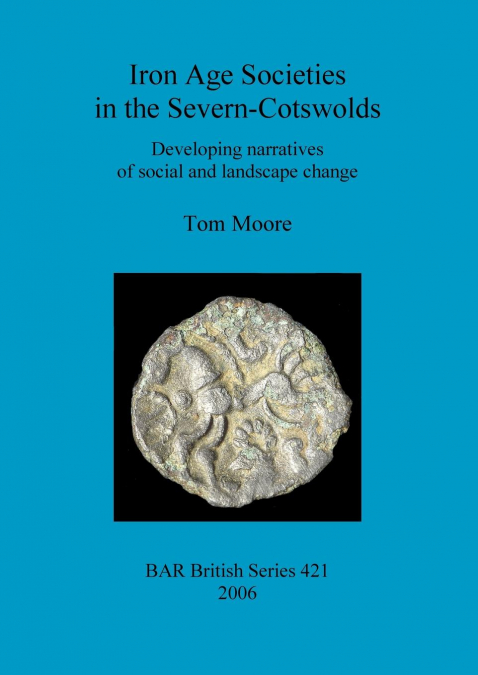
  • Iron Age Societies in the Severn-Cotswolds
    Tom Moore
    The central theme of this study is an examination of the processes of change in Iron Age social organisation and identity on a regional scale using the Severn-Cotswolds area in England as a case study. It aims to provide a coherent narrative of the period in the region based on the wealth of current data now available, providing a basic storyboard against which future studies c...
    Disponible

    144,57 €

  • Somewhere Beyond The Sea Les îles bretonnes (France)
    The Seminar on the Archaeology of Western France, which focused on the islands of Brittany, was held on 1 April 2014 at the University of Rennes 1. The desire to organize this seminar arose spontaneously from the dynamism which currently animates archaeological research on island spaces of the western seaboard of France. Indeed, the seminar took place during a pivotal period of...
    Disponible

    86,11 €

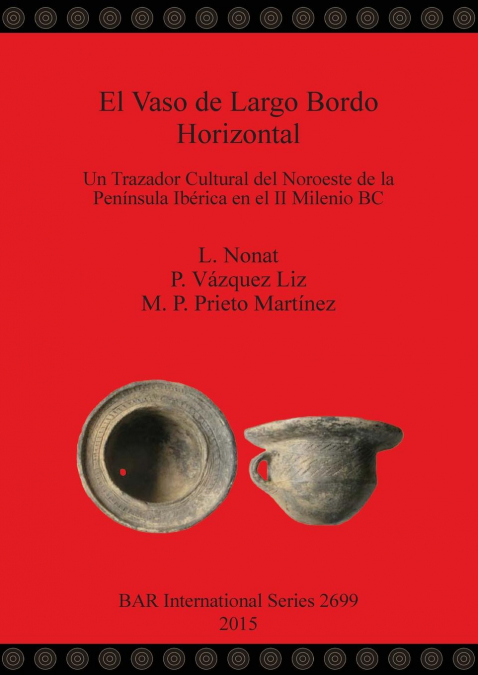
  • El Vaso de Largo Bordo Horizontal
    L. Nonat / LNonat / M. P. Prieto Martínez / MPPrieto Martínez / P. Vázquez Liz / PVázquez Liz
    In this paper the authors study a specific type of pottery from the northwest Iberian Peninsula, known as the Wide Horizontal Rim (WHR) vessel. One of its distinctive aspects is precisely the fact that it is exclusively found in this region, which now comprises the Spanish region of Galicia and northern Portugal, as far south as the River Duero. This type of pottery, of which t...
    Disponible

    115,71 €

  • A Connecting Sea
    Stašo Forenbaher
    This book includes papers stemming from a session at the EAA conference held in Zadar in September 2007.                          ...
    Disponible

    79,97 €

  • The Roman Pottery Production Site at Wickham Barn, Chiltington, East Sussex
    Chris Butler / Malcolm Lyne
    The excavations undertaken at Chiltington in East Sussex revealed two Roman pottery kilns, as well as remains from prehistory and from medieval period.The kilns are well documented, and all the finds were examined and catalogued. Three phases were identified. The pottery produced on the site indicate a strong New Forest influence. ...
    Disponible

    55,62 €

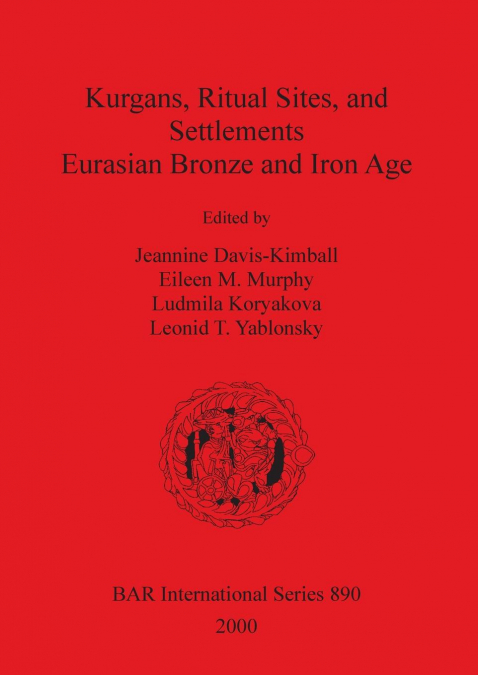
  • Kurgans, Ritual Sites, and Settlements
    Edited by: Jeannine Davis-Kimball, Eileen M. Murphy, Ludmila Koryakova and Leonid T. YablonskyThis richly illustrated volume adds immensely to the small but growing corpus of Eurasian Archaeology published in the English language. Comprised of thirty articles, the authors have focused on the Bronze Age, continuing to include the first millennium BC Early Iron Age, with a termin...
    Disponible

    158,26 €

Otros libros del autor

  • Broken Timelines Book 3 - The Indo-Europeans and Harappans
    Jack Stornoway
    The current conventional Harappan and Indo-European timelines are impossible. Believing in them means endorsing the idea the Harappan, arguably the largest civilization of the Bronze Age lagged thousand years technically behind the minor nations that surrounded them. Likewise, it means their major trading partners, the Sumerians, Elamites, and Akkadians were all technology back...
    Disponible

    14,79 €

  • Broken Timelines Book 1 - Egypt
    Jack Stornoway
    The current timeline of dynastic Egypt is impossible. Believing in it means endorsing the idea the Hyksos were time-travelers, and that the Egyptians were technologically a thousand years behind their major trading partners in Mesopotamia during the Middle Kingdom. It also is not what the ancient Egyptians actually recorded, so believing it means believing that modern Egyptolog...
    Disponible

    15,01 €

  • Mars 2194
    Jack Stornoway
    In 2194 the winds of change are sweeping across Mars. It’s been a decade since the eco-revolution started and stalled after liberating only 20% of the planet. Since then the eco-revolution has spread to Earth, and a cyber-revolution has begun in the asteroid belt. Now the revolution is spreading back to Mars, and impacting the lives of ordinary people.Eve started to laugh. She ...
    Disponible

    18,17 €