 Librería Samer Atenea
 Kálamo Books
 Librería Elías (Asturias)
 Librería Kolima (Madrid)
 Librería Proteo (Málaga)
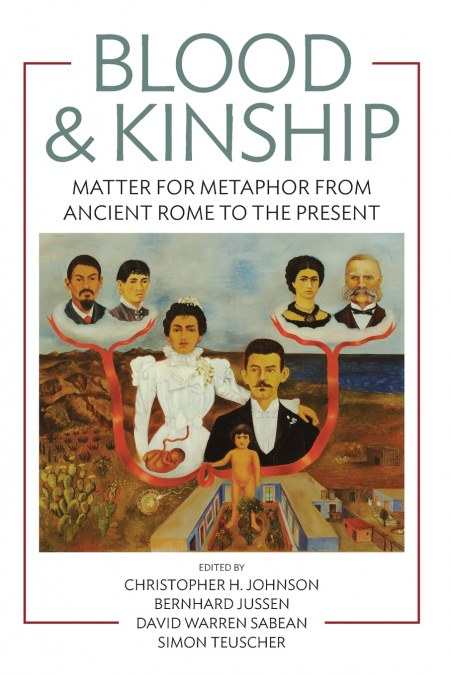
'This is a book of astonishing quality, comprising a wealth of outstanding studies that underline the various shifts and mutations that took place mostly in the late medieval and late modern periods. It is true that issues of gender could play a more prevalent role and that discourses and semantic issues are largely privileged over visual matters, cultural practices, and material culture, but rather than a critique this is an invitation for further investigations on those aspects. In any case, those limitations certainly do not make this book less inspiring and pioneering regarding the history of the blood metaphor and its shifting meanings.' · Contributions to the History of Concepts'Has family and kinship always met the same thing throughout our history? [This volume] is a collection of scholarly essays on history and anthropology looking at the foundations of western culture and history. Exploring the concept of blood and daring to take a very different perspective on the ideas of blood, many academic and scholarly minds come together to bring many fresh perspectives on these cultures. Tracing thousands of years of history and culture and offering an interesting twist of ideas throughout, Blood & Kinshipis an excellent and highly recommended addition to history and anthropology community and college library collections.' · Library Bookwatch'This is an excellent book, a sophisticated collection of scholarship that raises questions important not only to historians but also to anthropologists and other social scientists. I loved reading it...' · Jared Poley, Georgia State UniversityThe word 'blood' awakens ancient ideas, but we know little about its historical representation in Western cultures. Anthropologists have customarily studied how societies think about the bodily substances that unite them, and the contributors to this volume develop those questions in new directions. Taking a radically historical perspective that complements traditional cultural analyses, they demonstrate how blood and kinship have constantly been reconfigured in European culture. This volume challenges the idea that blood can be understood as a stable entity, and shows how concepts of blood and kinship moved in both parallel and divergent directions over the course of European history.Christopher H. Johnson is Professor Emeritus of History at Wayne State University. A National Book Award nominee and Guggenheim Fellow, his publications include The Life and Death of Industrial Languedoc, 1700-1920: The Politics of De-Industrialization (1995).Bernhard Jussen has been Professor of Medieval History at Goethe University Frankfurt since 2008. In 2007 he was awarded the Leibniz prize of the German Research Foundation. His publications include Spiritual Kinship as Social Practice (2000) and Atlas des Historischen Bildwissens (2009).David Warren Sabean is Henry J. Bruman Professor of German History at the University of California, Los Angeles, and a fellow of the American Academy of Arts and Sciences. His publications include Kinship in Neckarhausen, 1700-1870 (1998).Simon Teuscher is Professor of Medieval History at the University of Zurich. His publications include Lord’s Rights and Peasant Stories: Writing and the Formation of Tradition in the Later Middle Ages (2012).