Inicio > Tecnología, ingeniería, agricultura > Agricultura y explotación agropecuaria > Agronomía y producción agrícola > Bioremediation and Phytoremediation Technologies in Sustainable Soil Management
Bioremediation and Phytoremediation Technologies in Sustainable Soil Management

Bioremediation and Phytoremediation Technologies in Sustainable Soil Management


230,16 €
IVA incluido
Consulta disponibilidad
Editorial:
Taylor & Francis Ltd
Año de edición:
2022
Materia
Agronomía y producción agrícola
ISBN:
9781774910382

Selecciona una librería:

  • Librería Samer Atenea
  • Librería Aciertas (Toledo)
  • Kálamo Books
  • Librería Perelló (Valencia)
  • Librería Elías (Asturias)
  • Donde los libros
  • Librería Kolima (Madrid)
  • Librería Proteo (Málaga)

This 4-volume set focuses on the use of microbial bioremediation and phytoremediation to clean up pollutants in soil, such as pesticides, petroleum hydrocarbons, metals, and chlorinated solvents, which reduce the soil’s fertility and renders it unfit for plant growth. The volumes cover the many diverse eco-friendly microbial bioremediation and phytoremediation techniques for sustainable soil management.Volume 4: Degradation of Pesticides and Polychlorinated Biphenyls addresses pesticide degradation, PCBs degradation, and genetic interventions. It begins by describing environmental pesticide degradation, mechanisms and sustainability, microbes and microbial enzymes, plant microbe interactions, organophosphorus degradations and endosulfan degradation. It then goes on to discuss PCBs and degradation, cypermethrin, degradation by Phanerochaete chrysosporium, and carvone and surfactants for degradation of PCBs. The book also advocates for genetic systems for degradation of PCBs and pesticides, with discussion of the different advantages and disadvantages for each strategy and the various techniques.Other volumes in the 4-volume set:• Volume 1: Fundamental Aspects and Contaminated Sites• Volume 2: Microbial Approaches and Recent Trends• Volume 3: Inventive Techniques, Research Methods, and Case StudiesTogether, these four volumes provide in-depth coverage of the mechanisms, advantages, and disadvantages of the bioremediation and phytoremediation technologies for safe and sustainable soil management.
Artículos relacionados

  • Recherches sur les instruments aratoires et le travail du sol en Gaule Belgique
    André Marbach
    A volume of detailed research and summary into metal farming tools used in Gaul/Upper Germania from the Gallo-Romano period; indeed many of the types are still in use today. 199 finds are investigated and reconstructed to show the various techniques of manufacture, use and efficiency. The new method of analysis has shown that ploughing equipment was capable of turning the soil ...
    Disponible

    109,47 €

  • Instant Insights
    Bryan G Hopkins / Dan S Long / Dr Dan S. Long / Dr Paul Miller / Prof Bryan G. Hopkins
    This book provides a detailed overview of the history, current status and future needs of fertiliser developments in an era where sustainability is of paramount importance. Chapters also review recent advances in the use of fertiliser technologies, such as crop sprayers. ...
    Disponible

    69,64 €

  • Instant Insights
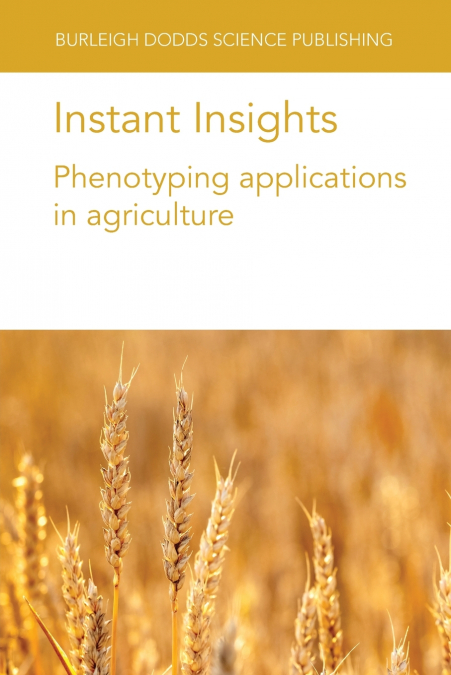
    Dr Roland Pieruschka / Dr Sherif Hamdy / Prof Ulrich Schurr / Thomas Vatter
    This book reviews recent advances in the application of phenotyping techniques to optimise crop breeding programmes. Chapters discuss the use of phenotyping as a means of improving crop yield, boosting genetic gain and identifying desirable traits in crop roots. ...
    Disponible

    69,69 €

  • FOOD SECURITY ISSUES IN ASIA
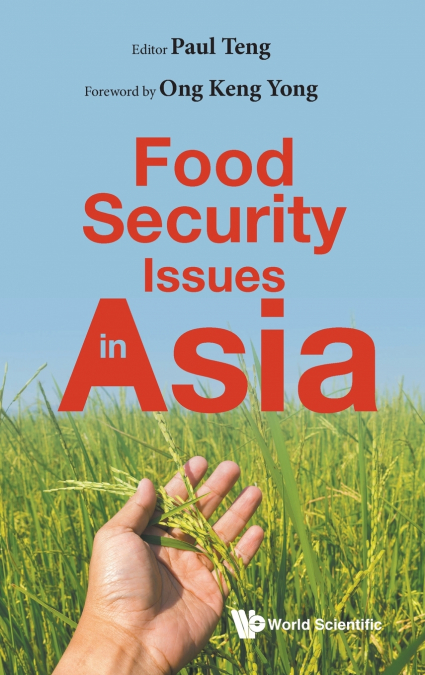
    Paul Teng / TENG PAUL
    Asia is not only the largest producer of important food items like rice and vegetable oil, but also the largest importer of commodities like soybeans and corn. Additionally, more than half the world’s population lives in Asia and thus the largest number of food insecure people are also in Asia. Food security is therefore a matter of paramount importance in Asia.This is the only...
  • Developing circular agricultural production systems
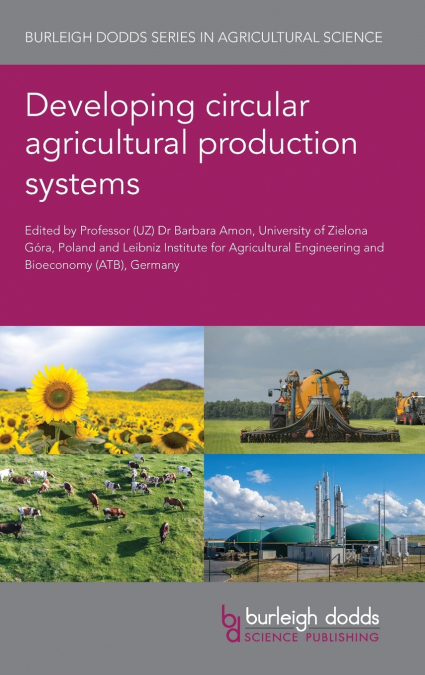
    Barbara Amon
    This collection summarises the wealth of research on the ways of achieving circular agricultural production systems through using minimal inputs, closing nutrient loops, reducing emissions and reusing and valorising agricultural wastes. ...
  • Improving nitrogen use efficiency in crop production
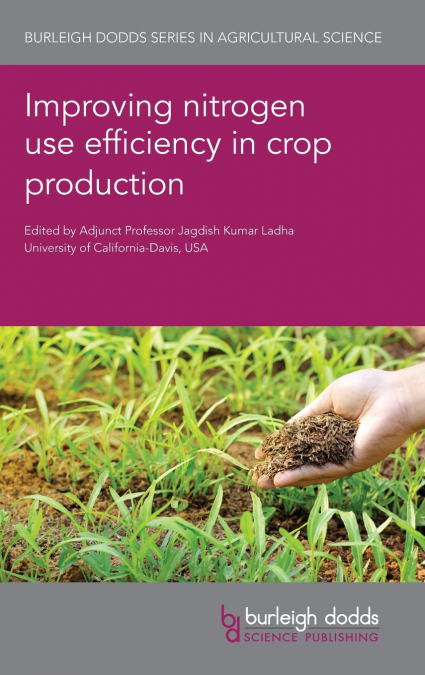
    Professor Cl Wagner-Riddle
    This collection reviews the wealth of research on ways of improving nitrogen use efficiency in crop production as a means of reducing the agricultural sector’s environmental impact and rebalancing the global nitrogen cycle. ...