Inicio > Tecnología, ingeniería, agricultura > > Química industrial > BioH2 & BioCH4 Through Anaerobic Digestion
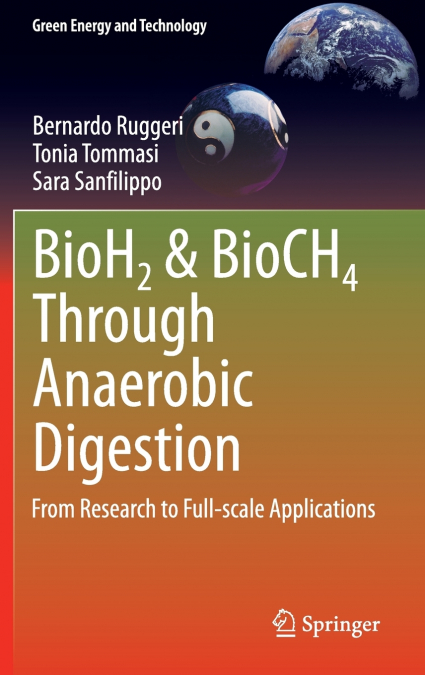
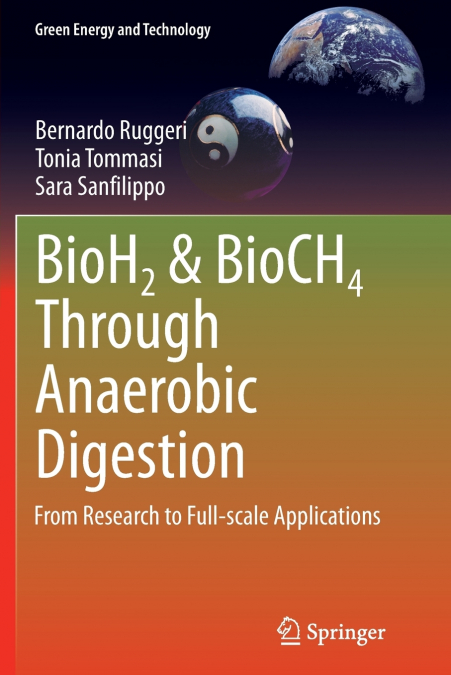
BioH2 & BioCH4 Through Anaerobic Digestion

BioH2 & BioCH4 Through Anaerobic Digestion

Bernardo Ruggeri / Sara Sanfilippo / Tonia Tommasi

136,09 €
IVA incluido
Disponible
Editorial:
Springer Nature B.V.
Año de edición:
2016
Materia
Química industrial
ISBN:
9781447169833
136,09 €
IVA incluido
Disponible

Selecciona una librería:

  • Librería Samer Atenea
  • Librería Aciertas (Toledo)
  • Kálamo Books
  • Librería Perelló (Valencia)
  • Librería Elías (Asturias)
  • Donde los libros
  • Librería Kolima (Madrid)
  • Librería Proteo (Málaga)

This book presents a Two-Stage Anaerobic Digestion (TSAD) technique for producing hydrogen and methane, following a step-by-step approach in order to guide readers through the experimental verification of the related hypothesis. In the first stage of AD, the reaction conditions are optimized to obtain the maximum amount of hydrogen, while in the second the liquid residue from the first phase is used as a substrate to produce fuel-methane. AD has traditionally been used to reduce the organic content of waste; this results in a biogas that is primarily constituted of CH4 and CO2. Over the last few decades, the conversion of organic matter into hydrogen by means of AD and selecting Hydrogen Producing Bacteria (HPB) has matured into a viable and sustainable technology among the pallet of H2 generation technologies. The combined bio-production of hydrogen and methane from Organic Waste Materials (OWM) is considered to be an ideal way of utilizing waste, and can increase energy efficiency (the substrate Heat Value converted into H2 and CH4 fuel) to roughly 80%, since the energy efficiency of H2-production alone (15%) is not energetically competitive. The two gas streams can be used either separately or in combination (Hytane®), be supplied as civilian gas or used for transportation purposes. All the aspects of this sustainable technology are taken into account, from the basic biochemical implications to engineering aspects, establishing the design criteria and the scale-up procedures for full-scale application. The sustainability of the TSAD method is assessed by applying EROI (Energy Return On Investment) and EPT (Energy Payback Time) criteria, and both the general approach and application to the field of Anaerobic Digestion are illustrated.
Artículos relacionados

  • Quantitative Structure-Activity Relationships in Drug Design, Predictive Toxicology, and Risk Assessment
    Kunal Roy
    Quantitative structure-activity relationships (QSARs) represent predictive models derived from the application of statistical tools correlating biological activity or other properties of chemicals with descriptors representative of molecular structure and/or property. Quantitative Structure-Activity Relationships in Drug Design, Predictive Toxicology, and Risk Assessment discus...
  • Chemical Compound Structures and the Higher Dimension of Molecules
    Gennadiy Vladimirovich Zhizhin
    Originally, scientists believed that molecules were three-dimensional; however, studies have proven that geometric dimensions are continuous. Therefore, molecules are able to have higher dimensions which influences how they interact with other molecules leading to advances in various fields including nanomedicine, nanotoxicology and quantum biology. Chemical Compound Structures...
  • CHEMICAL THERMODYNAMICS, 2ND EDITION
    Byung Chan Eu / BYUNG CHAN EU & MAZEN AL-GHOUL / EU BYUNG CHAN / Mazen Al-Ghoul
    This book enables the reader to learn, in a single volume, equilibrium and nonequilibrium thermodynamics as well as generalized forms of hydrodynamics for linear and nonlinear processes applied to various hydrodynamic flow processes — including chemical oscillation phenomena and pattern formations, shock wave phenomena, sound wave propagations, and Liesegang pattern formation, ...
  • CARBOHYDRATE CHEMISTRY
    ALEN RAIMO / Raimo Alen
     This book presents a comprehensive approach to the versatile and fascinating field of carbohydrate chemistry. It covers, besides the colorful historical perspective within the utilization of carbohydrates and their derivatives, all modern aspects on their properties, nomenclature, uses, and natural occurrence as such or as residues in a variety of biologically active molecules...
  • Recent Developments in Geopolymers and Alkali-Activated Materials
    Sujeong Lee
    We are compiling and publishing a collection of the latest research papers in the fields of Geopolymer and Alkali-Activated Materials (AAM). This compilation includes eight original research and two review papers covering a diverse range of topics, including various raw materials, manufacturing processes, and applications in the realms of Geopolymer and AAM. The publication aim...
  • Introduction to Chemical Engineering Fluid Mechanics
    William M. Deen
    ...

Otros libros del autor

  • BioH2 & BioCH4 Through Anaerobic Digestion
    Bernardo Ruggeri / Sara Sanfilippo / Tonia Tommasi
    This book presents a Two-Stage Anaerobic Digestion (TSAD) technique for producing hydrogen and methane, following a step-by-step approach in order to guide readers through the experimental verification of the related hypothesis. In the first stage of AD, the reaction conditions are optimized to obtain the maximum amount of hydrogen, while in the second the liquid residue from t...