
Inicio > Matemáticas y ciencia > Biologia, ciencias de la vida > Biología celular (citología) > Biochemical Roles of Eukaryotic Cell Surface Macromolecules
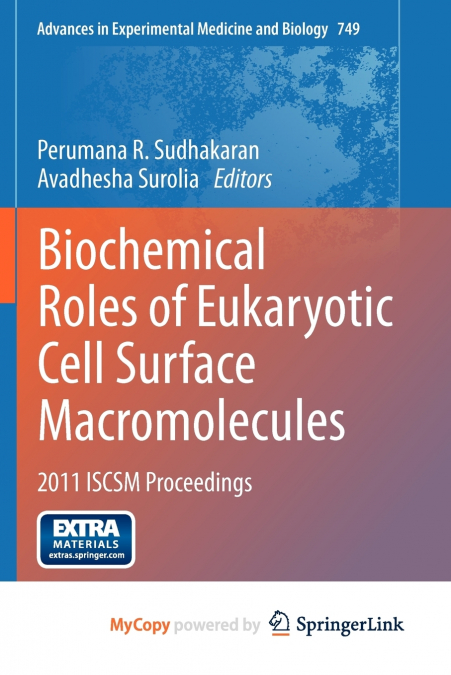
Biochemical Roles of Eukaryotic Cell Surface Macromolecules

Biochemical Roles of Eukaryotic Cell Surface Macromolecules


47,53 €
IVA incluido
Disponible
Editorial:
Springer Nature B.V.
Año de edición:
2012
Materia
Biología celular (citología)
ISBN:
9781461433828
47,53 €
IVA incluido
Disponible

Selecciona una librería:

  • Librería Samer Atenea
  • Kálamo Books
  • Librería Elías (Asturias)
  • Librería Kolima (Madrid)
  • Librería Proteo (Málaga)

Cell surface molecules are critically important in regulating cell structure and function. Recent advances on the functional role of cell surface molecules, particularly glycoconjugates are presented in this book. Comprising of 22 chapters from the 2011 International Symposium on Biochemical Roles of Eukaryotic Cell Surface Macromolecules, it covers topics on the analysis of glycome, biophysical approaches to study cell surface molecules, glycoconjugate metabolism and its dysregulation, and molecular mechanisms involved in cell-cell and cell-matrix interaction.
Artículos relacionados

  • Sex and the Origins of Death
    William R. Clark
    ...
    Disponible

    46,20 €

  • The Way of the Cell
    Franklin M. Harold
    ...
    Disponible

    31,18 €

  • Haematopoietic and Lymphoid Cell Culture
    Margaret J. Dallman / Margaret JDallman
    ...
    Disponible

    85,29 €

  • Mitochondria
    Douglas C Wallace / Richard J Youle
    'A subject collection from Cold Spring Harbor perspectives in biology.' ...
  • Organelle and Molecular Targeting
    Drugs must be delivered to the target tissue or, better yet, the target organelles. A more specific target minimizes toxicity and side effects and maximizes therapeutic effect. This book is a comprehensive review of Organelle Targeting. ...
  • How Life is Different
    Vitaly Shubin
    The book examines basic principles of the structure and organization of living organisms and their differences from objects of inanimate nature. It is shown how a single program-information structure permeates all evolutionary stages of life, including the cell, multicellular organisms and humans. ...