Franz Delitzsch / Karl Friedrich Keil
 Librería Samer Atenea
 Kálamo Books
 Librería Elías (Asturias)
 Librería Kolima (Madrid)
 Librería Proteo (Málaga)
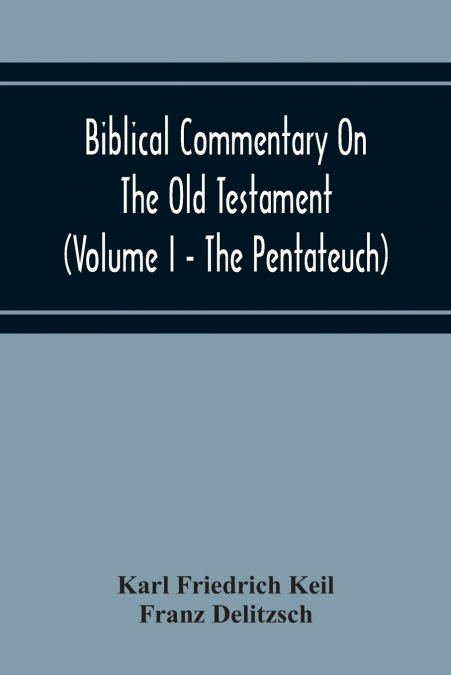
Definitive insight into the Pentateuch. Scholarly, readable, vital, and measured. Friedrich Keil’s Biblical Commentary on the Old Testament (Volume I - The Pentateuch) guides readers through Genesis to Deuteronomy with rigorous exegesis, marrying philological care to theological reflection and measured historical bible analysis. Designed for intense study as much as serious reading, it serves as an old testament commentary that supports pentateuch bible study groups, supplies pastors with a dependable pastor reference work, and doubles as a seminary textbook resource in settings that value close textual engagement. Keil writes with precise attention to language and context, making complex matters accessible without flattening scholarly nuance. Placed within the wider Keil and Delitzsch conversation and the Christian academic series that grew from nineteenth century theology, the volume belongs to a long-standing biblical exegesis collection and endures as a torah interpretation guide prized by students of ancient israel scholarship. The commentary’s sustained engagement with Hebrew idiom and historical background helps bring ancient narratives into sharper focus, offering context and interpretative options rather than dogmatic closure. It is equally at home on the shelf of a lay reader intent on deeper Bible study and in the stacks of a theological library.Republished by Alpha Editions in a careful modern edition, this volume preserves the spirit of the original while making it effortless to enjoy today - a heritage title prepared for readers and collectors alike. Of clear historical significance, Keil’s work epitomises a strain of nineteenth century theology that sought to combine historical enquiry with devout exposition; its scholarship continues to inform historical and theological study. Casual readers seeking a steady guide through the Torah will find readable depth, while classic-literature collectors and academic libraries will prize the volume for its provenance and continuing utility as a reference work. Collectors of classic theological works will appreciate the edition’s careful presentation and the continuity it provides with original nineteenth century scholarship; students and ministers will value its balance of exposition and reference.