AA.VV
 Librería Samer Atenea
 Kálamo Books
 Librería Elías (Asturias)
 Librería Kolima (Madrid)
 Librería Proteo (Málaga)
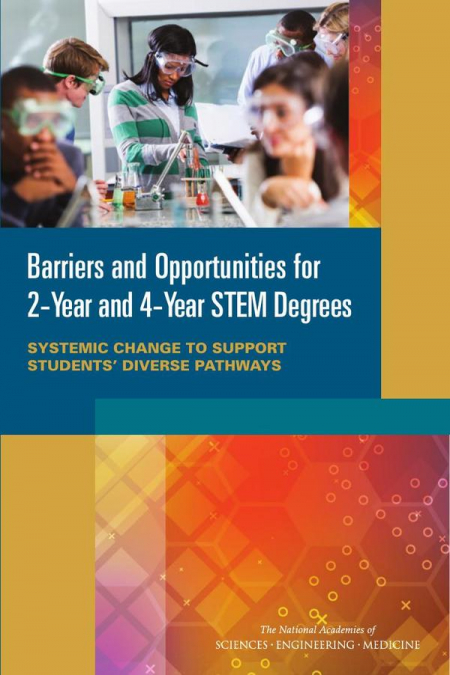
Nearly 40 percent of the students entering 2- and 4-year postsecondary institutions indicated their intention to major in science, technology, engineering, and mathematics (STEM) in 2012. But the barriers to students realizing their ambitions are reflected in the fact that about half of those with the intention to earn a STEM bachelor’s degree and more than two-thirds intending to earn a STEM associate’s degree fail to earn these degrees 4 to 6 years after their initial enrollment. Many of those who do obtain a degree take longer than the advertised length of the programs, thus raising the cost of their education. Are the STEM educational pathways any less efficient than for other fields of study? How might the losses be ’stemmed’ and greater efficiencies realized? These questions and others are at the heart of this study.Barriers and Opportunities for 2-Year and 4-Year STEM Degrees reviews research on the roles that people, processes, and institutions play in 2-and 4-year STEM degree production. This study pays special attention to the factors that influence students’ decisions to enter, stay in, or leave STEM majors—quality of instruction, grading policies, course sequences, undergraduate learning environments, student supports, co-curricular activities, students’ general academic preparedness and competence in science, family background, and governmental and institutional policies that affect STEM educational pathways.Because many students do not take the traditional 4-year path to a STEM undergraduate degree, Barriers and Opportunities describes several other common pathways and also reviews what happens to those who do not complete the journey to a degree. This book describes the major changes in student demographics; how students, view, value, and utilize programs of higher education; and how institutions can adapt to support successful student outcomes. In doing so, Barriers and Opportunities questions whether definitions and characteristics of what constitutes success in STEM should change. As this book explores these issues, it identifies where further research is needed to build a system that works for all students who aspire to STEM degrees. The conclusions of this report lay out the steps that faculty, STEM departments, colleges and universities, professional societies, and others can take to improve STEM education for all students interested in a STEM degree.