 Librería Samer Atenea
 Kálamo Books
 Librería Elías (Asturias)
 Librería Kolima (Madrid)
 Librería Proteo (Málaga)
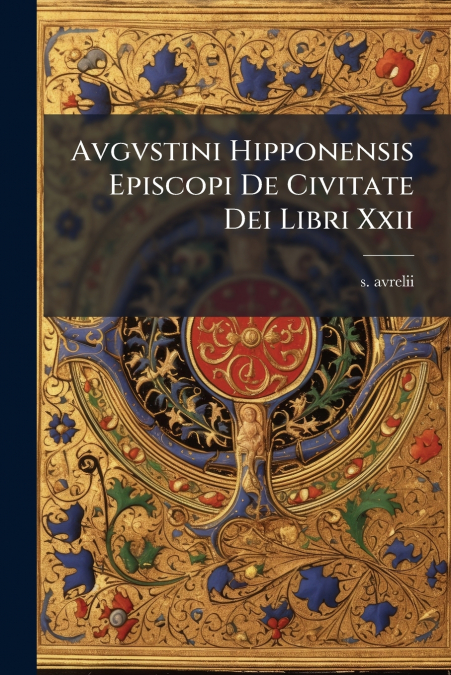
Avgvstini Hipponensis Episcopi De Civitate Dei Libri XXII, commonly known as 'The City of God,' is a foundational work of Christian philosophy and theology by Augustine of Hippo. Written in Latin in the early 5th century AD, this monumental work addresses profound questions about God, faith, history, and the nature of good and evil, particularly in the context of the decline of the Roman Empire. Augustine’s 'City of God' presents a sweeping vision of two cities: the earthly city, driven by self-interest, and the City of God, motivated by love of God. Through its 22 books, Augustine explores themes of justice, peace, and the ultimate destiny of humanity. His arguments draw upon Scripture, classical philosophy, and historical events to offer a comprehensive worldview that has influenced Western thought for centuries. This enduring work remains a crucial text for understanding the intersection of religion, politics, and history.This work has been selected by scholars as being culturally important, and is part of the knowledge base of civilization as we know it. This work was reproduced from the original artifact, and remains as true to the original work as possible. Therefore, you will see the original copyright references, library stamps (as most of these works have been housed in our most important libraries around the world), and other notations in the work.This work is in the public domain in the United States of America, and possibly other nations. Within the United States, you may freely copy and distribute this work, as no entity (individual or corporate) has a copyright on the body of the work.As a reproduction of a historical artifact, this work may contain missing or blurred pages, poor pictures, errant marks, etc. Scholars believe, and we concur, that this work is important enough to be preserved, reproduced, and made generally available to the public. We appreciate your support of the preservation process, and thank you for being an important part of keeping this knowledge alive and relevant.