Inicio > > Ciencias de la computación > Inteligencia artificial > Artificial Intelligence in Economics and Finance Theories
Artificial Intelligence in Economics and Finance Theories

Artificial Intelligence in Economics and Finance Theories

Tankiso Moloi / Tshilidzi Marwala

208,43 €
IVA incluido
Disponible
Editorial:
Springer Nature B.V.
Año de edición:
2021
Materia
Inteligencia artificial
ISBN:
9783030429645
208,43 €
IVA incluido
Disponible

Selecciona una librería:

  • Librería Samer Atenea
  • Librería Aciertas (Toledo)
  • Kálamo Books
  • Librería Perelló (Valencia)
  • Librería Elías (Asturias)
  • Donde los libros
  • Librería Kolima (Madrid)
  • Librería Proteo (Málaga)

As Artificial Intelligence (AI) seizes all aspects of human life, there is a fundamental shift in the way in which humans are thinking of and doing things. Ordinarily, humans have relied on economics and finance theories to make sense of, and predict concepts such as comparative advantage, long run economic growth, lack or distortion of information and failures, role of labour as a factor of production and the decision making process for the purpose of allocating resources among other theories. Of interest though is that literature has not attempted to utilize these advances in technology in order to modernize economic and finance theories that are fundamental in the decision making process for the purpose of allocating scarce resources among other things. With the simulated intelligence in machines, which allows machines to act like humans and to some extent even anticipate events better than humans, thanks to their ability to handle massive data sets, this book will use artificial intelligence to explain what these economic and finance theories mean in the context of the agent wanting to make a decision.The main feature of finance and economic theories is that they try to eliminate the effects of uncertainties by attempting to bring the future to the present. The fundamentals of this statement is deeply rooted in risk and risk management. In behavioural sciences, economics as a discipline has always provided a well-established foundation for understanding uncertainties and what this means for decision making. Finance and economics have done this through different models which attempt to predict the future. On its part, risk management attempts to hedge or mitigate these uncertainties in order for 'the planner' to reach the favourable outcome. This book focuses on how AI is to redefine certain important economic and financial theories that are specifically used for the purpose of eliminating uncertainties so as to allow agents to make informed decisions. In effect, certain aspects of finance and economic theories cannot be understood in their entirety without the incorporation of AI.
Artículos relacionados

  • Artificial Cognition Systems
    ...
    Disponible

    125,44 €

  • Cross-Disciplinary Applications of Artificial Intelligence and Pattern Recognition
    Vijay Kumar Mago
    The need for intelligent machines in areas such as medical diagnostics, biometric security systems, and image processing motivates researchers to develop and explore new techniques, algorithms, and applications in this evolving field. Cross-Disciplinary Applications of Artificial Intelligence and Pattern Recognition: Advancing Technologies provides a common platform for researc...
    Disponible

    257,39 €

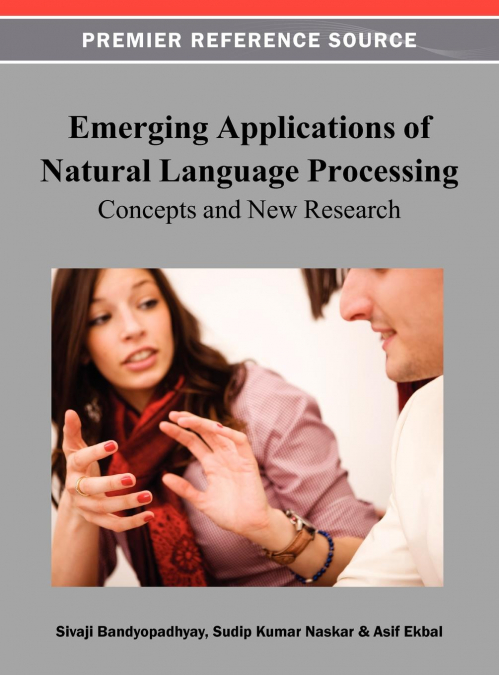
  • Emerging Applications of Natural Language Processing
    Over the last few years, the area of Natural Language Processing has drastically grown in recognition, not only within the research and development community, but also with industry professionals. As NLP continues to be discussed and researched, certain areas continue to grow and mature. As a result, the need for advanced research and information is in high demand. Emerging App...
    Disponible

    256,06 €

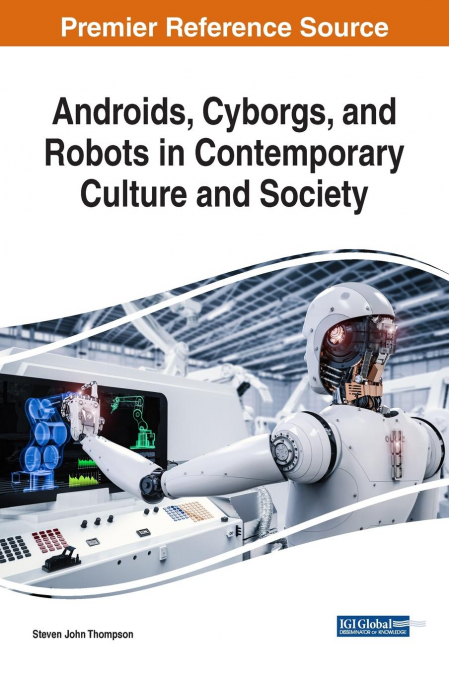
  • Androids, Cyborgs, and Robots in Contemporary Culture and Society
    Steven John Thompson
    Mankind’s dependence on artificial intelligence and robotics is increasing rapidly as technology becomes more advanced. Finding a way to seamlessly intertwine these two worlds will help boost productivity in society and aid in a variety of ways in modern civilization. Androids, Cyborgs, and Robots in Contemporary Culture and Society is an essential scholarly resource that delve...
    Disponible

    268,90 €

  • Deep Learning Innovations and Their Convergence With Big Data
    The expansion of digital data has transformed various sectors of business such as healthcare, industrial manufacturing, and transportation. A new way of solving business problems has emerged through the use of machine learning techniques in conjunction with big data analytics. Deep Learning Innovations and Their Convergence With Big Data is a pivotal reference for the latest sc...
    Disponible

    268,78 €

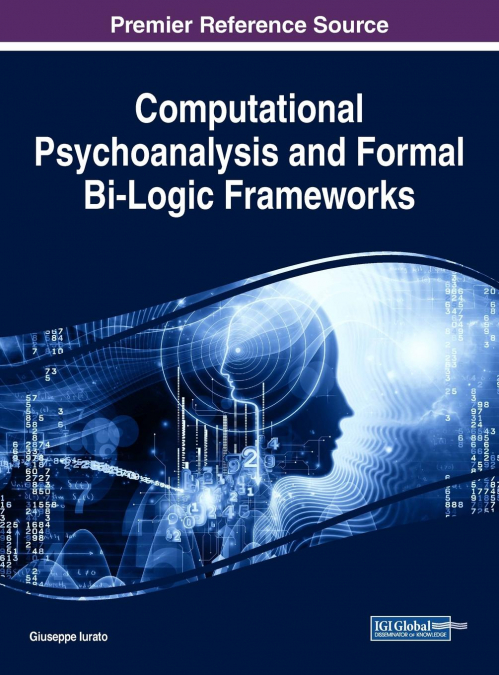
  • Computational Psychoanalysis and Formal Bi-Logic Frameworks
    Giuseppe Iurato
    Computational psychoanalysis is a new field stemming from Freudian psychoanalysis. The new area aims to understand the primary formal structures and running mechanisms of the unconscious while implementing them into computer sciences. Computational Psychoanalysis and Formal Bi-Logic Frameworks provides emerging information on this new field which uses psychoanalysis and the unc...
    Disponible

    282,18 €

Otros libros del autor

  • Artificial Intelligence and the Changing Nature of Corporations
    Tankiso Moloi / Tshilidzi Marwala
    This book explains how various forms of artificial intelligence, namely machine learning, natural language processing, and robotic process automation, could provide a source of competitive advantage to firms deploying them compared to those firms that would not have deployed these technologies. The advantages of machine learning, natural language processing, and robotic process...
    Disponible

    79,33 €

  • Artificial Intelligence and the Changing Nature of Corporations
    Tankiso Moloi / Tshilidzi Marwala
    This book explains how various forms of artificial intelligence, namely machine learning, natural language processing, and robotic process automation, could provide a source of competitive advantage to firms deploying them compared to those firms that would not have deployed these technologies. The advantages of machine learning, natural language processing, and robotic process...
    Disponible

    108,72 €

  • Artificial Intelligence in Economics and Finance Theories
    Tankiso Moloi / Tshilidzi Marwala
    As Artificial Intelligence (AI) seizes all aspects of human life, there is a fundamental shift in the way in which humans are thinking of and doing things. Ordinarily, humans have relied on economics and finance theories to make sense of, and predict concepts such as comparative advantage, long run economic growth, lack or distortion of information and failures, role of labour ...
    Disponible

    48,58 €