
Inicio > Medicina > Otras ramas de la medicina > Farmacología > Arthropod Venom Components and Their Potential Usage
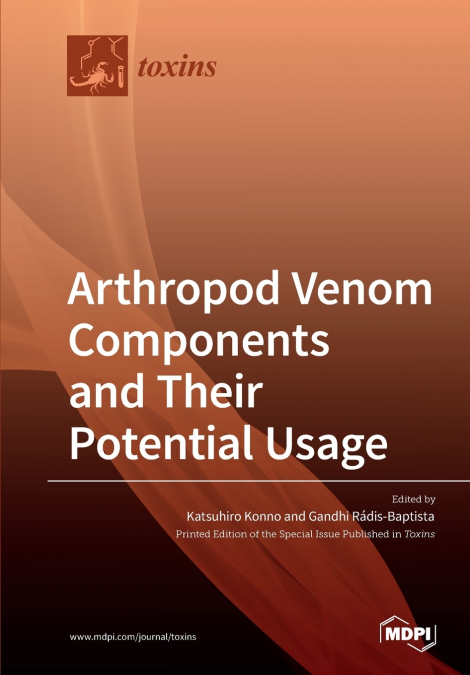
Arthropod Venom Components and Their Potential Usage

Arthropod Venom Components and Their Potential Usage

Arthropod Venom Components and Their Potential Usage


91,88 €
IVA incluido
Disponible
Editorial:
MDPI AG
Año de edición:
2020
Materia
Farmacología
ISBN:
9783039285402
91,88 €
IVA incluido
Disponible

Selecciona una librería:

  • Librería Samer Atenea
  • Librería Aciertas (Toledo)
  • Kálamo Books
  • Librería Perelló (Valencia)
  • Librería Elías (Asturias)
  • Donde los libros
  • Librería Kolima (Madrid)
  • Librería Proteo (Málaga)

Thousands of arthropod species, ranging from arachnids (spiders and scorpions) to hymenopterans (ants, bees, and wasps) and myriapods (centipedes), are venomous and use their venoms for both defense and predation. These venoms are invariably harmful to humans, and some may cause serious injuries, e.g., those from scorpions, spiders, and wasps. Arthropods’ venoms are also known as rich sources of biologically active compounds and have attracted the attention of toxin researchers for years. In this century, venom component analysis has progressed considerable due to the advances in analytical techniques, in particular, mass spectrometry and next-generation deep (DNA and RNA) sequencing. As such, proteomic and peptidomic analyses using LC–MS have enabled the full analysis of venom components, revealing a variety of novel peptide and protein toxins sequences and scaffolds, potentially useful as pharmacological research tools and for the development of highly selective peptide ligands and therapeutic leads, like chlorotoxin. Due to their specificity for numerous ion-channel subtypes, including voltage- and ligand-gated ion channels, arthropod neurotoxins have been investigated to dissect and treat neurodegenerative diseases and control epileptic syndromes. This Special Issue collects information on such progress, encouraging contributions on the chemical and biological characterization of venom components, not only peptides and proteins, but also small molecules, their mechanisms of action, and the development of venom-derived peptide leads.

Artículos relacionados

  • Identification and Characterization of Antimicrobial Peptides with Therapeutic Potential
    Guangshun Wang
    Antimicrobial peptides are key defense molecules adopted by all life forms to prevent infection. They also have other beneficial effects such as boosting immune response, anticancer, and wound healing. The antiviral effects of antimicrobial peptides have laid the foundations for developing new agents to combat seasonal Flu, HIV-1, RSV, Zika, and Ebola. This eBook is constructed...
    Disponible

    67,96 €

  • Mind Maps of Clinical Research Basics
    Amrita Akhouri
    The concepts of Clinical Research have been depicted through mind maps in this book which makes the subject fundamentals very easy to understand and convenient to revise. The chapter on career in clinical research gives an insight into the main job roles currently known in this field along with the focus on how to build preparedness for job interviews. Hence, this book will be ...
    Disponible

    25,42 €

  • Marine Polysaccharides Volume 2
    Paola Laurienzo
    The field of marine polysaccharides is constantly evolving, due to progress in the discovery and production of new marine polysaccharides. Seaweed remains the most abundant source of polysaccharides, but recent advances in biotechnology have allowed the production of large quantities of polysaccharides from a variety of micro-algae, by controlling growth conditions and tailorin...
    Disponible

    75,84 €

  • Marine Polysaccharides Volume 3
    Paola Laurienzo
    The field of marine polysaccharides is constantly evolving, due to progress in the discovery and production of new marine polysaccharides. Seaweed remains the most abundant source of polysaccharides, but recent advances in biotechnology have allowed the production of large quantities of polysaccharides from a variety of micro-algae, by controlling growth conditions and tailorin...
    Disponible

    116,84 €

  • Herbs Used for Hair Growth
    Devi Raman / V. Varalakshmi
    Natural medicine has many benefits, from nourishing the scalp to stimulating hair follicles. Some popular herbs that aid hair growth include rosemary, ginseng, aloe vera, and fenugreek. Each plant has unique properties that help strengthen hair, prevent breakage, and promote growth, healthy growth. Of course, many herbs are popular for their beneficial effects in promoting hair...
    Disponible

    54,32 €

  • Novel Anti-proliferative Agents
    Valentina Onnis
    This Special Issue of Pharmaceuticals presented the recent findings on antiproliferative compounds and highlighted possible routes to discover new drugs used to treat cancer. In this Special Issue, different studies on kinase and methyltransferase-like proteins 3 inhibitors and compounds capable of altering the tumor microenvironment or acting at the mitotic stage of the cell c...