
Aristotle’s Favorite Tragedy

Aristotle’s Favorite Tragedy

Aristotle's Favorite Tragedy

Gregory L Scott

12,49 €
IVA incluido
Disponible
Editorial:
ExistencePS
Año de edición:
2018
Materia
Obras de teatro, textos teatrales
ISBN:
9780999704912
Páginas:
256
Encuadernación:
Rústica
12,49 €
IVA incluido
Disponible

Selecciona una librería:

  • Librería Samer Atenea
  • Librería Aciertas (Toledo)
  • Kálamo Books
  • Librería Perelló (Valencia)
  • Librería Elías (Asturias)
  • Donde los libros
  • Librería Kolima (Madrid)
  • Librería Proteo (Málaga)

The Poetics is considered the foundation of Western dramatic and literary theory, and readers interpret Aristotle on the basis of Chapter 13 to claim that Oedipus, with its pity, fear and horrible ending, is always the finest type of tragedy. Some specialists, however, discuss Aristotle also stating in Chapter 14 that the happily-ending plays like Cresphontes are the finest, with the type of plays like Oedipus, which involve an agent killing or committing great suffering to a family member and only recognizing the family connection afterwards, being second-best. This passage obviously creates a dilemma. No commentator has ever been able to resolve it to the satisfaction of the profession, and as a result Oedipus maintains its stature. Indeed, the specialist Elizabeth Belfiore recently published ('The Elements of Tragedy,' in A Companion to Aristotle, ed. Georgios Anagnostopoulos, 2009) a defense of Oedipus as the best play for Aristotle in spite of the explicit ranking of Chapter 14.Gregory Scott here demonstrates instead that Aristotle actually means what he says in Chapter 14: Tragōidia, originally 'goat-song' or the like, and typically translated misleadingly as 'tragedy,' really involves for him serious drama primarily about good people, and Aristotle says three times in the book that it can end in misfortune or in fortune. Scott, building on his ground-breaking work from 2003, 'Purging the Poetics' (Oxford Studies in Ancient Philosophy) that is reprinted in his Aristotle on Dramatic Musical Composition: The Real Role of Literature, Catharsis, Music and Dance in the POETICS (2nd ed., 2018), resolves the dilemma between Chapters 13 and 14 once and for all, showing that the latter half of Chapter 14 is about tragōidia in general while the earlier text is only about one or two (or a mixture) of the subclasses of tragōidia as given in Chapter 18 and rarely discussed by commentators: 'tragedy' of suffering, complex 'tragedy,' 'tragedy' of character, and simple/spectacular 'tragedy.' The chapters are arbitrary divisions from the Renaissance and the texts must have both come from different original treatises of Aristotle and been assembled badly after his death, or the texts were part of a much larger work, now lost, in which the rest of the theory and the transitions from one topic to another were delineated.In addition to resolving the perennial dilemma and shining a better light on Aristotle’s notion of 'tragedy,' Scott also explains why the best type of play like Cresphontes is better than the second-best one, when they both have recognition and reversal, the conditions for the best kind of plot for Aristotle. With all of this in place, we can easily detect another dilemma that rarely gets discussed in the ranking of the four types of 'tragedy' in Chapter 14: The third best type, which is not problematic in this context, involves an agent who knows someone is a family member and who kills the member anyway; we can easily deduce Medea is an example. However, all known commentators accept that Aristotle speaks of Sophocles’ horribly-ending Antigone when he exemplifies the worst of the four types. Yet the reason Aristotle gives for the last-place finish is that Antigone is both apathes, 'without suffering,' and miaron, 'shocking' or 'revolting.' Scott explains in detail not only that Aristotle must be speaking of Euripides’ version of Antigone, which ends happily, but why its last-place ranking results.For Updates and Errata:  www.epspress.com/ArFavUpdates.html 3
Artículos relacionados

  • What Really Goes on in the Workplace
    Sharon Ford
    What really goes on in the workplace is about strippers, prostitutes, pimps, drugs, marital affairs and just plain old drama. It doesn't matter your age: race, or gender, drama is still drama. 3 ...
    Disponible

    21,81 €

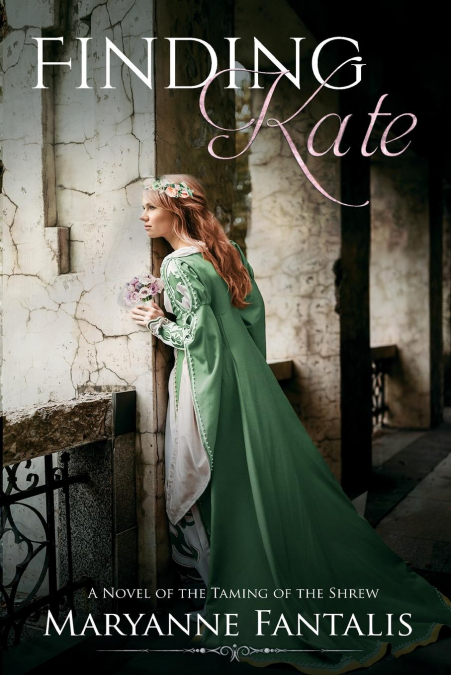
  • Finding Kate
    Maryanne Fantalis
    Kathryn’s strong will and sharp tongue have branded her a shrew in her small town.Now, not even the generous dowry offered by her wealthy father can tempt any man to court her. But when Sir William rides into town on his magnificent war horse, Kathryn’s world turns upside down.William is like a burr in Kathryn’s side from the very beginning. Even the way he insists on calling h...
    Disponible

    22,50 €

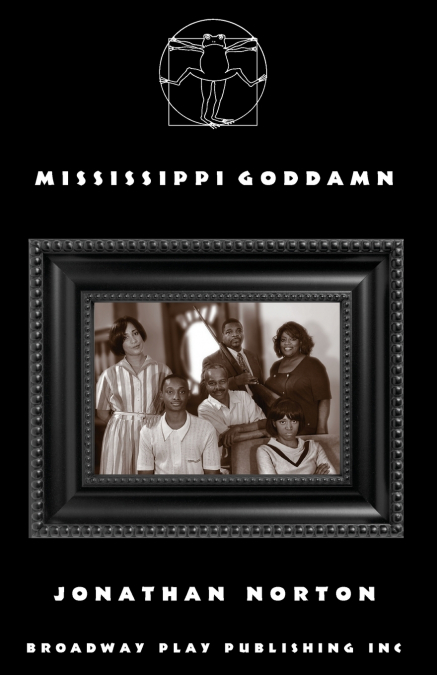
  • Mississippi Goddamn
    Jonathan Norton
       “Some shows have warnings for strobe lights. Some have them for loud gunshots.  Some for smoke.   MISSISSIPPI GODDAMN, a new play by Jonathan Norton should have one for intensity.   Granted, anyone attending a play about civil rights pioneer Medgar Evers set in 1963 Jackson, Mississippi, should expect some strife. Blood in the battle for racial equality is no surprise, but f...
    Disponible

    17,87 €

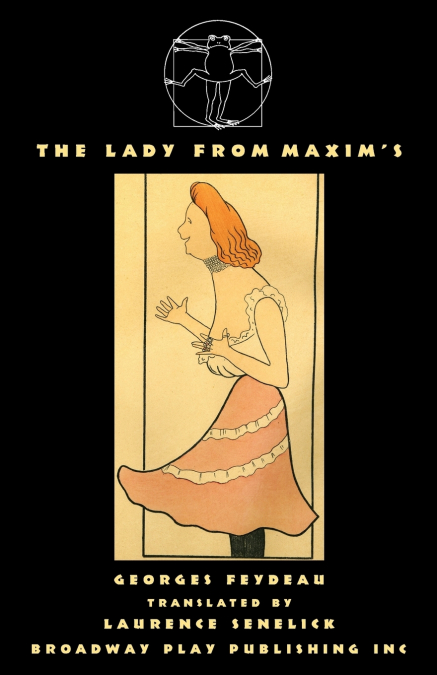
  • The Lady From Maxim’s
    Georges Feydeau / Laurence Senelick
       “It seems to me that for fertility in droll inventions, the perpetual outpouring of unforeseen misunderstandings, for the inexhaustible gaiety of dialogue, Feydeau’s new play is superior to everything he’s written so far. The most astonishing thing is the sureness with which everything is controlled, explained, justified, in the most extravagant buffoonery. The cross-purpose...
    Disponible

    21,85 €

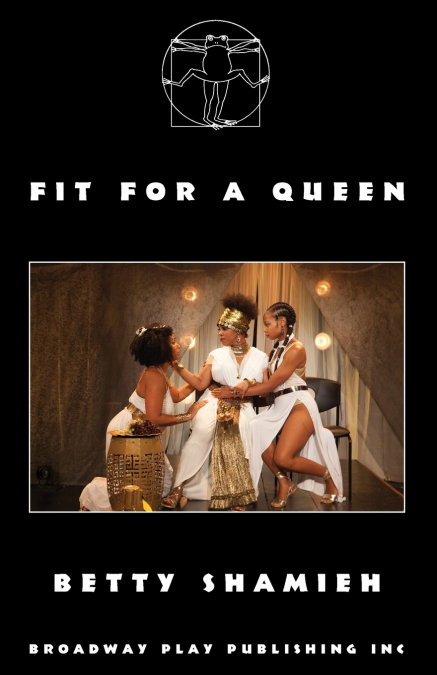
  • Fit For A Queen
    Betty Shamieh
       “Plenty of glamorous backstabbing, diva dissing and sexual double-crossing…has every right to claim the name Dynasty for itself.  But the title character in Betty Shamieh’s bouncy, bumpy comic melodrama is the real thing. A queen, I mean, and not just of the self-dramatizing type. Scratch that. She’s more than a queen. She’s a pharaoh, one Hatshepsut, who reigned over Egypt ...
    Disponible

    17,30 €

  • Who’s Holiday!
    Matthew Lombardo
       “A raunchy riff on Dr Seuss’s yuletide tale… The little tyke has become a bottle-blonde adult who spends her days in a trailer appointed with Airstream functionality and seasonal kitsch…brassy, very funny…a holiday offering that dirties up Christmas while ultimately reveling in its spirit.” Elisabeth Vincentelli, New York Times   “This irreverent, adults-only sequel…dares to...
    Disponible

    18,16 €

Otros libros del autor

  • Aristotle’s 'Not to Fear' Proof for the Necessary Eternality of the Universe
    Gregory L Scott
    Aristotle’s Unmoved Mover of Metaphysics Lambda, often called God, still convinces some non-believers to become theists, despite its paradoxical nature. One recent case is the British philosopher, Antony Flew, co-author of There is a God: How the World’s Most Notorious Atheist Changed His Mind (2007). As Pure Actuality, the Mover has no potentiality, matter or physicality of an...
    Disponible

    36,07 €

  • Aristotle’s 'Not to Fear' Proof for the Necessary Eternality of the Universe
    Gregory L Scott
    Aristotle’s Unmoved Mover of Metaphysics Lambda, often called God, still convinces some non-believers to become theists, despite its paradoxical nature. One recent case is the British philosopher, Antony Flew, co-author of There is a God: How the World’s Most Notorious Atheist Changed His Mind (2007). As Pure Actuality, the Mover has no potentiality, matter or physicality of an...
    Disponible

    55,61 €

  • A Primer on Aristotle’s DRAMATICS
    Gregory L Scott
    This book is primarily for students and is designed to be used in tandem with the ancient Greek text or with any of the dozens of available translations generally titled The Poetics that cost a few dollars each or that are free on the Internet. The Primer provides the basic findings of Aristotle on Dramatic Musical Composition: The Real Role of Literature, Catharsis, Music and ...
    Disponible

    75,29 €

  • A Primer on Aristotle’s DRAMATICS
    Gregory L Scott
    This book is primarily for students and is designed to be used in tandem with the ancient Greek text or with any of the dozens of available translations generally titled The Poetics that cost a few dollars each or that are free on the Internet. The Primer provides the basic findings of Aristotle on Dramatic Musical Composition: The Real Role of Literature, Catharsis, Music and ...
    Disponible

    37,45 €

  • Aristotle’s Favorite Tragedy
    Gregory L Scott
    The Poetics is considered the foundation of Western dramatic and literary theory, and readers interpret Aristotle on the basis of Chapter 13 to claim that Oedipus, with its pity, fear and horrible ending, is always the finest type of tragedy. Some specialists, however, discuss Aristotle also stating in Chapter 14 that the happily-ending plays like Cresphontes are the finest, wi...
    Disponible

    21,66 €