 Librería Samer Atenea
 Kálamo Books
 Librería Elías (Asturias)
 Librería Kolima (Madrid)
 Librería Proteo (Málaga)
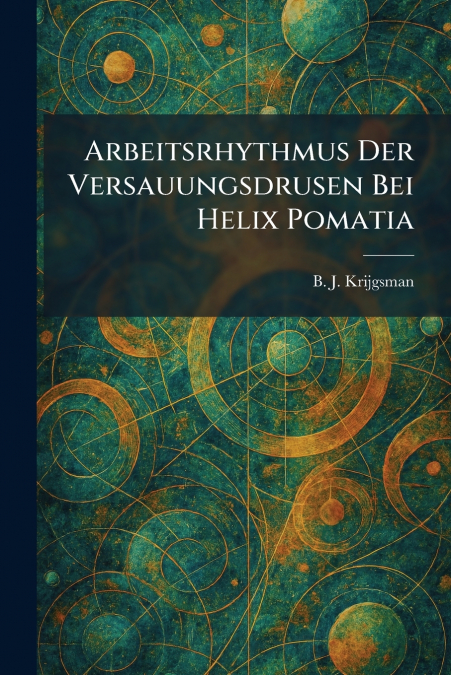
'Arbeitsrhythmus Der Verdauungsdrüsen Bei Helix Pomatia' ist eine bedeutende wissenschaftliche Untersuchung des Zoologen B.J. Krijgsman über die physiologischen Abläufe bei der Weinbergschnecke. Das Werk widmet sich der detaillierten Analyse des Arbeitsrhythmus der Verdauungsdrüsen und bietet tiefe Einblicke in die Biologie und den Stoffwechsel dieser Weichtiere.Durch sorgfältige Beobachtung und experimentelle Forschung dokumentiert Krijgsman die zyklischen Veränderungen in den Zellen der Drüsen während des Verdauungsprozesses. Diese Studie stellt einen wertvollen Beitrag zur vergleichenden Physiologie und zur Malakologie dar, indem sie grundlegende Mechanismen der wirbellosen Biologie beleuchtet. Für Forscher und Studierende der Zoologie sowie Interessierte an der Physiologie der Invertebraten bleibt dieses Werk ein wichtiges Referenzdokument, das die wissenschaftliche Akribie des frühen 20. Jahrhunderts widerspiegelt und das Verständnis der inneren Prozesse von Gastropoden maÃgeblich bereichert.This work has been selected by scholars as being culturally important, and is part of the knowledge base of civilization as we know it. This work was reproduced from the original artifact, and remains as true to the original work as possible. Therefore, you may see the original copyright references, library stamps (as most of these works have been housed in our most important libraries around the world), and other notations in the work.This work is in the public domain in the United States of America, and possibly other nations. Within the United States, you may freely copy and distribute this work, as no entity (individual or corporate) has a copyright on the body of the work.As a reproduction of a historical artifact, this work may contain missing or blurred pages, poor pictures, errant marks, etc. Scholars believe, and we concur, that this work is important enough to be preserved, reproduced, and made generally available to the public. We appreciate your support of the preservation process, and thank you for being an important part of keeping this knowledge alive and relevant.