
Arabic Maccabees

Arabic Maccabees

Scriptural Research Institute

18,30 €
IVA incluido
Disponible
Editorial:
Digital Ink Productions
Año de edición:
2024
Materia
Historia social y cultural
ISBN:
9781998288663
18,30 €
IVA incluido
Disponible

Selecciona una librería:

  • Librería Samer Atenea
  • Librería Aciertas (Toledo)
  • Kálamo Books
  • Librería Perelló (Valencia)
  • Librería Elías (Asturias)
  • Donde los libros
  • Librería Kolima (Madrid)
  • Librería Proteo (Málaga)

Arabic Maccabees is the longest surviving book of Maccabees, however, does not appear to have originated as a book of Maccabees, but a pseudo-history book of the independent Kingdom of Judea from the Maccabean Revolt through the death of Herod the Great. The book concludes by claiming the story of Herod’s son Antipater in the book the author had previously written, which does not appear to have survived to the present. This lost book was probably not translated into Arabic like Arabic Maccabees, as it would have covered the era when Jesus was born, but probably did not mention him. The Arabic translation appears to have been made by a Christian, while the original text appears to have been written in Palestinean Aramaic by a Jewish woman, sometime in the mid 6th century AD.The text only survives in Arabic, which is the reason it is named Arabic Maccabees. It is also known somewhat erroneously as 5th Maccabees, based on the similar Syriac book of 5th Maccabees, however, the Syriac book is simply a translation of Josephus’ The Judean War. The title of 5th Maccabees was introduced to the Arabic book by Anglican historian Henry Cotton in 1832, and picked up by other English authors, however, is not accurate. Josephus’ The Judean War is considered extended canon in the Syriac Bibles under the name 5th Maccabees, as well as the Ethiopic Bibles under its original name, while Arabic Maccabees is not considered canon in any bible.The author appears to have intended the book as a ’Jewish’ history book, which is often not dependent on historical facts. The author clearly had access to ancient sources, like Josephus’ Antiquities of the Judeans, however, deviates from the older sources so often that the deviations cannot be errors. The author uses poetic terminology, such as referring to Judea as the ’Holy Land,’ and Jerusalem as the ’city of the sacred temple,’ giving the work a mythic quality. It suggests she intended the work for adolescents, unlike the earlier writers’ works, which were intended for adults.Most of the content of the book is a retelling of the stories found in the Septuagint’s 1st and 2nd Maccabees and Josephus’ Antiquities of the Judeans, however, chapter 12 is only otherwise found in Hebrew Maccabees. Chapters 1 through 17 are remarkably similar to the content of Hebrew Maccabees, suggesting it was the primary source used by the author of Arabic Maccabees for the first third of the book. It is likely that the rest was reworked from some ancient source, and Jason of Cyrene, Justus of Tiberias, or Nicolaus of Damascus have all been proposed as sources as little of their work has survived to the present, although it was considered important during the Roman era.Justus of Tiberias was a 1st century Jewish historian who had been the secretary of King Herod Agrippa II, the last ruler from the Herodian dynasty who reigned over territories outside of Judea as a Roman client. Agrippa II fled Jerusalem in 66 AD, during the Judean uprising, and supported the Roman side in the First Judean-Roman War. Although Justus had not been mentioned in Josephus’ earlier The Judean War, Josephus wrote over 30 pages in his autobiography attacking Justus. One of Josephus’ claims was that Justus’ History of the Judean War was filled with errors, but does not discuss them in detail. Josephus claimed that Justus’ work lacked facts because Justus did not have access to the field notes of Vespasian and Titus, which suggests that Justus’ work was written from the Judean perspective, and ignored the Roman perspective, unlike Josephus’ work.

Artículos relacionados

  • Arizal
    Raphael Afilalo
    The Ari overflowed with Torah. He was expert in Scripture, Mishnah, Talmud, Midrash, Maaseh Bereishit and Maaseh Merkavah. About all the different levels of prophecy, their details and from which level the prophets had their revelations.  He understood the whistling of the trees, the grass and stones, the language of the birds and other animals, the conversations of angels, the...
    Disponible

    20,44 €

  • Rose-tinted Memory
    Michael S Fryer
    “Those who deny Auschwitz would be ready to remake it”.  ~ Primo Levi, Holocaust survivor and author Seventy years after the mass murder of the Jews of Europe, Holocaust denial and Holocaust revisionism are creeping into our overall perception of what actually happened.Christendom has not ‘denied’ Holocaust, but it has attempted to create a memory of Holocaust which suggests th...
    Disponible

    8,84 €

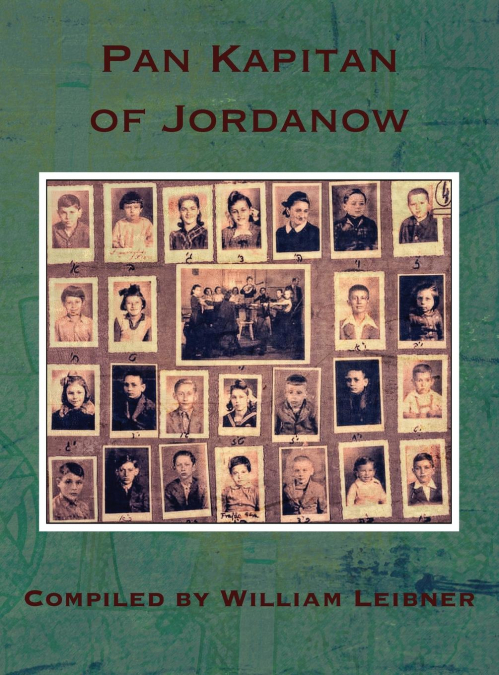
  • Pan Kapitan of Jordanow
    William Leibner
    Yeshayahu Drucker devoted a good part of his life to rescuing Jewish children from non-Jewish homes. Many parents had given their children to Polish neighbors for safekeeping during the war. Unfortunately most of the parents did not survive the Shoah. At the end of the war, there was no one to claim the children and they remained with the “adopted” Polish families. Following hi...
  • Holy Dissent
    Glenn Dynner
    BThe religious communities of early modern Eastern Europe—particularly those with a mystical bent—are typically studied in isolation. Yet the heavy Slavic imprint on Jewish popular mysticism and pervasive Judaizing tendencies among Christian dissenters call into question the presumed binary quality of Jewish-Christian interactions. In Holy Dissent: Jewish and Christian Mystics ...
  • AL-FARD
    Ali Mahdi Muhammad
    The Al-Fard, or the The Dawn, has captured the early rays of Our history. This history is essential if we are to be brought face to face with the One true and living God of the universe. The purpose of this writing is to bring the reader step by step, one degree at a time to the reality of God in person. The teachings of Our Father elevates the believer to the level of Godhood ...
  • Wild Things. Nature and the Social Imagination
    HISTORIES OF HUMAN CONSTRUCTIONS OF NATUREWild Things: Nature and the Social Imagination assembles eleven substantive and original essays on the cultural and social dimensions of environmental history. They address a global cornucopia of social and ecological systems, from Africa to Europe, North America and the Caribbean, and their temporal range extends from the 1830s into th...

Otros libros del autor

  • Septuagint - Hosea and the Dodeka
    Scriptural Research Institute
    In the mid 3rd century BCE, King Ptolemy II Philadelphus of Egypt ordered a translation of the ancient Israelite scriptures for the Library of Alexandria, which resulted in the creation of the Septuagint. The Dodeka would eventually be added to the Septuagint as the Book of Dodeka circa 140 BCE, and then much later be divided into its twelve constituent books by the early Chris...
    Disponible

    23,86 €

  • Memories of the New Kingdom
    Scriptural Research Institute
    The New Kingdom era of Egyptian history emerged from the darkness of the Second Intermediate Period, when the Theban dynasty drove out the Hyksos from Egypt, and went on the conquer Canaan, and Nubia. The Hyksos dynasty appears to have been largely as a result of the Minoan eruption in Greece, which darkened the sky of Egypt and blanketed northern Egypt with up to 2 meters (6 f...
    Disponible

    16,26 €

  • Septuagint - Numbers
    Scriptural Research Institute
    Since the 1800s, the majority of Biblical scholars have interpreted the books of Leviticus and Numbers as a later addition to the original laws of Moses found in Exodus, with Deuteronomy being an even later addition during the Babylonian or Persian eras. Cosmic Genesis is either considered to be part of Moses’ original work or a later addition in the Persian era, depending on t...
    Disponible

    19,41 €

  • Septuagint - Exodus
    Scriptural Research Institute
    Few books have generated as many debates about geographical features as the book of Exodus. It describes in detail a series of wonders that the Lord God of the Israelites, performed to cause them to be freed from their slavery in the country, and then their trek across the wilderness to a mountain on which God descended and gave them the Torah. The wonders themselves have been ...
    Disponible

    21,60 €

  • Septuagint - Cosmic Genesis
    Scriptural Research Institute
    In the mid-3rd century BC, King Ptolemy II Philadelphus of Egypt ordered a translation of the ancient Israelite scriptures for the Library of Alexandria, which resulted in the creation of the Septuagint. The original version, published circa 250 BC, only included the Torah, or in Greek terms, the Pentateuch. The Torah is composed of the five books traditionally credited to Mose...
    Disponible

    22,88 €

  • Septuagint - Wisdom of Joshua ben Sira and Odes
    Scriptural Research Institute
    The Wisdom of Joshua ben Sira was an independently translated early Jewish collection of wisdom proverbs, translated in 132 BC according to the prologue by the author, which was added the Septuagint.The translator claimed to be the grandson of Joshua ben Sira, who had moved to Egypt, and found that there were no books of minor wisdom among the Septuagint, and so translated his ...
    Disponible

    18,27 €