 Librería Samer Atenea
 Kálamo Books
 Librería Elías (Asturias)
 Librería Kolima (Madrid)
 Librería Proteo (Málaga)
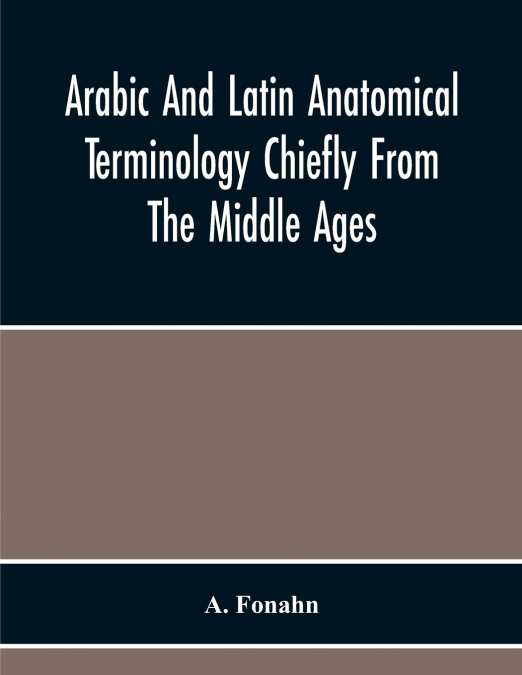
An indispensable key to how medieval healers named and understood the human form. Words map the living body. In Arabic And Latin Anatomical Terminology Chiefly From The Middle Ages, A. Fonahn compiles a rigorous medical terminology reference and anatomy terminology collection that places medieval anatomical terms in parallel across Latin and Arabic sources. Arranged with clarity and scholarly care, the book functions as a historical anatomy glossary and a practical arabic latin medical translation resource, making lineage and usage visible rather than obscure. Entries show variant spellings, contextual notes and cross-references that reveal how terms guided dissection, diagnosis and teaching. For readers drawn to middle ages medicine the volume exposes the daily vocabulary of practice; for translators, philologists and students of academic medical linguistics it offers systematic tools to follow ideas across manuscripts. Its comparative anatomical language highlights both shared vocabulary and surprising departures of meaning.More than a catalogue, it is a medical historians resource and a historical medical dictionary that traces pathways from islamic golden age medicine into medieval europe science. The book’s historical significance lies in recovering the precise words that carried knowledge between cultures, a linguistic map of surgical instruction, humoral theory and anatomical description. Also of practical use to librarians, cataloguers and curators, the work lends context to manuscript studies and the cataloguing of early medical books, helping to identify variant terms and provenance. Republished by Alpha Editions in a careful modern edition, this volume preserves the spirit of the original while making it effortless to enjoy today - a heritage title prepared for readers and collectors alike. Accessible to casual readers yet prized by classic-literature collectors, the work rewards curiosity and careful study alike: a collector’s item and a cultural treasure for anyone fascinated by the history and language of medicine. It is essential reading for anyone studying the transmission and translation of medical knowledge.