 Librería Samer Atenea
 Kálamo Books
 Librería Elías (Asturias)
 Librería Kolima (Madrid)
 Librería Proteo (Málaga)
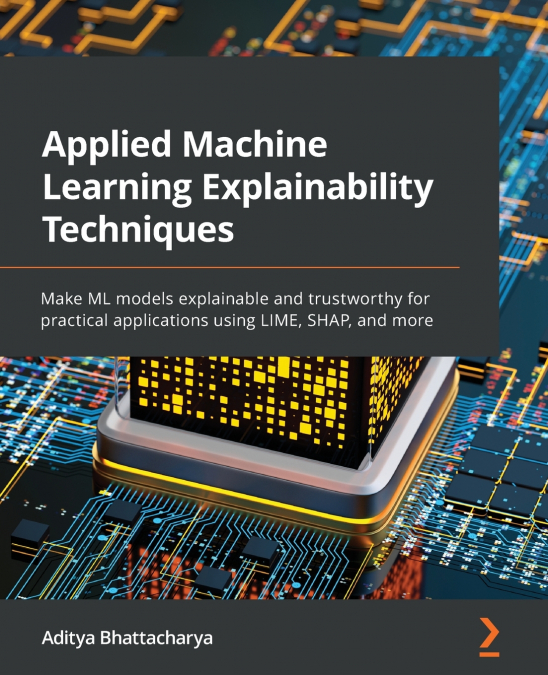
Leverage top XAI frameworks to explain your machine learning models with ease and discover best practices and guidelines to build scalable explainable ML systemsKey Features:Explore various explainability methods for designing robust and scalable explainable ML systemsUse XAI frameworks such as LIME and SHAP to make ML models explainable to solve practical problemsDesign user-centric explainable ML systems using guidelines provided for industrial applicationsBook Description:Explainable AI (XAI) is an emerging field that brings artificial intelligence (AI) closer to non-technical end users. XAI makes machine learning (ML) models transparent and trustworthy along with promoting AI adoption for industrial and research use cases.Applied Machine Learning Explainability Techniques comes with a unique blend of industrial and academic research perspectives to help you acquire practical XAI skills. You’ll begin by gaining a conceptual understanding of XAI and why it’s so important in AI. Next, you’ll get the practical experience needed to utilize XAI in AI/ML problem-solving processes using state-of-the-art methods and frameworks. Finally, you’ll get the essential guidelines needed to take your XAI journey to the next level and bridge the existing gaps between AI and end users.By the end of this ML book, you’ll be equipped with best practices in the AI/ML life cycle and will be able to implement XAI methods and approaches using Python to solve industrial problems, successfully addressing key pain points encountered.What You Will Learn:Explore various explanation methods and their evaluation criteriaLearn model explanation methods for structured and unstructured dataApply data-centric XAI for practical problem-solvingHands-on exposure to LIME, SHAP, TCAV, DALEX, ALIBI, DiCE, and othersDiscover industrial best practices for explainable ML systemsUse user-centric XAI to bring AI closer to non-technical end usersAddress open challenges in XAI using the recommended guidelinesWho this book is for:This book is for scientists, researchers, engineers, architects, and managers who are actively engaged in machine learning and related fields. Anyone who is interested in problem-solving using AI will benefit from this book. Foundational knowledge of Python, ML, DL, and data science is recommended. AI/ML experts working with data science, ML, DL, and AI will be able to put their knowledge to work with this practical guide. This book is ideal for you if you’re a data and AI scientist, AI/ML engineer, AI/ML product manager, AI product owner, AI/ML researcher, and UX and HCI researcher.