
Apology

Apology

Plato / Benjamin Jowett

11,26 €
IVA incluido
Disponible
Editorial:
Brian Westland
Año de edición:
2023
Materia
Filosofía occidental: antigua, hasta c. 500
ISBN:
9781774419601
11,26 €
IVA incluido
Disponible

Selecciona una librería:

  • Librería Samer Atenea
  • Librería Aciertas (Toledo)
  • Kálamo Books
  • Librería Perelló (Valencia)
  • Librería Elías (Asturias)
  • Donde los libros
  • Librería Kolima (Madrid)
  • Librería Proteo (Málaga)

The Apology of Socrates is a Socratic dialogue of the speech of legal self-defence which Socrates (469-399 BC) spoke at his trial for impiety and corruption in 399 BC.Specifically, the Apology of Socrates is a defence against the charges of 'corrupting the youth' and 'not believing in the gods in whom the city believes, but in other daimonia that are novel' to Athens (24b).[2]Among the primary sources about the trial and death of the philosopher Socrates, the Apology of Socrates is the dialogue that depicts the trial, and is one of four Socratic dialogues, along with Euthyphro, Phaedo, and Crito, through which Plato details the final days of the philosopher Socrates.The Apology of Socrates begins with Socrates addressing the jury of perhaps 500 Athenian men to ask if they have been persuaded by the Orators Lycon, Anytus, and Meletus, who have accused Socrates of corrupting the young people of the city and impiety against the pantheon of Athens. The first sentence of his speech establishes the theme of the dialogue-that philosophy begins with an admission of ignorance. Socrates later clarifies that point of philosophy when he says that whatever wisdom he possesses comes from knowing that he knows nothing (23b, 29b).In the course of the trial, Socrates imitates, parodies, and corrects the Orators, his accusers, and asks the jury to judge him by the truth of his statements, not by his oratorical skill (cf. Lysias XIX 1,2,3; Isaeus X 1; Isocrates XV 79; Aeschines II 24). Socrates says he will not use sophisticated language-carefully arranged ornate words and phrases-but will speak using the common idiom of the Greek language. Socrates says that he will speak in the manner he has used in the agora and at the money tables which he states is his native tongue and the fashion of his country. Although offered the opportunity to appease the prejudices of the jury, with a minimal concession to the charges of corruption and impiety, Socrates does not yield his integrity to avoid the penalty of death. The jury condemns Socrates to death.

Artículos relacionados

  • The Nature of Things
    Lucretius Lucretius
    De rerum natura (On the Nature of Things) is a 1st century BC didactic poem by the Roman poet and philosopher Lucretius with the goal of explaining Epicurean philosophy to a Roman audience. Lucretius presents the principles of atomism; the nature of the mind and soul; explanations of sensation and thought; the development of the world and its phenomena; and explains a variety o...
    Disponible

    36,76 €

  • Pompeii
    Fergus Mason
    Pompeii was one of most advanced cities of its time; it had a complex water system, gymnasium, and an amphitheater. Despite it's advancements, there was one thing it wasn't ready for: Mount Vesuvius—the volcano that led to its ultimate doom.  The 79 AD eruption of Mount Vesuvius was one of the worst disasters in all of European history. In a near instant, over 15,000 p...
    Disponible

    10,36 €

  • Middle Platonism and Neoplatonism, Volume 1
    Stephen Gersh
    'It is generally agreed that those types of philosophy that are loosely called ’Platonic’ and ’Neoplatonic’ played a crucial role in the history of European culture during the centuries between antiquity and the Renaissance. However, until now no scholar has attempted to describe the evolution of these forms of thought in a single comprehensive academic study.' So writes Stephe...
    Disponible

    179,17 €

  • Middle Platonism and Neoplatonism, Volume 2
    Stephen Gersh
    It is generally agreed that those types of philosophy that are loosely called 'Platonic' and 'Neoplatonic' played a crucial role in the history of European culture during the centuries between antiquity and the Middle Ages. However, until now no scholar has attempted to describe the evolution of these forms of thought in a single comprehensive academic study. Middle Platonism a...
    Disponible

    215,18 €

  • Porphyry’s Commentary on Ptolemy’s Harmonics
    Andrew Barker
    ...
    Disponible

    77,17 €

  • The Roots of Platonism
    John Dillon
    ...
    Disponible

    25,29 €

Otros libros del autor

  • Statesman (Polis & Praxis Classics)(Annotated)
    Plato / Benjamin Jowett
    Discover What Makes a True Leader in Plato’s StatesmanWhy do some leaders strengthen a society while others divide and destabilize it? What knowledge, judgment, and character are required to govern well? In Statesman, Plato delivers one of his most insightful explorations of political leadership, power, and the craft of ruling.Written as a dynamic philosophical dialogue, States...
    Disponible

    10,56 €

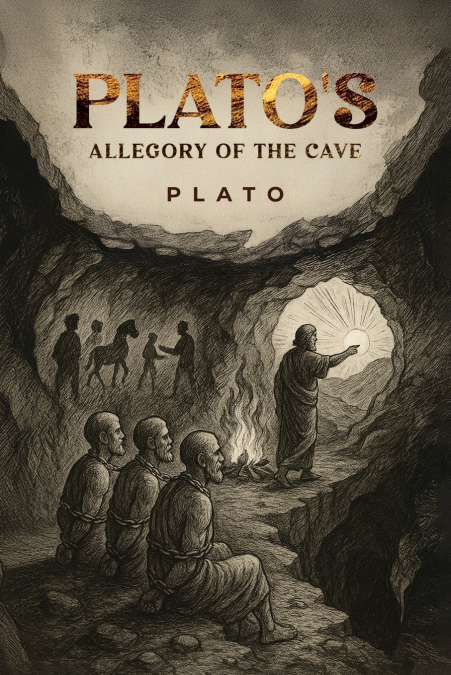
  • Plato’s Allegory of the Cave
    Plato / Benjamin Jowett
    'How could they see anything but the shadows if they were never allowed to move their heads?' - PlatoPlato’s Allegory of the Cave is one of the most powerful metaphors in Western philosophy, exploring the nature of reality, perception, and enlightenment. Through a vivid dialogue between Socrates and Glaucon, it challenges us to question appearances and seek the deeper truths be...
    Disponible

    7,03 €

  • Protagoras
    Plato / Benjamin Jowett
    Protagoras, is a classical book and has been considered important throughout the human history. So that this book is never forgotten we at Alpha Editions have made efforts in its preservation by republishing this again in a modern format book for present and future generations. This whole book has been reformatted, retyped and designed. These books are not made of scanned copie...
    Disponible

    14,76 €

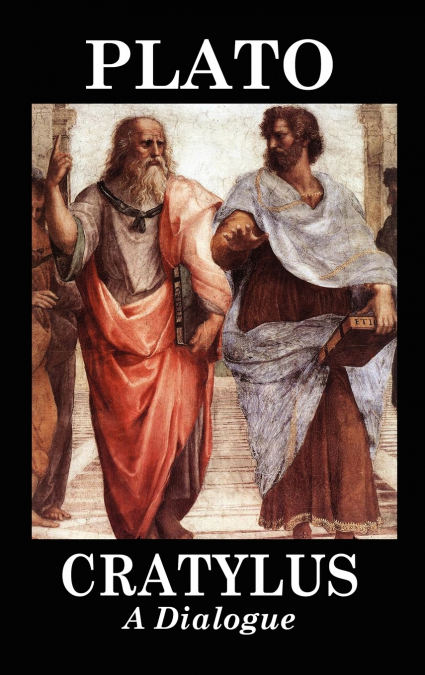
  • Cratylus (A Dialogue)
    Plato / Benjamin Jowett
    In this dialogue, Plato delves into the philosophy of language, exploring the relationship between words and the objects they represent. Through the characters of Socrates, Hermogenes, and Cratylus, the discussion navigates whether names are natural or conventional, questioning if language can truly capture the essence of things. The dialogue presents early thoughts on linguist...
    Disponible

    21,12 €

  • Apology
    Plato / Benjamin Jowett
    APOLOGY (The Apology of Socrates), by Plato, is the Socratic dialogue that presents the speech of legal self-defence, which Socrates presented at his trial for impiety and corruption, in 399 BC. ...
    Disponible

    7,21 €

  • Protagoras
    Plato / Benjamin Jowett
    Dive into Plato’s Protagoras, where Socrates and the sophist Protagoras engage in a thought-provoking dialogue on virtue and knowledge. Explore timeless questions of truth and morality as they challenge each other’s beliefs, inviting readers to contemplate the essence of wisdom and human excellence in this seminal work of philosophy. ...
    Disponible

    10,73 €