Inicio > Humanidades > Historia > Historia regional y nacional > Historia de América > Animals and Society in Brazil, from the Sixteenth to Nineteenth Centuries
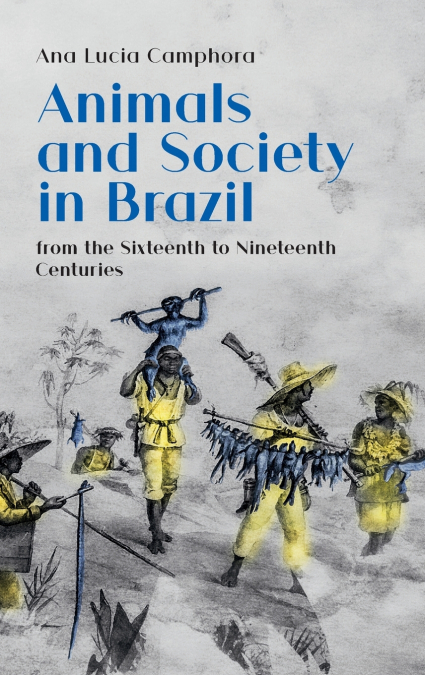
Animals and Society in Brazil, from the Sixteenth to Nineteenth Centuries

Animals and Society in Brazil, from the Sixteenth to Nineteenth Centuries

Ana Lucia Camphora / Miriam Adelman

101,62 €
IVA incluido
Consulta disponibilidad
Editorial:
White Horse Press
Año de edición:
2021
Materia
Historia de América
ISBN:
9781912186174

Selecciona una librería:

  • Librería Samer Atenea
  • Librería Aciertas (Toledo)
  • Kálamo Books
  • Librería Perelló (Valencia)
  • Librería Elías (Asturias)
  • Donde los libros
  • Librería Kolima (Madrid)
  • Librería Proteo (Málaga)

This pioneering overview of how social relations were constructed as interspecies relations offers the reader a starting point for bringing these encounters into a historical narrative that unfolds over the course of several centuries of Portuguese South American colonial life. In showing the decisive importance of non-human animals in the development of Brazilian society, this volume provides a point of departure for the construction of an international corpus of knowledge in the fields of environmental history and human-animal studies, adding complexity to existing narratives and throwing new light on the role of Latin American societies within the global picture. Brazil, the largest country in South America, is home to some of the planet’s richest fauna, is ranked as one of the world’s largest meat producers (beef, chicken and pork) and also has a huge population of pets, estimated at 54.2 million dogs, 39.8 million birds and 23.9 million cats, according to a 2018 survey. Non-human animals have always been there, domesticated or wild, alongside their human counterparts. These sets of relationships configure what is still a less-understood part of Brazilian history. In its six chapters, this book considers the exotic wildlife diet base adopted by European explorers; the uses of animals for medicinal purposes; intense hunting and whaling activities; and the introduction of domesticated animals from Europe and other Portuguese colonies, focusing on the decisive contributions of cattle, horses and mules in the occupation and colonisation of the extensive Brazilian territory, and the precarious system of meat supply in the-then capital, Rio de Janeiro, in the nineteenth century.
Artículos relacionados

  • Pan-Africanism and Education
    Kenneth J. King / Kenneth JKing
    This is an analysis of the complex links between Black America and Africa in the period of 1880 to 1945. It examines an extended white attempt to pattern politics and education in colonial Africa upon the example of the U.S. South. This export of United States race relations to Africa was resisted by Black intellectuals in the United States and many of the early nationalists in...
    Disponible

    24,60 €

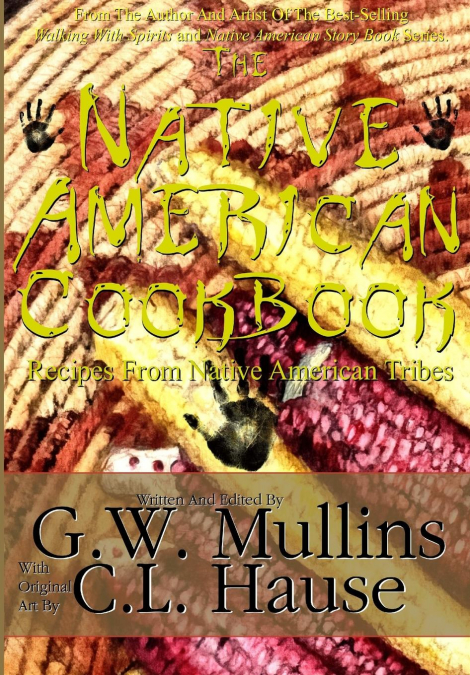
  • The Native American Cookbook Recipes From Native American Tribes
    G.W. Mullins
    Light Of The Moon Publishing along with Author G.W. Mullins and Illustrator / Artist C.L. Hause have joined together to explore Native American Indian Cooking.  More than just a cookbook, this Native American recipe collection offers a look into a forgotten past.  'The Native American Cookbook Recipes From Native American Tribes,' offers a large collection of recipes from and i...
    Disponible

    24,56 €

  • A Public Spirit
    George H. Atkinson
    George Henry Atkinson (1819-89) was a son of New England who arrived in the Oregon Territory in 1848, sent by the American Home Missionary Society. Although his commission from the Society specified that his work was to be ecclesiastical and educational, he took an approach to that assignment which went well beyond his mandate. Well-informed and energetic, he made an impact on ...
    Disponible

    10,45 €

  • North Carolina Women of the Confederacy
    Lucy London Anderson
    Long out of print, this volume of recollections, stories, and verse provides a glimpse of women's lives on the home front-and sometimes in the thick of battle-during the War between the States. Nearly fifty years after the American Civil War, Lucy Worth London Anderson (Mrs. John Huske Anderson) of Fayetteville, N.C., compiled one of the first memorial collections honoring the...
    Disponible

    17,20 €

  • Freedom by a Thread
    Freedom by a Thread: The History of Quilombos in Brazil brings together some of the best scholars in the world working on the history of quilombos (maroon societies) in Brazil from a variety of perspectives and approaches. Over 40 percent of the total volume of captive Africans arrived in Brazil during a 400-year period of legal and contraband transatlantic slaving. If slavery ...
    Disponible

    36,71 €

  • Nashville Baseball History
    Bill Traughber
    Nashville is a Big League city despite never having been home to a major league team. From the Civil War era, to star-studded exhibitions, to outstanding Negro Leagues teams, to some of the great minor league franchises of all time, few cities have as rich a baseball tradition as Nashville, Tennessee.Nashville sports historian Bill Traughber, who has been writing about baseball...
    Disponible

    13,15 €