
Inicio > Artes > Arquitectura > Andrés Jaque, Office for Political Innovation
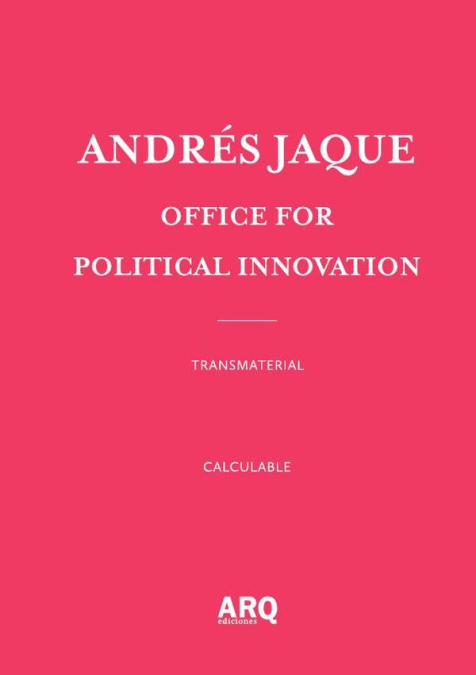
Andrés Jaque, Office for Political Innovation

Andrés Jaque, Office for Political Innovation

Andrés Jaque

11,44 €
IVA incluido
Disponible
Editorial:
Ediciones ARQ
Año de edición:
2017
Materia
Arquitectura
ISBN:
9789569571305
11,44 €
IVA incluido
Disponible

Selecciona una librería:

  • Librería Samer Atenea

  • Kálamo Books
  • Librería Elías (Asturias)
  • Librería Kolima (Madrid)
  • Librería Proteo (Málaga)

En su clásico texto ”The Author as Producer” (1934), Walter Benjamin proponía una cuestión que nos acecha hasta hoy: ”En vez de preguntar ¿cuál es la actitud de una obra hacia las relaciones de producción de su tiempo?, quisiera preguntar: ¿cuál es su posición dentro de ellas?”. Parafrasear a Benjamin es útil para entender el rol de Andrés Jaque y Office for Political Innovation en la arquitectura actual: en lugar de preguntar cuál es la actitud de la arquitectura hacia las dinámicas contemporáneas, Jaque y su equipo preguntan cuál es la posición de la arquitectura dentro de esas dinámicas. Es esa capacidad de poner a la arquitectura en ‘otro plano’ lo que convierte al trabajo de Jaque en algo difícil de entender para algunos, y en algo realmente fascinante para otros. Si hay algo que caracteriza a esta oficina española son las preguntas. Tanto las que hacen ellos como las que nos hacemos quienes apreciamos su trabajo. Jaque y su equipo no hacen las preguntas típicas de un arquitecto a su cliente (‘¿qué quiere?’ o ‘¿cómo le gustaría que fuera?’), sino que interrogan perspicazmente las situaciones a las que se enfrentan hasta dar con aquello que sólo una curiosidad infinita podría descubrir. Para quienes observamos desde afuera, sin embargo, la pregunta siempre es la misma: ‘¿por qué nunca se me ocurrió ver el problema de esa forma?’. In his classic text “The Author as Producer” (1934), Walter Benjamin raised a question that still haunts us today: “Rather than asking, ‘what is the attitude of a work to the relations of production of its time?’ I would like to ask, ‘what is its position in them?’”1 Paraphrasing Benjamin is useful for understanding the role of Andrés Jaque and the Office for Political Innovation in our discipline today: instead of asking what is the attitude of architecture towards contemporary dynamics, Jaque and his team would rather ask what is the position of architecture within these dynamics. It’s this same ability to place the discipline on another plane that makes Jaque’s work difficult to understand for some, and fascinating for others. Questions are what characterize this Spanish office: both the ones they pose as well as the ones posed by those who admire their work. Jaque and his team do not ask the typical questions that an architect would ask his client ‘what is it that you want?’ or ‘how would you like it to be?’ rather, they sharply interrogate the situations they face until finding what only infinite curiosity could discover. However, for those of us who observe their work the question remains: ‘why did it never occur to me to see the problem that way?’. 10
Artículos relacionados

  • Selected Papers from Building A Better New Zealand (BBNZ 2014) Conference
    This Special Issue includes expanded academic papers selected from the forthcoming BBNZ 2014 Conference.The 2014 Building a Better New Zealand conference was held at The Rendezvous Hotel, Auckland, from 3 September 2014 to 5 September 2014.Themes:•Achieving Better Buildings•Improving the Performance of Materials•Improving the performance of existing buildings•Sustainability•Pro...
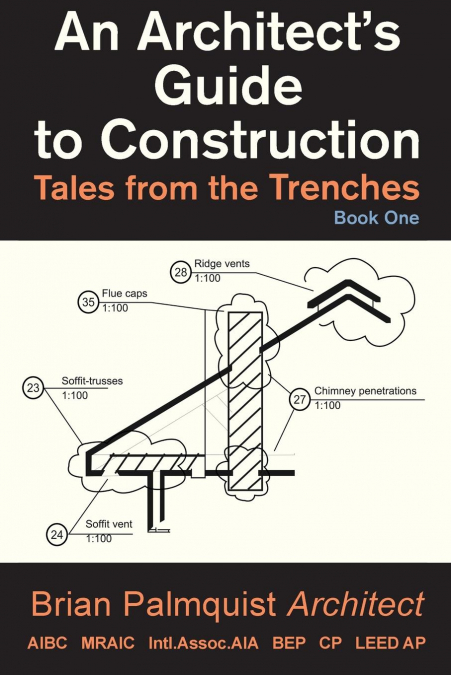
  • An Architect’s Guide to Construction
    Brian Palmquist
    After more than 35 years 'in the trenches' as an architect, specialist consultant and now quality director for a large North American construction company, Brian Palmquist has written An Architect’s Guide to Construction in order to share a balanced wealth of knowledge and experience about the construction phase of building projects.Considering both the consultant and contracto...
    Disponible

    21,61 €

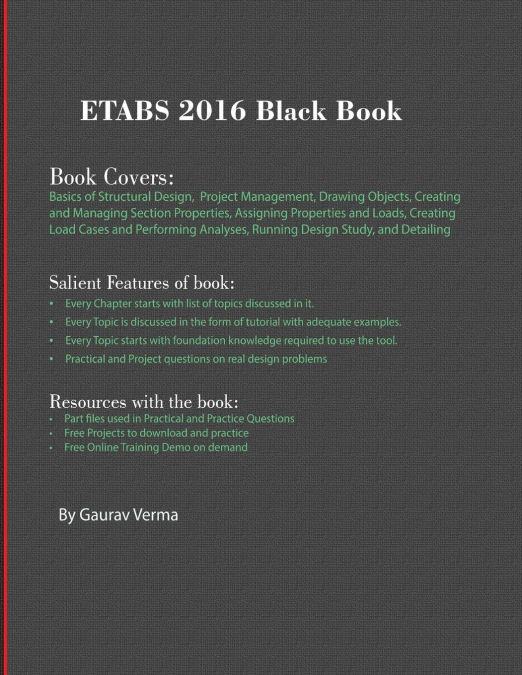
  • ETABS 2016 Black Book
    Gaurav Verma
    The ETABS 2016 Black Book, is written to help beginners learn the basics of ETABS structure modeling and analysis. The book follows a step by step methodology. This book explains the designing of structure, assigning various properties to structure, applying different load conditions, and performing analyses. This book also covers the basics of detailing in ETABS. The book cove...
    Disponible

    81,20 €

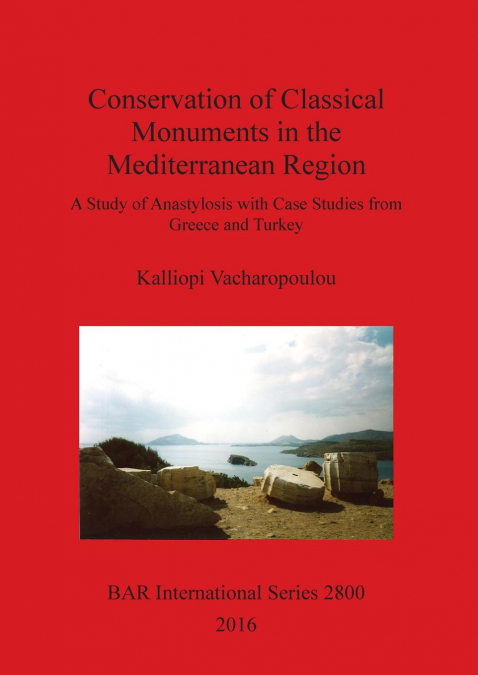
  • Conservation of Classical Monuments in the Mediterranean Region
    Kalliopi Vacharopoulou
    This work studies the conservation of classical monuments in the Mediterranean region. It focuses on a specific method, anastylosis, and its application to classical monuments. The terminology, philosophy, theoretical principles and technical issues of anastylosis are explored within the wider context of cultural heritage management, through case studies from Greece and Turkey,...
    Disponible

    143,03 €

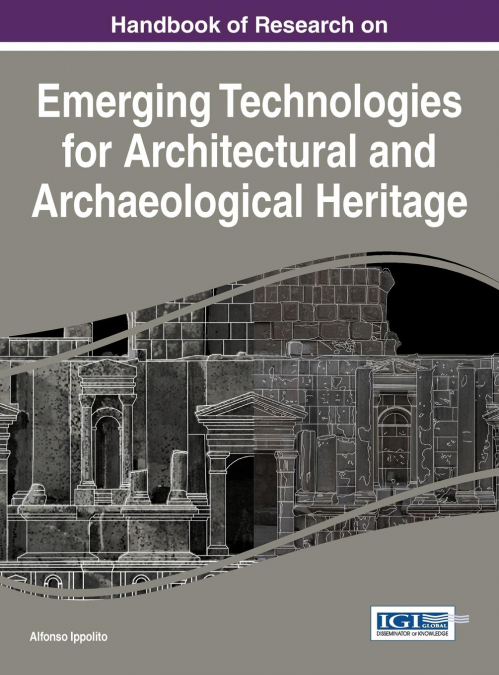
  • Handbook of Research on Emerging Technologies for Architectural and Archaeological Heritage
    Alfonso Ippolito
    Cultural heritage is a vital, multifaceted component of modern society. To better protect and promote the integrity of a culture, certain technologies have become essential tools. The Handbook of Research on Emerging Technologies for Architectural and Archaeological Heritage is an authoritative reference source for the latest scholarly research on the use of technological assis...
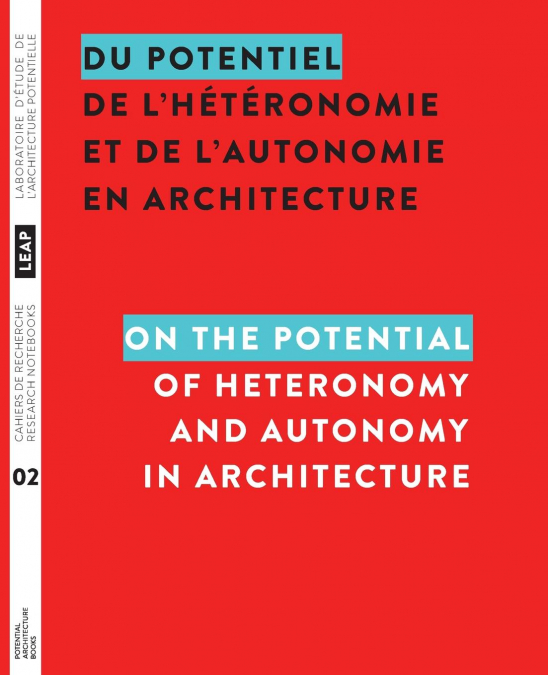
  • Du potentiel de l’hétéronomie et de l’autonomie en architecture / On the Potential of Heteronomy and Autonomy in Architecture
    Cette deuxième édition des Cahiers du Laboratoire d’Étude de l’Architecture Potentielle propose une réflexion sur l’un des problèmes centraux du Mouvement moderne et de la critique postmoderne : la tension entre l’hétéronomie et l’autonomie en architecture.Abordé à l’aide d’un texte peu connu de Stanford Anderson, le thème invitait chacun, chacune à penser l’architecture entre ...
    Disponible

    35,74 €