
Anarchism

Anarchism

Peter Caldwell

17,20 €
IVA incluido
Disponible
Editorial:
PublishDrive
Año de edición:
2026
Materia
Historia social y cultural
ISBN:
9798900421193
17,20 €
IVA incluido
Disponible

Selecciona una librería:

  • Librería Samer Atenea

  • Kálamo Books
  • Librería Elías (Asturias)
  • Librería Kolima (Madrid)
  • Librería Proteo (Málaga)

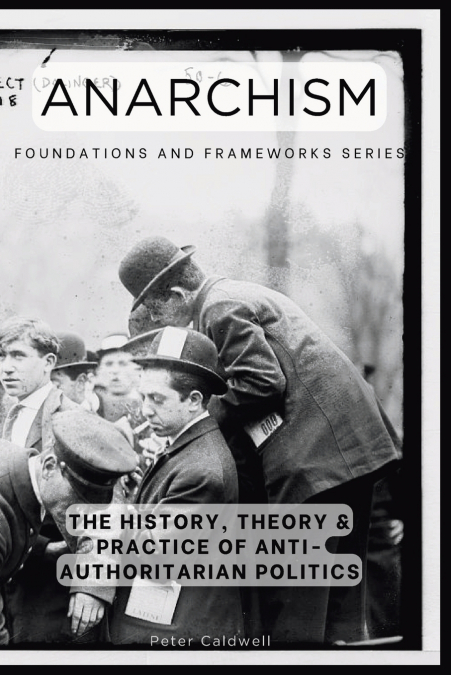
Anarchism is one of the most misunderstood political traditions in the world. This book gives you the real thing: what anarchists argued, what they built, and where their ideas broke down. Ten chapters trace the tradition across two centuries, starting with the first thinkers who questioned government in the 1790s and closing with the mutual aid networks that fed people during the COVID-19 pandemic. Theory and practice sit side by side throughout, because anarchists have always insisted the two can’t be separated. The chapters cover: - What the word anarchy actually means, why order without rulers has nothing to do with chaos, and how the four strands differ: individualist, social, anarcho-syndicalist, anarcho-communist - William Godwin, Max Stirner, and Pierre-Joseph Proudhon, the self-taught printer who took the insult anarchist in 1840 and claimed it as a coherent political position - Bakunin’s split with Marx, Kropotkin on mutual aid, Emma Goldman on free speech and women’s freedom, plus Errico Malatesta and Lucy Parsons - The Haymarket bombing of 1886 and the origin of May Day - The Paris Commune, Nestor Makhno’s peasant armies in Ukraine, and the Spanish Revolution of 1936, when a union of a million members ran the factories, trams, and bakeries of Barcelona - How an anarchist economy would handle money, work, and property, including mutual credit banks and the collectivized farms of Catalonia - Prefigurative politics, the argument that government is coercive by nature, and why most anarchists refuse to vote or run for office - Anarcha-feminism, queer and anti-colonial organizing, the Situationists, anarcho-primitivism, and the fight over technology that split the movement - Seattle 1999, Occupy Wall Street, disaster relief networks, and today’s argument between insurrectionism and patient organizing Five closing sections follow chapter ten. A timeline runs from 1548 through 2020 so the events in different chapters line up against each other. A glossary defines the vocabulary in plain terms. Every chapter ends with a discussion question, and worked example answers let you compare your thinking against another take. A cited reading list points you toward the original books. Written for readers with no background in political theory, for students of political science and modern history, and for anyone who has watched neighbors feed each other after a storm or protesters make decisions in a circle and wondered where those practices came from. The failures get the same attention as the victories here. You will read how anarchists themselves have argued for a century and a half about coordinating a large economy, about hidden cliques that take over supposedly leaderless groups, and about defending a free society against organized violence. Whatever you conclude, you will be arguing with the real tradition instead of a caricature of anarchist thinking.

Artículos relacionados

  • Arizal
    Raphael Afilalo
    The Ari overflowed with Torah. He was expert in Scripture, Mishnah, Talmud, Midrash, Maaseh Bereishit and Maaseh Merkavah. About all the different levels of prophecy, their details and from which level the prophets had their revelations.  He understood the whistling of the trees, the grass and stones, the language of the birds and other animals, the conversations of angels, the...
  • Rose-tinted Memory
    Michael S Fryer
    “Those who deny Auschwitz would be ready to remake it”.  ~ Primo Levi, Holocaust survivor and author Seventy years after the mass murder of the Jews of Europe, Holocaust denial and Holocaust revisionism are creeping into our overall perception of what actually happened.Christendom has not ‘denied’ Holocaust, but it has attempted to create a memory of Holocaust which suggests th...
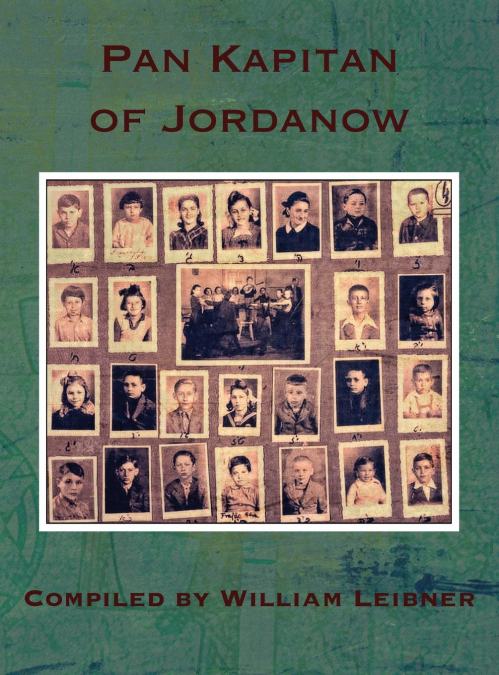
  • Pan Kapitan of Jordanow
    William Leibner
    Yeshayahu Drucker devoted a good part of his life to rescuing Jewish children from non-Jewish homes. Many parents had given their children to Polish neighbors for safekeeping during the war. Unfortunately most of the parents did not survive the Shoah. At the end of the war, there was no one to claim the children and they remained with the “adopted” Polish families. Following hi...
  • Holy Dissent
    Glenn Dynner
    BThe religious communities of early modern Eastern Europe—particularly those with a mystical bent—are typically studied in isolation. Yet the heavy Slavic imprint on Jewish popular mysticism and pervasive Judaizing tendencies among Christian dissenters call into question the presumed binary quality of Jewish-Christian interactions. In Holy Dissent: Jewish and Christian Mystics ...
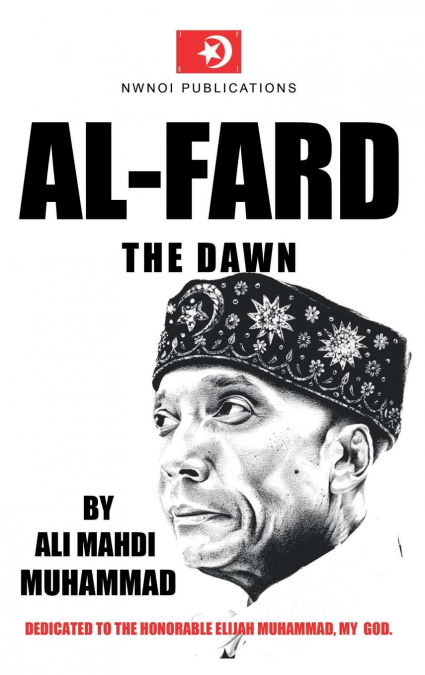
  • AL-FARD
    Ali Mahdi Muhammad
    The Al-Fard, or the The Dawn, has captured the early rays of Our history. This history is essential if we are to be brought face to face with the One true and living God of the universe. The purpose of this writing is to bring the reader step by step, one degree at a time to the reality of God in person. The teachings of Our Father elevates the believer to the level of Godhood ...
  • Wild Things. Nature and the Social Imagination
    HISTORIES OF HUMAN CONSTRUCTIONS OF NATUREWild Things: Nature and the Social Imagination assembles eleven substantive and original essays on the cultural and social dimensions of environmental history. They address a global cornucopia of social and ecological systems, from Africa to Europe, North America and the Caribbean, and their temporal range extends from the 1830s into th...

Otros libros del autor

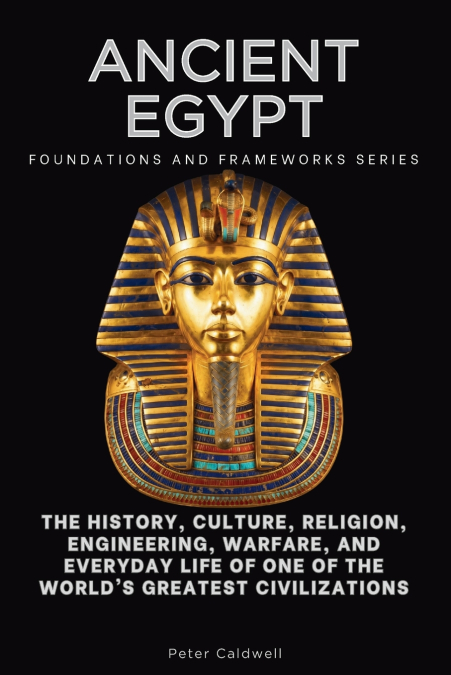
  • Ancient Egypt
    Peter Caldwell
    Ancient Egypt lasted about 3,000 years, from the first kings around 3100 BCE to the death of Cleopatra VII in 30 BCE. This book gives you the full story in one readable volume, along with the evidence behind it, so you understand what happened, who recorded it, and how historians reached their conclusions. The first four chapters run in order, from the Nile flood to Roman conqu...
    Disponible

    17,18 €

  • American Revolution
    Peter Caldwell
    American Revolution history told clearly in one volume: why loyal British subjects turned on their king, how an outmatched army outlasted a global empire, and who paid the price on every side. In 1763, colonists toasted George III after Britain beat France. By July 1776, a New York crowd pulled down his gilded statue and melted it into 42,088 musket cartridges. This book traces...
    Disponible

    17,15 €

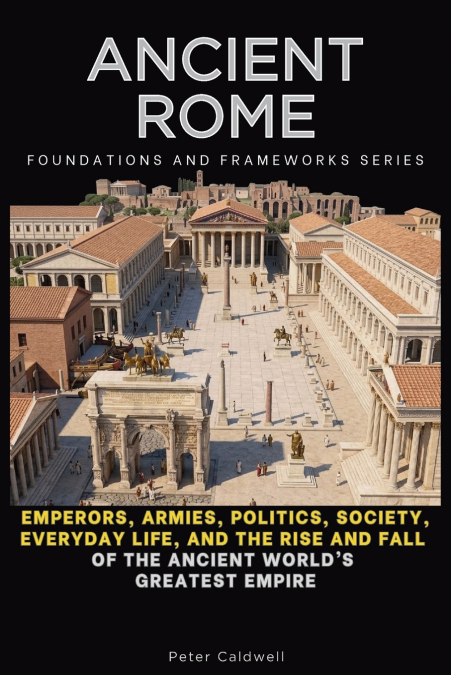
  • Ancient Rome
    Peter Caldwell
    Ancient Rome history, told in order and in plain language: how a hilltop village of farmers grew into a state of sixty million people, how it ran day to day, and how its western half came apart. The book follows Rome in the sequence the Romans lived it, so each chapter builds on the one before. It also tells you when the evidence is solid, when a number is a best estimate, and ...
    Disponible

    17,09 €

  • American Civil War
    Peter Caldwell
    The American Civil War makes sense when you learn it in order: why it started, who fought it, how it was won, and what it changed. This book takes you from the cotton economy of the 1850s to the Compromise of 1877 in plain language. Ten chapters build one layer at a time, and each assumes only what earlier chapters covered. You need no background to start, and you finish with a...
    Disponible

    17,09 €

  • World War II, Foundations and Frameworks Series
    Peter Caldwell
    World War II finally makes sense when you can see how the pieces connect. This guide explains the entire war in plain language, from the bitterness left behind in 1919 to the Cold War that grew out of the rubble. Nine chapters follow the war in order, so the causes lead into the invasions, the invasions lead into the turning points, and the turning points lead into the world we...
    Disponible

    17,15 €

  • Dictatorships, Foundations and Frameworks Series
    Peter Caldwell
    Dictatorships run on a small set of repeatable tactics. Learn to name them and the whole subject becomes readable, whether the regime in question is Stalin’s Soviet Union or a government making headlines this week. The chapters take the machinery apart in order, moving from definitions through the tools of control to the way regimes finally end. Every idea arrives attached to a...
    Disponible

    17,24 €