 Librería Samer Atenea
 Kálamo Books
 Librería Elías (Asturias)
 Librería Kolima (Madrid)
 Librería Proteo (Málaga)
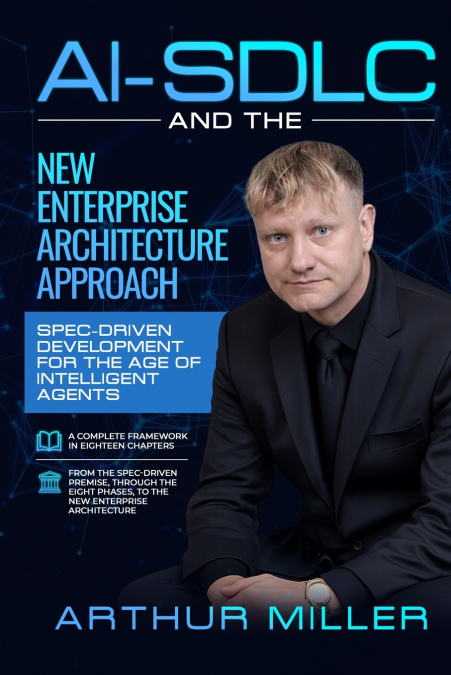
Software production just became nearly free. That didn’t make the development lifecycle less necessary; it made it the only thing standing between your organization and expensive, fast-moving mistakes.Early enterprise deployments of AI-native, spec-driven delivery report calendar compression of 97-98%: three years of scoped work landing in six weeks, six weeks of work landing in two days. The number is real. So is the danger it creates, a 97% faster path to the wrong system is a 97% faster mistake.AI-SDLC and the New Enterprise Architecture Approach is the framework for capturing the speed without losing the accountability. Written by Arthur Miller, the enterprise architect behind Zelle and Real-Time Payments infrastructure and a fintech CTO who has spent his career building regulated financial systems, this book shows how to turn the artifacts your organization already produces, requirements, architecture documents, project plans, release notes, into living, AI-legible specifications that climb a three-level maturity path: Guided, Contracted, and Generated.Across eighteen chapters and three parts, you’ll get:A complete argument for why intent and verification, not code, are the real bottleneck once generation is cheap, and how 'vibe coding' quietly reintroduces the risk teams think they’ve eliminatedA phase-by-phase walk through all eight stages of the lifecycle, Discovery, Design, Planning, Implementation, Verification, Release, Monitoring, and Analysis, each with a worked example, AI’s role, tollgate ownership, and common failure modesA new model for roles, governance, and accountability when agents do the producing and humans do the judgingA maturity model and migration playbook for moving a real organization from document-driven to spec-driven, one artifact at a timeReference appendices on enterprise integration patterns, agentic AI and MCP orchestration, a metrics starter kit, and a troubleshooting guide from symptom to diagnosisThis is not a tools book, and it holds no vendor’s brief, named products are quarantined to a single dated appendix because they’ll change before you finish reading. What won’t change is the argument: as everything else in software becomes cheap and generated, human judgment about what to build, whether it was built right, and who answers for it becomes the whole of the job.Whether you’re an executive deciding if spec-driven development deserves investment, an enterprise or solutions architect responsible for how work flows through your systems, or an engineering leader who wants to change how your team works this week, this book gives you a complete, technology-agnostic framework for building software fast without losing what makes it trustworthy.