
Inicio > > Ciencias de la computación > Inteligencia artificial > AI Data Centers and Water Sustainability
AI Data Centers and Water Sustainability

AI Data Centers and Water Sustainability


258,99 €
IVA incluido
Disponible
Editorial:
IGI Global
Año de edición:
2026
Materia
Inteligencia artificial
ISBN:
9798260027622
258,99 €
IVA incluido
Disponible

Selecciona una librería:

  • Librería Samer Atenea

  • Kálamo Books
  • Librería Elías (Asturias)
  • Librería Kolima (Madrid)
  • Librería Proteo (Málaga)

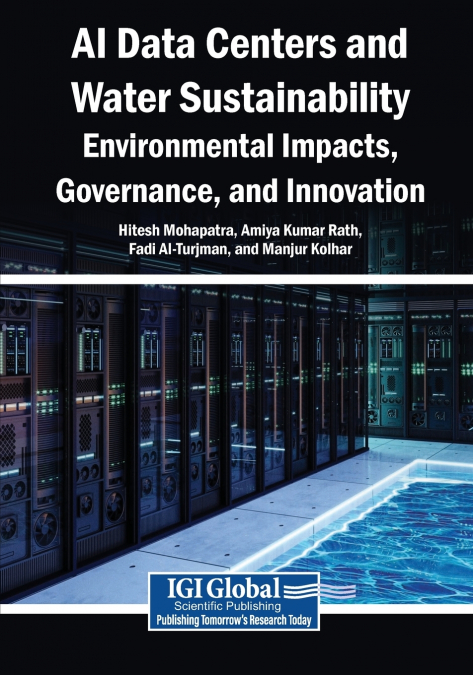
AI increases growth in data center infrastructure, enabling advances in machine learning, cloud computing, and digital services. However, the expansion of AI data centers raises concerns about environmental sustainability, particularly regarding their water and energy consumption. Water is essential for cooling servers and maintaining operational efficiency yet increasing demand places stress on local water resources. As governments, technology companies, and communities grapple with the environmental implications of AI development, questions of governance, transparency, and resource management become important. Emerging innovations in cooling technologies, water recycling systems, and sustainable facility design may help reduce environmental impacts. Examining the intersection of AI data centers and water sustainability reveals how technological progress can be balanced with responsible environmental stewardship. AI Data Centers and Water Sustainability: Environmental Impacts, Governance, and Innovation explores how the rapid growth of AI data centers affects water resources and environmental sustainability through their cooling and operational requirements. It examines the governance frameworks, corporate responsibilities, and technological innovations that reduce water consumption, improve transparency, and support more sustainable AI infrastructure. This book covers topics such as data science, sustainable development, and water resources, and is a useful resource for business owners, engineers, policymakers, academicians, researchers, and environmental scientists.
Artículos relacionados

  • Artificial Cognition Systems
    ...
  • Cross-Disciplinary Applications of Artificial Intelligence and Pattern Recognition
    Vijay Kumar Mago
    The need for intelligent machines in areas such as medical diagnostics, biometric security systems, and image processing motivates researchers to develop and explore new techniques, algorithms, and applications in this evolving field. Cross-Disciplinary Applications of Artificial Intelligence and Pattern Recognition: Advancing Technologies provides a common platform for researc...
  • Emerging Applications of Natural Language Processing
    Over the last few years, the area of Natural Language Processing has drastically grown in recognition, not only within the research and development community, but also with industry professionals. As NLP continues to be discussed and researched, certain areas continue to grow and mature. As a result, the need for advanced research and information is in high demand. Emerging App...
  • Androids, Cyborgs, and Robots in Contemporary Culture and Society
    Steven John Thompson
    Mankind’s dependence on artificial intelligence and robotics is increasing rapidly as technology becomes more advanced. Finding a way to seamlessly intertwine these two worlds will help boost productivity in society and aid in a variety of ways in modern civilization. Androids, Cyborgs, and Robots in Contemporary Culture and Society is an essential scholarly resource that delve...
  • Deep Learning Innovations and Their Convergence With Big Data
    The expansion of digital data has transformed various sectors of business such as healthcare, industrial manufacturing, and transportation. A new way of solving business problems has emerged through the use of machine learning techniques in conjunction with big data analytics. Deep Learning Innovations and Their Convergence With Big Data is a pivotal reference for the latest sc...
  • Computational Psychoanalysis and Formal Bi-Logic Frameworks
    Giuseppe Iurato
    Computational psychoanalysis is a new field stemming from Freudian psychoanalysis. The new area aims to understand the primary formal structures and running mechanisms of the unconscious while implementing them into computer sciences. Computational Psychoanalysis and Formal Bi-Logic Frameworks provides emerging information on this new field which uses psychoanalysis and the unc...