
Inicio > > Ciencias de la computación > Inteligencia artificial > Agentic Coding with OpenAI Codex CLI
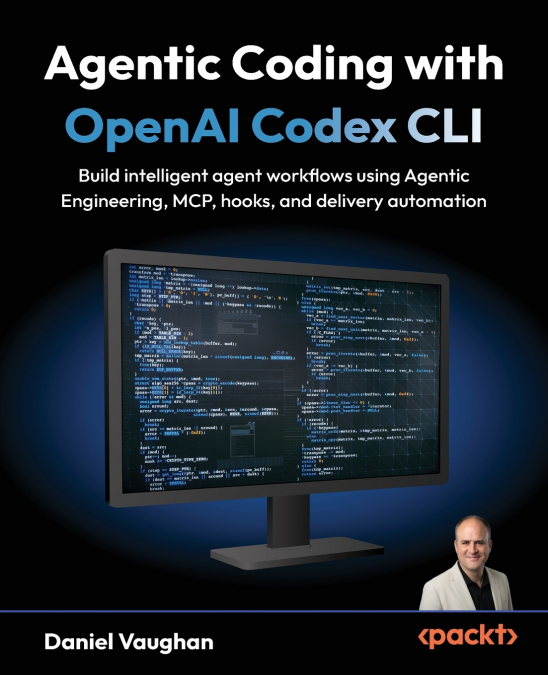
Agentic Coding with OpenAI Codex CLI

Agentic Coding with OpenAI Codex CLI

Daniel Vaughan

72,79 €
IVA incluido
Disponible
Editorial:
Packt Publishing
Año de edición:
2026
Materia
Inteligencia artificial
ISBN:
9781808348891
72,79 €
IVA incluido
Disponible

Selecciona una librería:

  • Librería Samer Atenea

  • Kálamo Books
  • Librería Elías (Asturias)
  • Librería Kolima (Madrid)
  • Librería Proteo (Málaga)

Comprehensive guide to Codex CLI: prompting, AGENTS.md, MCP, hooks, skills, sub-agents, orchestration, CI/CD, security, and enterprise deployment, with exercises Key Features:- Move from first principles to production workflows and team-scale agentic practice.- Apply proven patterns for orchestration, code review, migration, testing, and CI/CD delivery.- Harden agent sessions with approval modes, kernel-level sandboxing, and security practices.- Purchase of the print or Kindle book includes a free PDF eBookBook Description:Agentic Coding with OpenAI Codex CLI is a comprehensive guide to agentic AI development with OpenAI’s command-line coding agent. Across six parts, you’ll move from first principles to production workflows and team-scale practice: prompting and AGENTS.md configuration, approval modes and kernel-level sandboxing, model selection, context and cost management, MCP servers, hooks, skills, sub-agents and orchestration, worktrees, CI/CD integration, security hardening, and enterprise deployment.Later chapters cover debugging and testing agentic workflows, AI code review, practical engineering guides (codebase migration, backend, frontend, and infrastructure as code), and the bigger picture: benchmarks, competing tools, harness engineering, and how to structure an agentic engineering team.Whether you’re a solo developer looking to multiply your output or an engineering lead rolling out agentic workflows across a team, this book gives you the mental models and practical techniques to work effectively with AI coding agents.It draws on real-world experience and community insights, and every chapter includes learning objectives, worked examples, and hands-on exercises.What You Will Learn:- Set up, authenticate, and prompt Codex CLI effectively- Write AGENTS.md rules and apply patterns that avoid common pitfalls- Choose approval modes, kernel-level sandboxing, and trust boundaries- Manage model selection, reasoning effort, context windows, and cost- Extend the agent with MCP servers, hooks, and skills- Coordinate sub-agents, multi-agent orchestration, and worktrees- Integrate Codex into CI/CD, security hardening, and enterprise deployment- Apply Codex to code review, migration, backend, frontend, and infrastructure as codeWho this book is for:This book is for software developers who are comfortable in a terminal and want to use AI agents for real engineering work rather than isolated code suggestions. It is also useful for tech leads and engineering managers who need a framework for adopting agentic coding safely at team or enterprise scale. DevOps practitioners and architects interested in integrating agent workflows into delivery pipelines will also find it relevant. Some experience with version control and command-line tools is assumed; no prior knowledge of Codex CLI is required.Table of Contents:- What Is Codex CLI?- Getting Started with Codex CLI- Prompting Codex CLI Effectively- AGENTS.md: Patterns and Pitfalls- Approval Modes and Trust Boundaries- Model Selection and Reasoning Effort- Context Window Management- MCP: Consuming and Serving- Hooks: Intercepting the Agent Lifecycle- The Skills Ecosystem: Using and Writing Skills- Sub-Agents and Parallel Execution- Multi-Agent Orchestration Patterns- Worktrees and Isolated Execution- Cost Management and Quota Strategy- CI/CD Integration- Security Hardening- Enterprise Deployment- Debugging and Diagnosing Agent Failures(N.B. Please use the Read Sample option to see further chapters)
Artículos relacionados

  • Artificial Cognition Systems
    ...
  • Cross-Disciplinary Applications of Artificial Intelligence and Pattern Recognition
    Vijay Kumar Mago
    The need for intelligent machines in areas such as medical diagnostics, biometric security systems, and image processing motivates researchers to develop and explore new techniques, algorithms, and applications in this evolving field. Cross-Disciplinary Applications of Artificial Intelligence and Pattern Recognition: Advancing Technologies provides a common platform for researc...
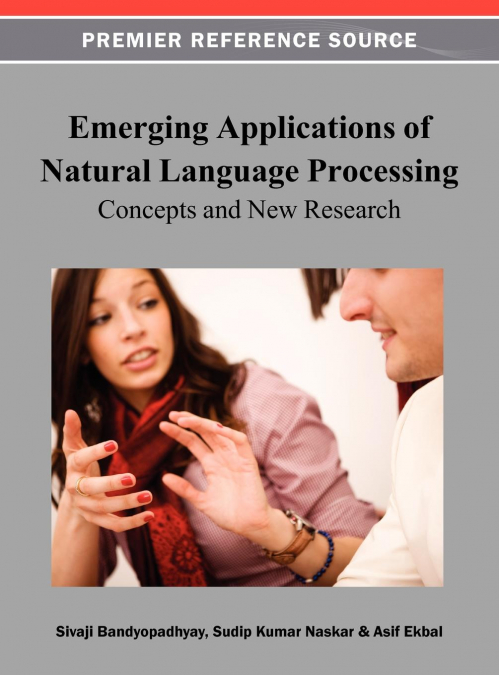
  • Emerging Applications of Natural Language Processing
    Over the last few years, the area of Natural Language Processing has drastically grown in recognition, not only within the research and development community, but also with industry professionals. As NLP continues to be discussed and researched, certain areas continue to grow and mature. As a result, the need for advanced research and information is in high demand. Emerging App...
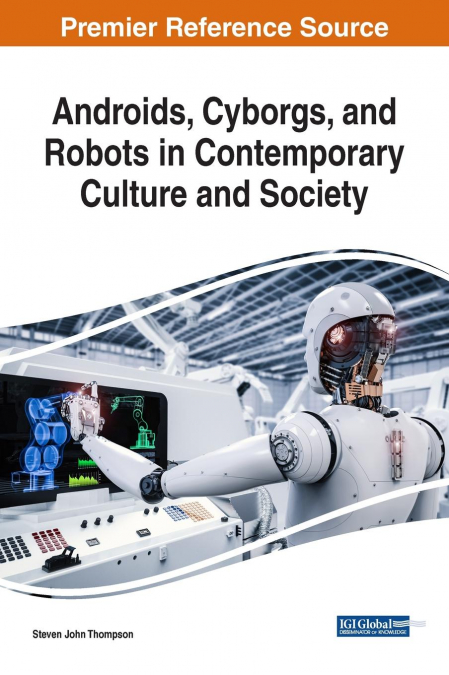
  • Androids, Cyborgs, and Robots in Contemporary Culture and Society
    Steven John Thompson
    Mankind’s dependence on artificial intelligence and robotics is increasing rapidly as technology becomes more advanced. Finding a way to seamlessly intertwine these two worlds will help boost productivity in society and aid in a variety of ways in modern civilization. Androids, Cyborgs, and Robots in Contemporary Culture and Society is an essential scholarly resource that delve...
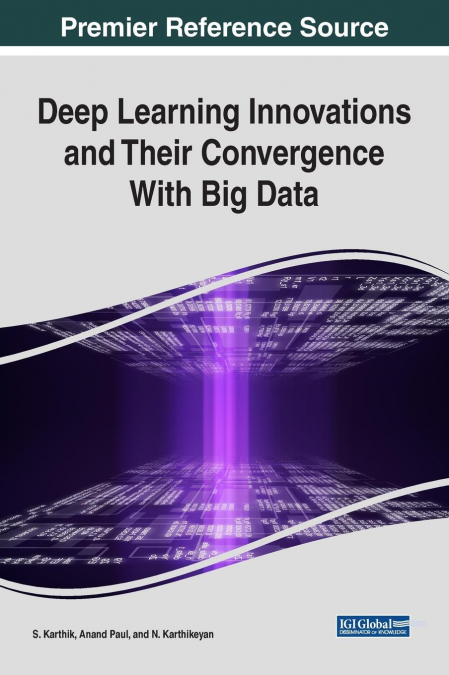
  • Deep Learning Innovations and Their Convergence With Big Data
    The expansion of digital data has transformed various sectors of business such as healthcare, industrial manufacturing, and transportation. A new way of solving business problems has emerged through the use of machine learning techniques in conjunction with big data analytics. Deep Learning Innovations and Their Convergence With Big Data is a pivotal reference for the latest sc...
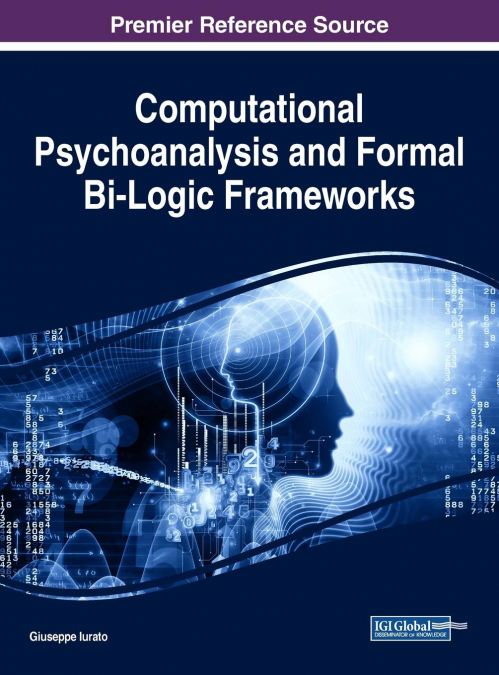
  • Computational Psychoanalysis and Formal Bi-Logic Frameworks
    Giuseppe Iurato
    Computational psychoanalysis is a new field stemming from Freudian psychoanalysis. The new area aims to understand the primary formal structures and running mechanisms of the unconscious while implementing them into computer sciences. Computational Psychoanalysis and Formal Bi-Logic Frameworks provides emerging information on this new field which uses psychoanalysis and the unc...

Otros libros del autor

  • The Claude Certified Architect Study Guide
    Daniel Vaughan
    Learn to spot fragile Claude designs, choose the right control, tool, or workflow, and make decisions that hold up under real production constraintsKey Features:- Cover both CCAR-F and CCAR-P through a domain-weighted study path aligned to exam priorities.- Compare sound architecture choices with realistic anti-patterns, trade-offs, and failure modes.- Work through cases using ...
    Disponible

    59,98 €

  • Phenomena Of The Material World (1856)
    Daniel Vaughan
    Phenomena Of The Material World is a book written by Daniel Vaughan in 1856. The book explores the various phenomena of the material world, including the properties of matter, the laws of motion, and the principles of energy and force. It also delves into the topics of heat, light, electricity, and magnetism, providing detailed explanations of their properties and behaviors. Th...
    Disponible

    25,51 €