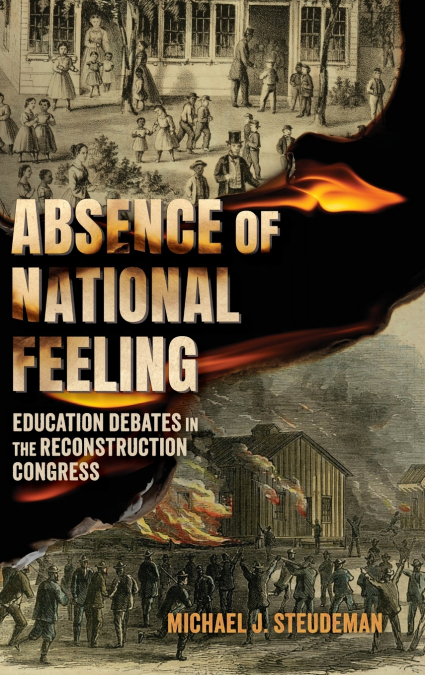
Absence of National Feeling

Absence of National Feeling

Michael J Steudeman

42,91 €
IVA incluido
Disponible
Editorial:
University Press of Mississippi
Año de edición:
2025
Materia
Historia de América
ISBN:
9781496858511
42,91 €
IVA incluido
Disponible

Selecciona una librería:

  • Librería Samer Atenea
  • Librería Aciertas (Toledo)
  • Kálamo Books
  • Librería Perelló (Valencia)
  • Librería Elías (Asturias)
  • Donde los libros
  • Librería Kolima (Madrid)
  • Librería Proteo (Málaga)

Before the start of the Civil War, the US Congress seldom took up the question of education, deferring regularly to a tradition of local control. In the period after the war, however, education became a major concern of the federal government. Many members of Congress espoused the necessity of schooling to transform southern culture and behavior, secure civil rights, and reconstruct the Union. Absence of National Feeling: Education Debates in the Reconstruction Congress analyzes how policymakers cultivated a rhetoric of public education to negotiate conflicts over federalism and civic belonging in the aftermath of the Civil War.Reconstruction Era advocates embraced education as a way to orchestrate the affective life of Americans. They believed education could marshal feelings of hope, love, shame, and pride to alter Americans’ predispositions toward other citizens. The most assertive educational advocates believed that schools would physically bring together children divided by race or religion, fostering shared affinities and dissolving racial hierarchies. Schooling promised to be an emotional adhesive, holding together the North and South and facilitating US expansion into the West.Through protracted debates over national education funding, the fate of the Freedmen’s Bureau, and school desegregation, members of Congress negotiated schools’ potential as a vehicle for social change. By Reconstruction’s end, most members of Congress accepted schooling as an element of national reconciliation. To reach this tenuous consensus, though, legislators sacrificed their call for schools to intervene in the feelings of prejudice, resentment, and superiority that sustained the culture of slavery. Rejecting a transformative educational vision, Congress took another tragic step in its abandonment of Reconstruction.Focusing on the words spoken in the Reconstruction Congress, Absence of National Feeling contends that educational rhetoric appealed to legislators debating whether the federal government could, or even should, alter public feeling. Tracing congressional transcripts between 1865 and 1877, author Michael J. Steudeman illustrates that these debates lastingly helped to both define and delimit the possible trajectories of education policy.

Artículos relacionados

  • Pan-Africanism and Education
    Kenneth J. King / Kenneth JKing
    This is an analysis of the complex links between Black America and Africa in the period of 1880 to 1945. It examines an extended white attempt to pattern politics and education in colonial Africa upon the example of the U.S. South. This export of United States race relations to Africa was resisted by Black intellectuals in the United States and many of the early nationalists in...
    Disponible

    24,60 €

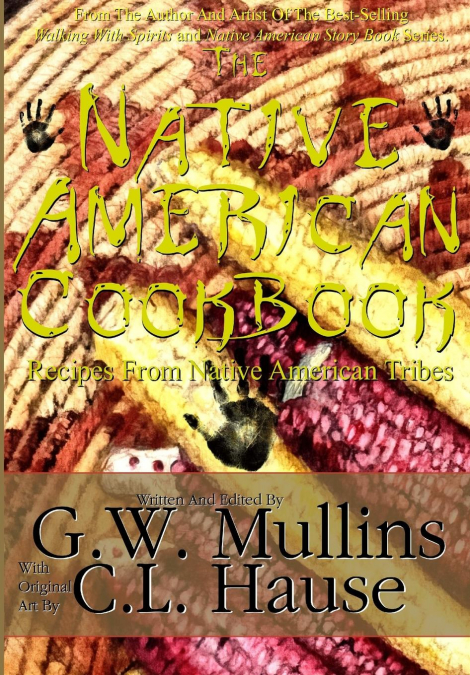
  • The Native American Cookbook Recipes From Native American Tribes
    G.W. Mullins
    Light Of The Moon Publishing along with Author G.W. Mullins and Illustrator / Artist C.L. Hause have joined together to explore Native American Indian Cooking.  More than just a cookbook, this Native American recipe collection offers a look into a forgotten past.  'The Native American Cookbook Recipes From Native American Tribes,' offers a large collection of recipes from and i...
    Disponible

    24,56 €

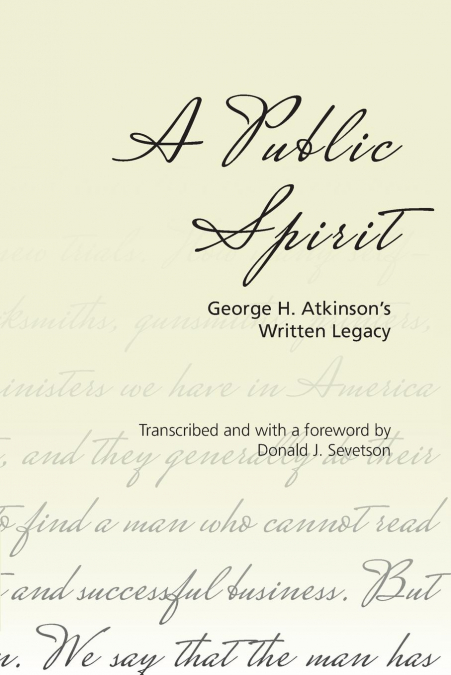
  • A Public Spirit
    George H. Atkinson
    George Henry Atkinson (1819-89) was a son of New England who arrived in the Oregon Territory in 1848, sent by the American Home Missionary Society. Although his commission from the Society specified that his work was to be ecclesiastical and educational, he took an approach to that assignment which went well beyond his mandate. Well-informed and energetic, he made an impact on ...
    Disponible

    10,45 €

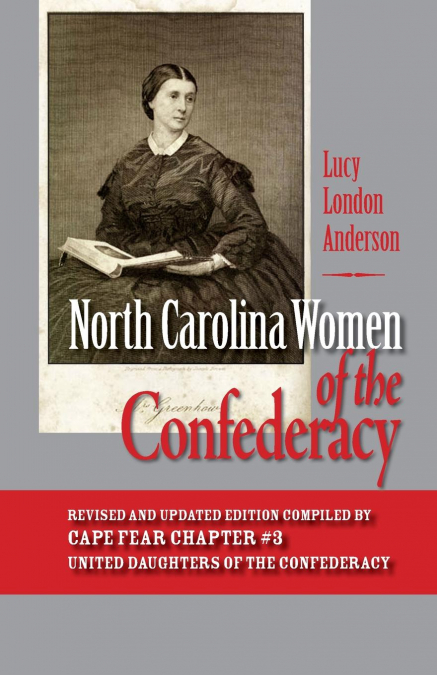
  • North Carolina Women of the Confederacy
    Lucy London Anderson
    Long out of print, this volume of recollections, stories, and verse provides a glimpse of women's lives on the home front-and sometimes in the thick of battle-during the War between the States. Nearly fifty years after the American Civil War, Lucy Worth London Anderson (Mrs. John Huske Anderson) of Fayetteville, N.C., compiled one of the first memorial collections honoring the...
    Disponible

    17,20 €

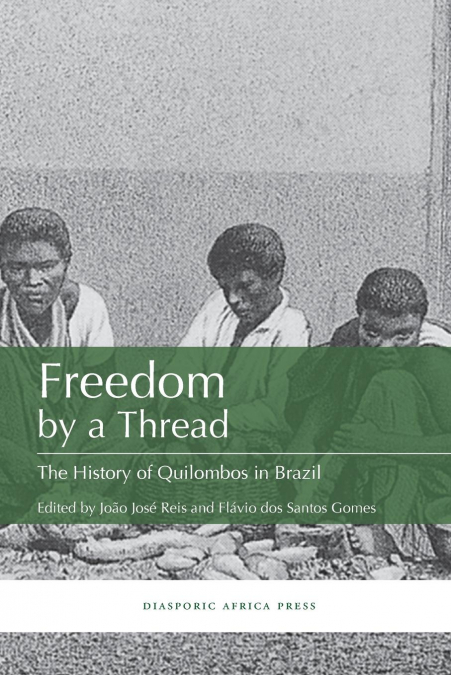
  • Freedom by a Thread
    Freedom by a Thread: The History of Quilombos in Brazil brings together some of the best scholars in the world working on the history of quilombos (maroon societies) in Brazil from a variety of perspectives and approaches. Over 40 percent of the total volume of captive Africans arrived in Brazil during a 400-year period of legal and contraband transatlantic slaving. If slavery ...
    Disponible

    36,71 €

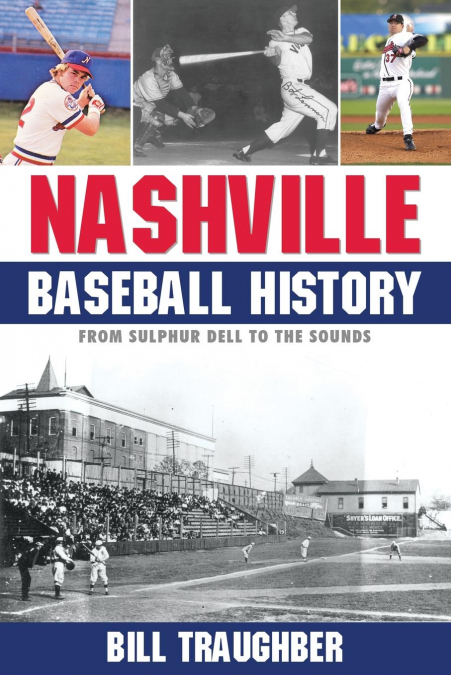
  • Nashville Baseball History
    Bill Traughber
    Nashville is a Big League city despite never having been home to a major league team. From the Civil War era, to star-studded exhibitions, to outstanding Negro Leagues teams, to some of the great minor league franchises of all time, few cities have as rich a baseball tradition as Nashville, Tennessee.Nashville sports historian Bill Traughber, who has been writing about baseball...
    Disponible

    13,15 €

Otros libros del autor

  • Absence of National Feeling
    Michael J Steudeman
    Before the start of the Civil War, the US Congress seldom took up the question of education, deferring regularly to a tradition of local control. In the period after the war, however, education became a major concern of the federal government. Many members of Congress espoused the necessity of schooling to transform southern culture and behavior, secure civil rights, and recons...