 Librería Samer Atenea
 Kálamo Books
 Librería Elías (Asturias)
 Librería Kolima (Madrid)
 Librería Proteo (Málaga)
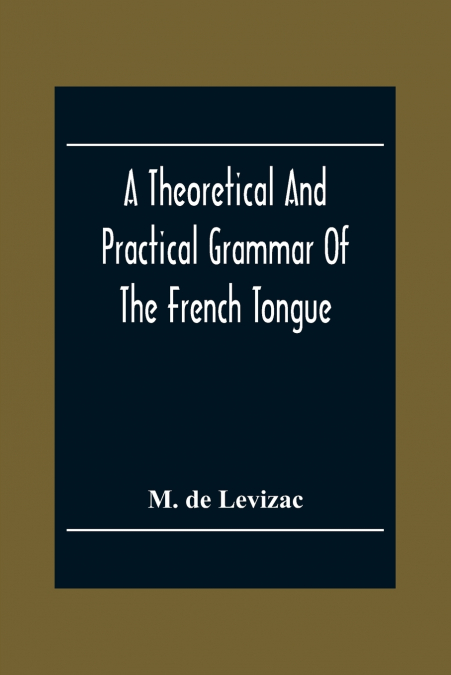
An exacting grammar for serious study and steady self-improvement. Clarity meets rigorous grammatical method. In A Theoretical And Practical Grammar Of The French Tongue, M. de Levizac marries theoretical exposition with practical exemplification, laying out present usage in alignment with French Academy standards. At once a French grammar textbook and a classic language guide, it examines French language structure with systematic rules, paradigms and comparative observations rather than loose anecdote. The tone is resolutely instructive yet readable: academic French study is served by precise definitions and formal statements, while self-study language learners and students of French will appreciate the stepwise examples and exercises that test application. The book also speaks to comparative interests; its cross-references and contrasts make it useful among comparative grammar books for anyone tracing the shifts that shaped modern usage, and tutors or linguists will find it a reliable reference.Republished by Alpha Editions in a careful modern edition, this volume preserves the spirit of the original while making it effortless to enjoy today - a heritage title prepared for readers and collectors alike. Historically significant as a document of nineteenth century French pedagogy and historical French instruction, de Levizac’s work belongs in the shelves of classic-literature collectors and in academic libraries that document the evolution of grammar teaching. Casual readers fascinated by linguistic history will find the explanations enlightening; those assembling a Levizac grammar collection or comparing primary sources will prize the book’s period authority and contextual notes. Part language learning reference, part cultural artefact, the edition bridges past and present: practical enough to support study, substantial enough to satisfy collectors and scholars. Teachers, philologists and translators often return to works like this for clarity of principle and reliable exemplification. Complementing modern courses, it also enriches private study, comparative research and historical scholarship across related disciplines.