 Librería Samer Atenea
 Kálamo Books
 Librería Elías (Asturias)
 Librería Kolima (Madrid)
 Librería Proteo (Málaga)
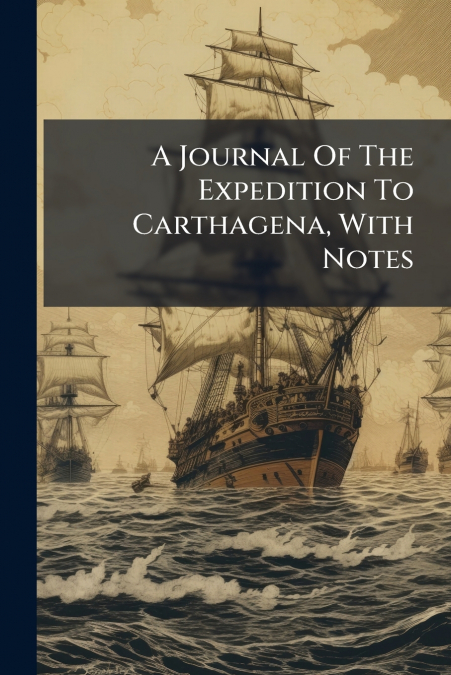
'A Journal Of The Expedition To Carthagena, With Notes' offers a detailed account of the ill-fated British expedition to Cartagena (modern-day Cartagena, Colombia) in 1741, during the War of Jenkins’ Ear. This historical document provides invaluable insights into the strategic decisions, challenges, and human cost of the campaign led by Admiral Edward Vernon.Written by an anonymous author with firsthand knowledge, the journal serves as a direct response to a previous pamphlet, offering alternative perspectives and supplementary notes on the events as they unfolded. The narrative captures the harsh realities faced by the British forces in the Caribbean, from disease and logistical failures to the formidable defenses of the Spanish colonial city.This edition allows modern readers to engage with a crucial moment in Anglo-Spanish colonial history, offering a unique window into the military, political, and social dynamics of the 18th century Caribbean.This work has been selected by scholars as being culturally important, and is part of the knowledge base of civilization as we know it. This work was reproduced from the original artifact, and remains as true to the original work as possible. Therefore, you will see the original copyright references, library stamps (as most of these works have been housed in our most important libraries around the world), and other notations in the work.This work is in the public domain in the United States of America, and possibly other nations. Within the United States, you may freely copy and distribute this work, as no entity (individual or corporate) has a copyright on the body of the work.As a reproduction of a historical artifact, this work may contain missing or blurred pages, poor pictures, errant marks, etc. Scholars believe, and we concur, that this work is important enough to be preserved, reproduced, and made generally available to the public. We appreciate your support of the preservation process, and thank you for being an important part of keeping this knowledge alive and relevant.