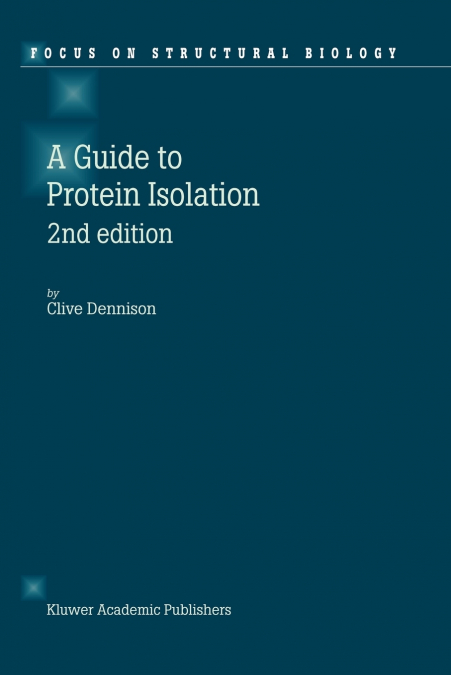
A Guide to Protein Isolation

A Guide to Protein Isolation

C. Dennison

66,71 €
IVA incluido
Disponible
Editorial:
Springer Nature B.V.
Año de edición:
2013
Materia
Bioquímica
ISBN:
9789401741729
66,71 €
IVA incluido
Disponible

Selecciona una librería:

  • Librería Samer Atenea
  • Librería Aciertas (Toledo)
  • Kálamo Books
  • Librería Perelló (Valencia)
  • Librería Elías (Asturias)
  • Donde los libros
  • Librería Kolima (Madrid)
  • Librería Proteo (Málaga)

It is a truism of science that the more fundamental the subject, the more universally applicable it is. Nevertheless, it is important to strike a level of 'fundamentalness' appropriate to the task in hand. For -depth study of the mechanics of motor cars would tell one example, an in nothing about the dynamics of traffic. Traffic exists on a different 'level' - it is dependent upon the existence of motor vehicles but the physics and mathematics of traffic can be adequately addressed by considering motor vehicles as mobile 'blobs',with no consideration of how they become mobile. To start a discourse on traffic with a consideration of the mechanics of motor vehicles would thus be inappropropriate. In writing this volume, I have wrestled with the question of the appropriate level at which to address the physics underlying many of the techniques used in protein isolation. I have tried to strike a level as would be used by a mechanic (with perhaps a slight leaning towards an engineer) - i.e. a practical level, offering appropriate insight but with minimal mathematics. Some people involved in biochemical research have a minimal grounding in chemistry and physics and so I have tried to keep it as simple as possible.
Artículos relacionados

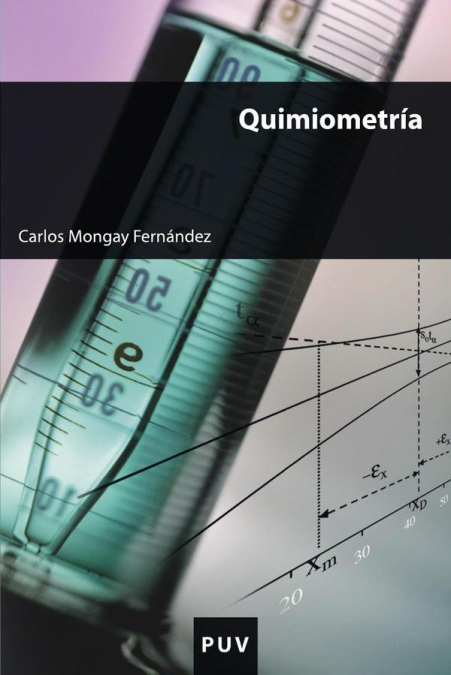
  • Quimiometría
    Carlos Mongay Fernández
    Es insólito que siendo la química analítica la ciencia de la medida química, estén tan descuidadas las bases en las que ésta se asienta y tan infrautilizadas las potencialidades que ofrecen diversas técnicas quimiométricas de trabajo. El presente manual plantea y discute esas bases de una forma sistemática: arranca con una rápida ojeada a los principios de la estadística, para ...
    Disponible

    30,00 €

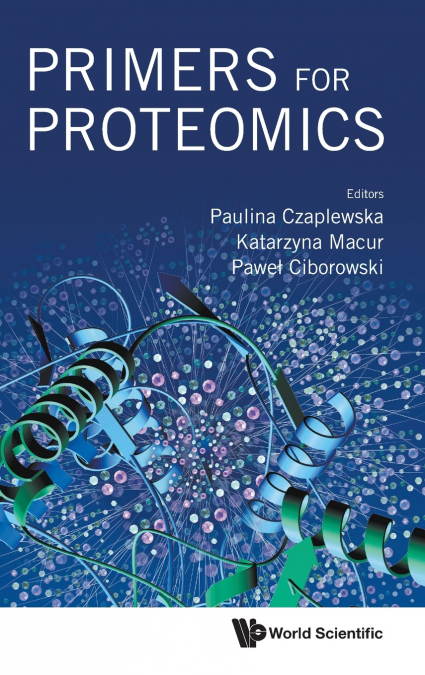
  • PRIMERS FOR PROTEOMICS
    CZAPLEWSKA PAULINA / KATARZYNA MACUR PAW PAULINA CZAPLEWSKA
    This book contains examples written by internationally recognized experts applying proteomics and analysis applications of mass spectrometry in their everyday research. They dedicate this book to a broad audience of all scientists to encourage them to use the omics approach to investigate biological processes.The first chapter is a short introduction to the basics of analytical...
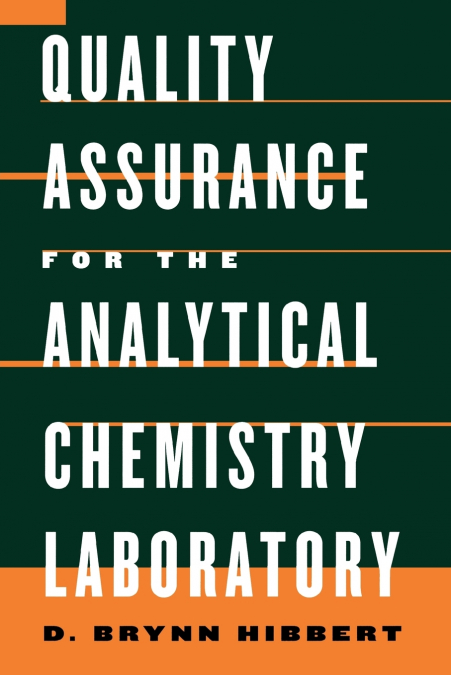
  • Quality Assurance for the Analytical Chemistry Laboratory
    D. Brynn Hibbert
    ...
    Disponible

    100,42 €

  • Surfactants
    Laurier L. Schramm / Laurier LSchramm
    ...
  • Chemistry
    William B. Tucker
    Providing a holistic overview of general chemistry and its foundational principles, this textbook is an essential accompaniment to students entering the field. It is designed with the reader in mind, presenting the development of ideas to frame and center new concepts as well as providing sources for all topics covered. ...
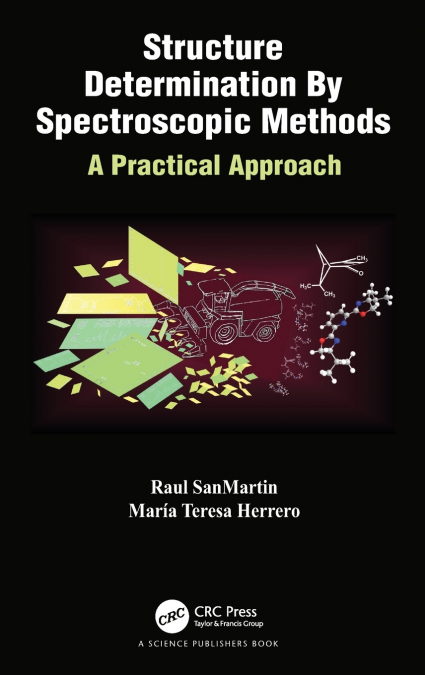
  • Structure Determination By Spectroscopic Methods
    Maria Teresa Herrero / Raul SanMartin
    A number of increasingly more complex problems will act as trip segments, and in addition to the spectra themselves, each chapter is supplemented with figures and tables that decipher the above data and serve as maps for the journey. ...

Otros libros del autor

  • A Guide to Protein Isolation
    C. Dennison
    It is a truism of science that the more fundamental the subject, the more universally applicable it is. Neverthelens, it is important to strike a level of 'fundamentalness' appropriate to the task in hand. For example, an in-depth study of the mechanics of motor cars would tell one nothing about the dynamics of traffic. Traffic exists on a different '...
    Disponible

    132,82 €

  • A Guide to Protein Isolation
    C. Dennison
    It is a truism of science that the more fundamental the subject, the more universally applicable it is. Neverthelens, it is important to strike a level of 'fundamentalness' appropriate to the task in hand. For example, an in-depth study of the mechanics of motor cars would tell one nothing about the dynamics of traffic. Traffic exists on a different '...