 Librería Samer Atenea
 Kálamo Books
 Librería Elías (Asturias)
 Librería Kolima (Madrid)
 Librería Proteo (Málaga)
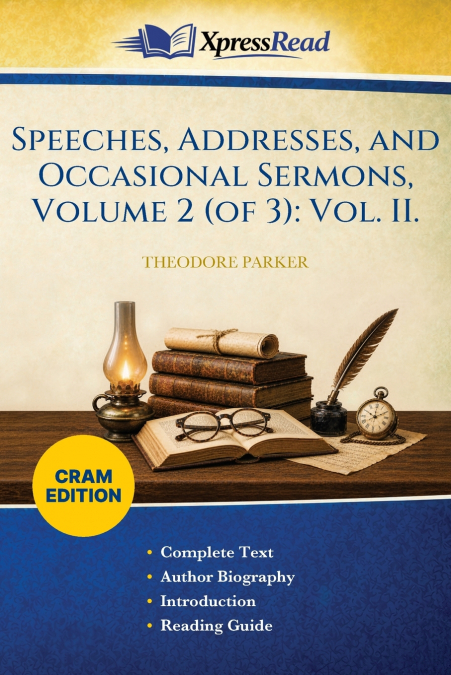
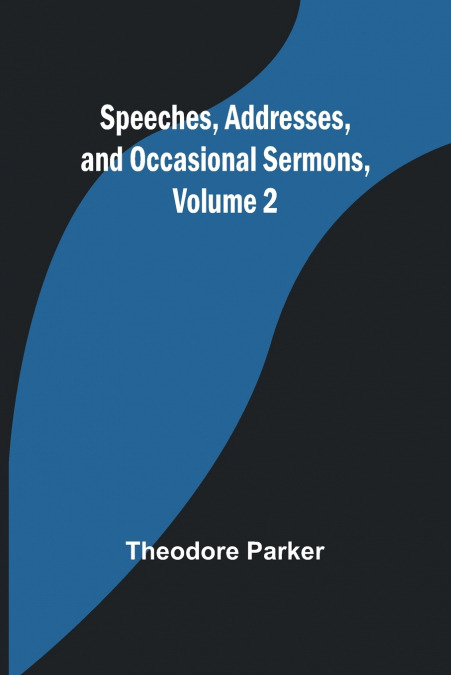
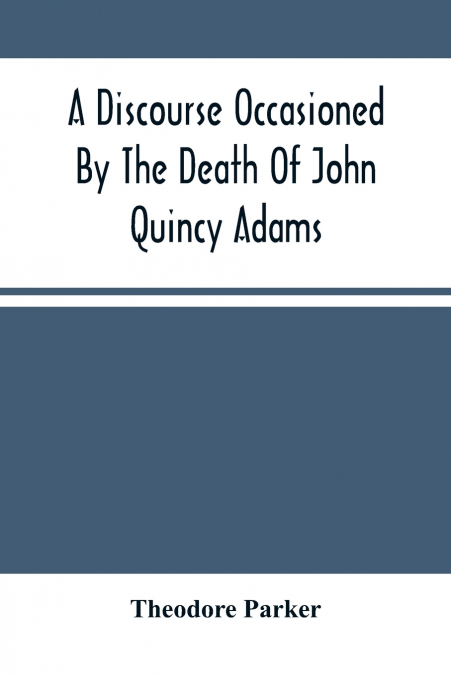
Death stopped a statesman; Boston answered with fire.A nation listens, stunned, grieving.Delivered at the Melodeon on 5 March 1848, Theodore Parker’s Boston 1848 address preserves the immediacy of a political memorial speech for John Quincy Adams, spoken days after his death. Part funeral oration transcript, part moral reckoning, it brings the John Quincy Adams legacy into sharp relief: a life of public service set against the turbulence of antebellum American politics. Parker, famed for Theodore Parker sermons and his role in transcendentalist reform speeches, writes as a citizen-preacher, turning private loss into public argument with the force of abolitionist political rhetoric.Read today, this American history primary source stands at the crossroads of pulpit and podium, making it invaluable for rhetoric and oratory study as well as for readers drawn to a historical sermon collection from New England’s most charged civic rooms. It echoes the culture of New England lyceum lectures, where ideas were performed, contested, and carried into the street. Unflinching and intimate, it shows how mourning can become a measure of national conscience. For newcomers, it reads like a brisk civic drama, full of conviction and human scale. For classic-literature collectors, it offers a defining document of reform-era Boston and a touchstone for understanding the language that carried abolition and democratic ideals forward today. Out of print for decades and now republished by Alpha Editions, restored for today’s and future generations, it is more than a reprint -- a collector’s item and a cultural treasure.