 Librería Samer Atenea
 Kálamo Books
 Librería Elías (Asturias)
 Librería Kolima (Madrid)
 Librería Proteo (Málaga)
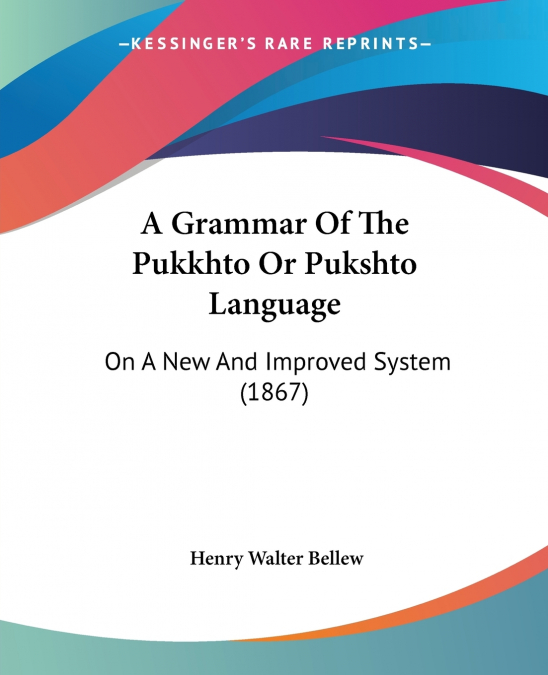
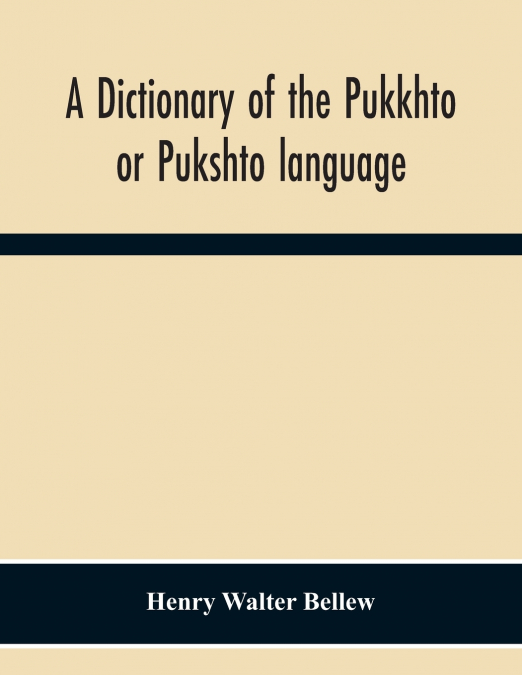
An indispensable key to Pashto’s past. A living language in time. Henry Walter Bellew’s A Dictionary of the Pukkhto or Pukshto Language is a nineteenth-century labour of philological care that traces Pashto vocabulary to Indian and Persian sources. This pukhto language dictionary serves as a pashto english reference and more, pairing clear entries with rigorous notes on the etymology of pashto words and the persian language influence that shaped them. Accessible yet scholarly, it functions both as a language learners resource and an academic research tool for anyone probing dialects, idioms and historical usage. Bellew’s methodical cross-referencing invites readers to follow words across Indian tongues and Persian antecedents, revealing connections that shorter glossaries overlook.As an indian languages lexicon it illumines shared roots across the subcontinent and provides durable context for students of nineteenth century linguistics and for specialists in south asian languages. Its value as a historical linguistics reference is matched by practical utility: casual readers and travellers will discover cultural and lexical surprises, while classic-literature collectors and researchers in pashto language studies will prize the meticulous attributions and period perspective. The book’s balance of readable definitions and archival depth makes it a comprehensive pashto dictionary as useful to translators and historians as it is to curious natives and newcomers. Translators and lexicographers consult it for dated meanings and loanword pathways; anthropologists and regional historians draw from its entries to reconstruct social and literary contexts. Its recorded forms and glosses often serve as primary data in modern philological work.Republished by Alpha Editions in a careful modern edition, this volume preserves the spirit of the original while making it effortless to enjoy today - a heritage title prepared for readers and collectors alike. Restored with respect and prepared for modern use, it belongs on the shelves of language lovers, historians, archivists and anyone seeking a deeper, historically grounded understanding of Pashto and its place among the region’s tongues.