 Librería Samer Atenea
 Kálamo Books
 Librería Elías (Asturias)
 Librería Kolima (Madrid)
 Librería Proteo (Málaga)
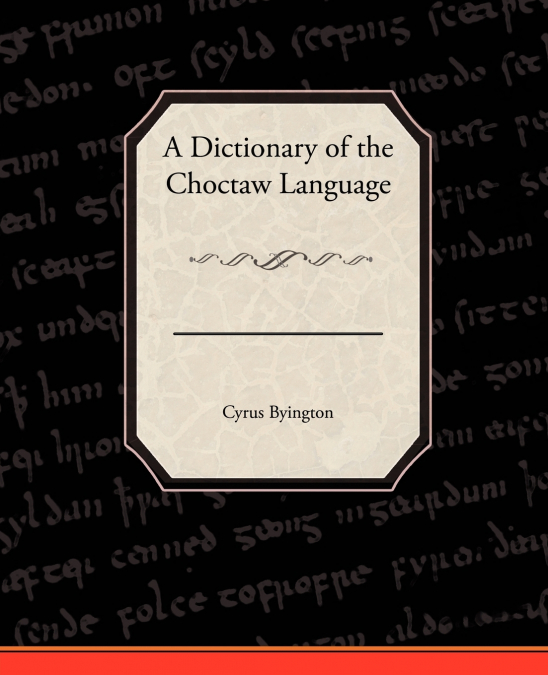
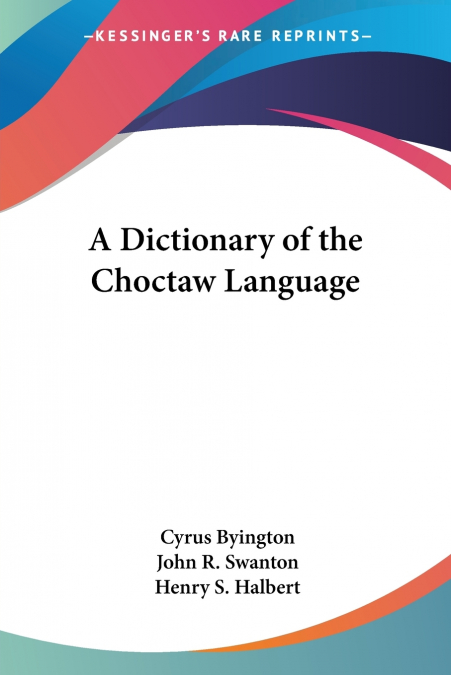
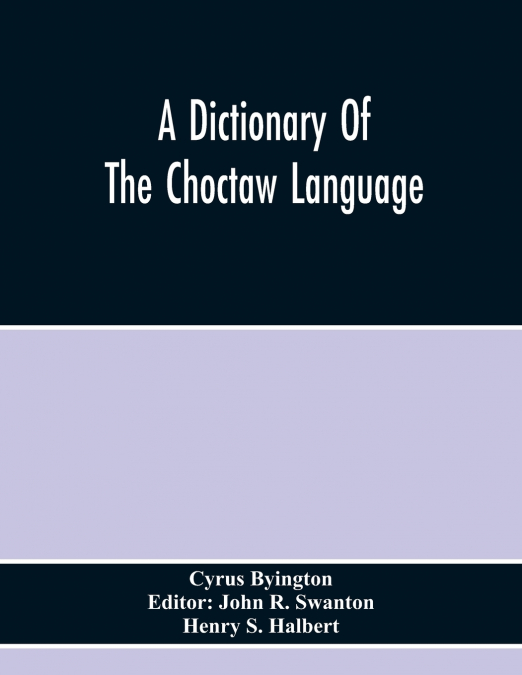
A Dictionary of the Choctaw Language maps a people’s vocabulary with exacting care and quiet respect. Essential for students and scholars. Cyrus Byington’s nineteenth-century lexicon stands as a choctaw language dictionary, bilingual reference book and choctaw vocabulary guide rolled into one: entries give clear translations, grammatical notes and contextual usage that make the work indispensable as both a language learners resource and an academic research tool. Readers drawn to native american language books will find its pages accessible and richly informative, while students of native american linguistics and native american studies will recognise a foundational source. Plain in presentation but profound in content, it bridges field notes and systematic description without losing the human voices behind the words.Republished by Alpha Editions in a careful modern edition, this volume preserves the spirit of the original while making it effortless to enjoy today - a heritage title prepared for readers and collectors alike. First issued in the nineteenth century, Byington’s work records vocabulary from the southeastern united states tribes and stands among Cyrus Byington works as a principal witness to 19th century native languages. Long consulted by philologists, historians and field linguists, the dictionary remains an academic research tool that feeds comparative studies across the Americas. At the same time it functions as a practical language learners resource: teachers, community activists and independent students use its entries as a dependable choctaw vocabulary guide when reconstructing speech, naming practices or cultural terms. Casual readers interested in native american studies will find cultural snapshots embedded in brief definitions; collectors of native american language books and classic literature alike will value the restored edition for its scholarship and provenance. The book’s clear presentation and cross-referential care make it suited to classroom use, library holdings and community archives. Above all, its continued availability supports indigenous language preservation by providing a durable lexical record for revival projects, comparative research and everyday learning.