Inicio > Economía, finanzas, empresa y gestión > Economía > Macroeconomía > A Comparison of Household Food Security in Canada and the United States
A Comparison of Household Food Security in Canada and the United States

A Comparison of Household Food Security in Canada and the United States

Heather Hopwood / Mark Nord / United Economic Research Service (ERS)

14,77 €
IVA incluido
Disponible
Editorial:
Scholar’s Choice
Año de edición:
2015
Materia
Macroeconomía
ISBN:
9781297044069
14,77 €
IVA incluido
Disponible

Selecciona una librería:

  • Librería Samer Atenea
  • Librería Aciertas (Toledo)
  • Kálamo Books
  • Librería Perelló (Valencia)
  • Librería Elías (Asturias)
  • Donde los libros
  • Librería Kolima (Madrid)
  • Librería Proteo (Málaga)

Food security-consistent access to enough food for an active, healthy life-is essential for health and good nutrition. The extent to which a nation’s population achieves food security is an indication of its material and social well-being. Differences in the prevalence of household-level food insecurity between Canada and the United States are described at the national level and for selected economic and demographic subpopulations. Associations of food security with economic and demographic characteristics are examined in multivariate analyses that hold other characteristics constant. Comparable measures of household food security were calculated from the nationally representative Canadian Community Health Survey Cycle 2.2 (2004) and the U.S. Current Population Survey Food Security Supplement (2003-05). Based on the standard U.S. methodology, the percentage of the population living in households classified as food insecure was lower in Canada (7.0 percent) than in the United States (12.6 percent). The difference was greater for the percentage of children living in food-insecure households (8.3 percent vs. 17.9 percent) than for adults (6.6 percent vs. 10.8 percent). These differences primarily reflected different prevalence rates of food insecurity for Canadian and U.S. households with similar demographic and economic characteristics. Differences in population composition on measured economic and demographic characteristics account for only about 15 to 30 percent of the overall Canada-U.S. difference.This work has been selected by scholars as being culturally important, and is part of the knowledge base of civilization as we know it. This work was reproduced from the original artifact, and remains as true to the original work as possible. Therefore, you will see the original copyright references, library stamps (as most of these works have been housed in our most important libraries around the world), and other notations in the work.This work is in the public domain in the United States of America, and possibly other nations. Within the United States, you may freely copy and distribute this work, as no entity (individual or corporate) has a copyright on the body of the work.As a reproduction of a historical artifact, this work may contain missing or blurred pages, poor pictures, errant marks, etc. Scholars believe, and we concur, that this work is important enough to be preserved, reproduced, and made generally available to the public. We appreciate your support of the preservation process, and thank you for being an important part of keeping this knowledge alive and relevant.
Artículos relacionados

  • Introduction to Dynamic Macroeconomic General Equilibrium Models
    José Luis Torres Chacon
    This book offers an introductory step-by-step course in Dynamic Stochastic General Equilibrium modelling. Modern macroeconomic analysis is increasingly concerned with the construction, calibration and/or estimation and simulation of Dynamic General Equilibrium (DGE) models. The book is intended for graduate students as an introductory course to DGE modelling and for those econo...
    Disponible

    61,40 €

  • International Education and the Next-Generation Workforce
    Wei Wang
    Education is the first stage in developing a viable, dynamic, and long-lived global economy. Unfortunately, in times of economic hardship, educational programs, teacher salaries, and extracurricular opportunities are often the first to be cut. International Education and the Next-Generation Workforce: Competition in the Global Economy presents a detailed discussion of present e...
    Disponible

    236,17 €

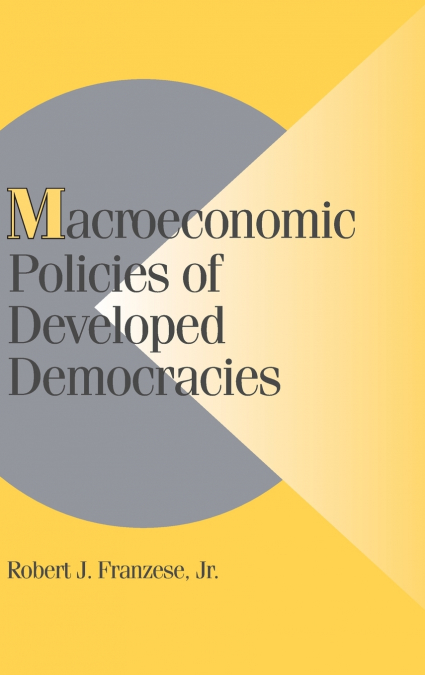
  • Macroeconomic Policies of Developed Democracies
    Robert J Franzese Jr
    ...
    Disponible

    113,93 €

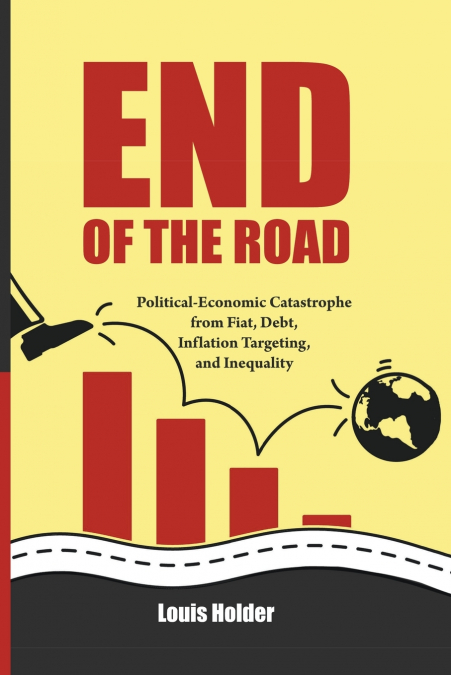
  • End Of The Road
    Louis Holder
    This book is about the mismanagement of Western economies in pursuit of political power, which resulting devastation will have to be borne by future generations. The book establishes that postponement is no longer doable and lays out the hard choices ahead causing much misery and agony.Although not fully recognized because of masking by asset bubbles, which are spun/sold as in...
    Disponible

    16,42 €

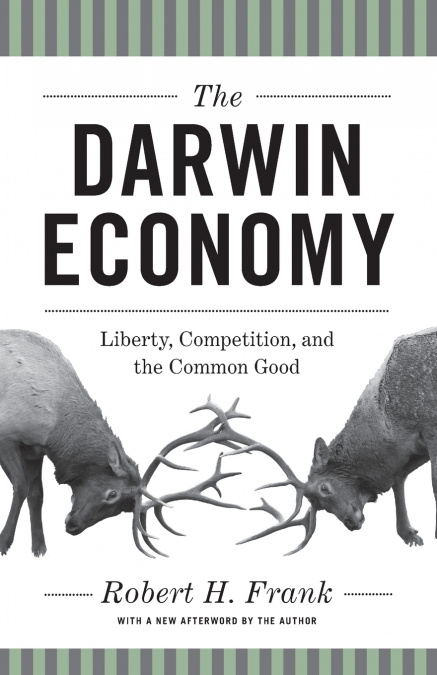
  • The Darwin Economy
    Robert H. Frank
    What Charles Darwin can teach us about building a fairer societyWho was the greater economist-Adam Smith or Charles Darwin? The question seems absurd. Darwin, after all, was a naturalist, not an economist. But Robert Frank, New York Times economics columnist and best-selling author of The Economic Naturalist, predicts that within the next century Darwin will unseat Smith as the...
    Disponible

    22,42 €

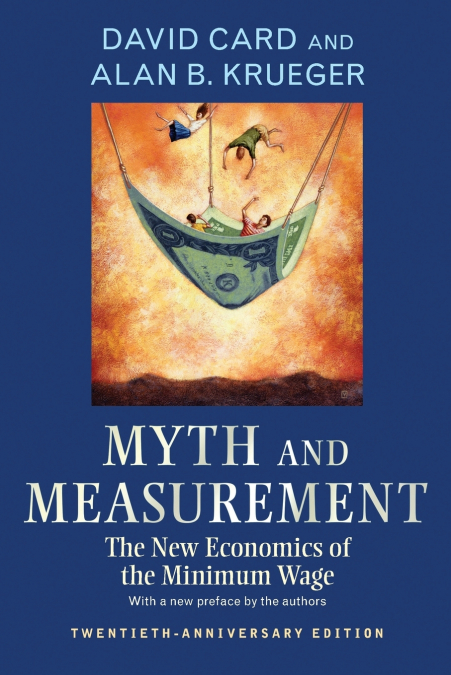
  • Myth and Measurement
    Alan B. Krueger / David Card
    From David Card, winner of the Nobel Prize in Economics, and Alan Krueger, a provocative challenge to conventional wisdom about the minimum wageDavid Card and Alan B. Krueger have already made national news with their pathbreaking research on the minimum wage. Here they present a powerful new challenge to the conventional view that higher minimum wages reduce jobs for low-wage ...
    Disponible

    39,64 €