 Librería Samer Atenea
 Kálamo Books
 Librería Elías (Asturias)
 Librería Kolima (Madrid)
 Librería Proteo (Málaga)
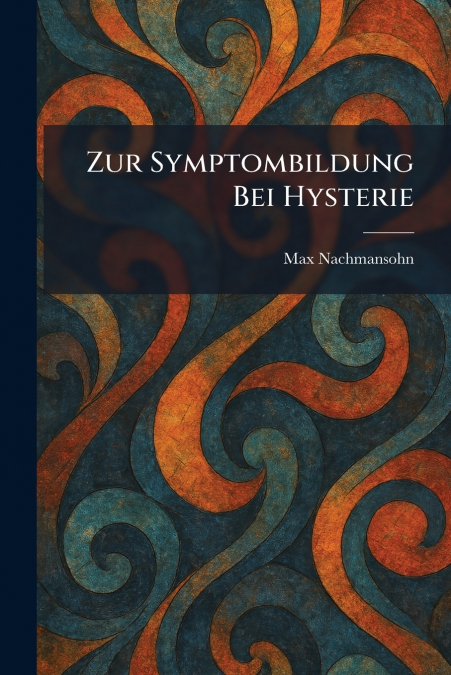
'Zur Symptombildung Bei Hysterie' von Max Nachmansohn stellt eine tiefgreifende Untersuchung der psychologischen Prozesse dar, die der Entstehung hysterischer Symptome zugrunde liegen. Das Werk, das in der Blütezeit der psychoanalytischen Theoriebildung entstand, widmet sich der Frage, wie unbewusste Konflikte und emotionale Spannungen in physische Manifestationen oder psychische Störungen transformiert werden.Nachmansohn analysiert klinische Fallbeispiele und theoretische Modelle, um die Dynamik der Symptombildung zu verdeutlichen. Dabei stützt er sich auf die damals aktuellen Erkenntnisse der Psychiatrie und Psychoanalyse, um ein umfassendes Bild der Hysterie als komplexes Krankheitsbild zu zeichnen. Die Arbeit bietet nicht nur Einblicke in die therapeutische Praxis des frühen 20. Jahrhunderts, sondern leistet auch einen wichtigen Beitrag zum Verständnis der menschlichen Psyche und der psychosomatischen Zusammenhänge.Dieses Buch ist eine wertvolle Ressource für Fachleute der Psychologie und Medizin sowie für Historiker der Wissenschaft, die sich für die historische Entwicklung psychiatrischer Konzepte interessieren. Es bleibt ein signifikantes Dokument für das Studium der Psychoanalyse und der Erforschung neurotischer Störungen.This work has been selected by scholars as being culturally important, and is part of the knowledge base of civilization as we know it. This work was reproduced from the original artifact, and remains as true to the original work as possible. Therefore, you may see the original copyright references, library stamps (as most of these works have been housed in our most important libraries around the world), and other notations in the work.This work is in the public domain in the United States of America, and possibly other nations. Within the United States, you may freely copy and distribute this work, as no entity (individual or corporate) has a copyright on the body of the work.As a reproduction of a historical artifact, this work may contain missing or blurred pages, poor pictures, errant marks, etc. Scholars believe, and we concur, that this work is important enough to be preserved, reproduced, and made generally available to the public. We appreciate your support of the preservation process, and thank you for being an important part of keeping this knowledge alive and relevant.