Inicio > Sociedad y ciencias sociales > Política y gobierno > Young people in post-Soviet Russia
Young people in post-Soviet Russia

Young people in post-Soviet Russia

Nadia Ptashchenko

19,45 €
IVA incluido
Disponible
Editorial:
GRIN Verlag
Año de edición:
2009
Materia
Política y gobierno
ISBN:
9783640398751
19,45 €
IVA incluido
Disponible

Selecciona una librería:

  • Librería Samer Atenea
  • Librería Aciertas (Toledo)
  • Kálamo Books
  • Librería Perelló (Valencia)
  • Librería Elías (Asturias)
  • Donde los libros
  • Librería Kolima (Madrid)
  • Librería Proteo (Málaga)

Seminar paper from the year 2008 in the subject Politics - International Politics - Region: Russia, grade: 7, Uppsala University, course: M.A. 'Euroculture: Europe in the Wider World', language: English, abstract: During the course of the twentieth century, the Soviet Union rose and fell, and Russia re-emerged. The Russians were left 'feeling robbed of a sense of place, of purpose and of identity' . By the mid-1990’s, Russia, while contending with the ups and downs of economic crisis and the health of its leaders, was trying to find its own course, attempting to resurrect past glories, learn from recent mistakes, and forge a place in a community of nations. Together with society, youth was going through a period of change in its ideological, economic and moral values. According to Martha Olcott, 'it was Russian youth, who seemed to suffer disproportionately from the numerous social disorders in the USSR at the end of the decade'. Ilynsky talks about the widespread moral decay in Russia in the 1990’s and the lack of direction among many young people - 'their poor understanding of freedom, lack of faith in politicians, growing sense of injustice and general concerns about what the future might bring'. Russian identity is and has been a topic of continual argument, of conflicting claims, competing images, contradictory criteria. According to S. Franklin, 'Russia is continually represented as a question, a field of possibilities, a set of contradictions'. After the collapse of the Soviet Union in 1991 even more intensified self-questioning in the 'new' Russia started. Usually, such questions have been posed by the young population of Russia who happened to live in the period of global economic and ideological transitions. What kind of country is Russia to be? What has happened to young people in the post-Communist phase? The focus of this paper is how the changing economic, political and social geography of Russia affected the youth since the fall of communism in 1991
Artículos relacionados

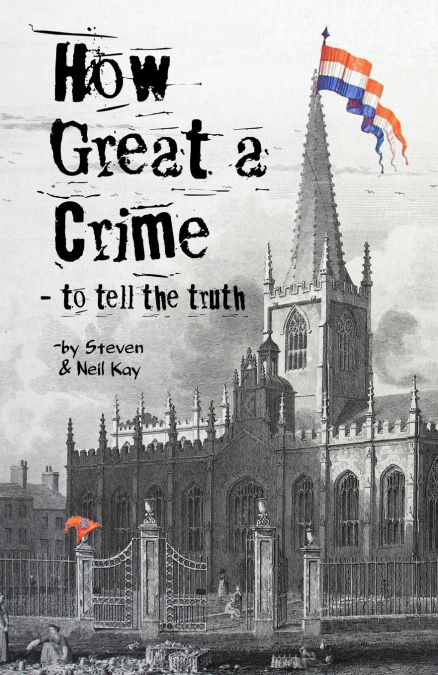
  • How Great a Crime - to tell the truth
    Neil Kay / Steven Kay
    Joseph Gales was one of the all-time great Sheffielders – forget Joe Cocker, Jessica Ennis-Hill, Sean Bean or Michael Palin. These are all minnows compared to Joseph Gales – and their stories are boring besides that of the Galeses. The Galeses story has been forgotten and has not been brought together in one place before – it is not just something dredged up from history – an i...
    Disponible

    10,33 €

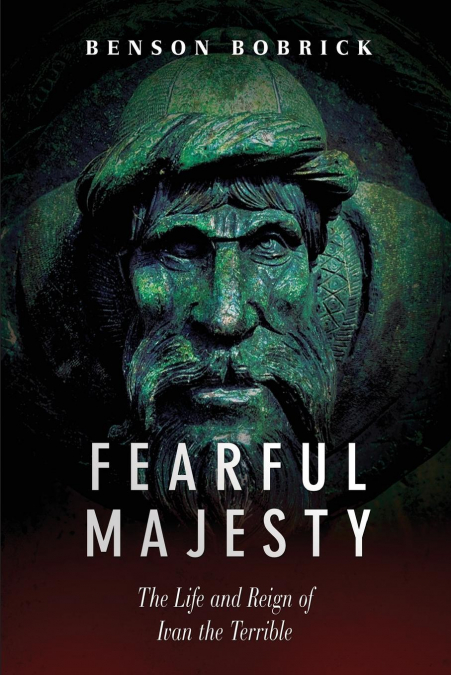
  • Fearful Majesty
    Benson Bobrick
    Ivan the Terrible - the name evokes the legend of a cruel and dangerously insane tyrant. Fearful Majesty explores that legend and exposes the man, his nature, and his time.This acclaimed biography of one of Russia’s most important and tyrannical rulers is not only a rich, readable biography, it is also surprisingly timely, revealing how many of the issues Russia faces today hav...
    Disponible

    19,27 €

  • Economic Optimization of Innovation & Risk
    Robert Shuler
    A Theory of Crash Rate for Private & Public Projects with Critical or non-Critical systems.Analyzing & managing risk has been a quest for 5000 years, and is essential to everything from water supplies, finance, and agriculture to computers and space travel. At last there is a quantitative theory and a simple equation that allows you to: - choose your failure rate - get there...
    Disponible

    13,02 €

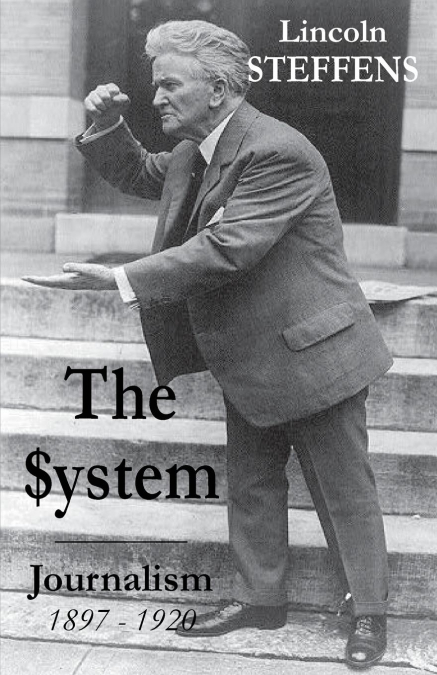
  • The System
    Lincoln Steffens
    The 'muckraker' Lincoln Steffens dug deep into business criminality and political corruption in a powerful series of articles written for McClure's magazine. Establishment newspapers and 'System' politicians dismissed his work as just another example of the decrepit modern journalism that could never pass for genuine writing. But Steffens' dogged quest for truth and justice set...
    Disponible

    23,66 €

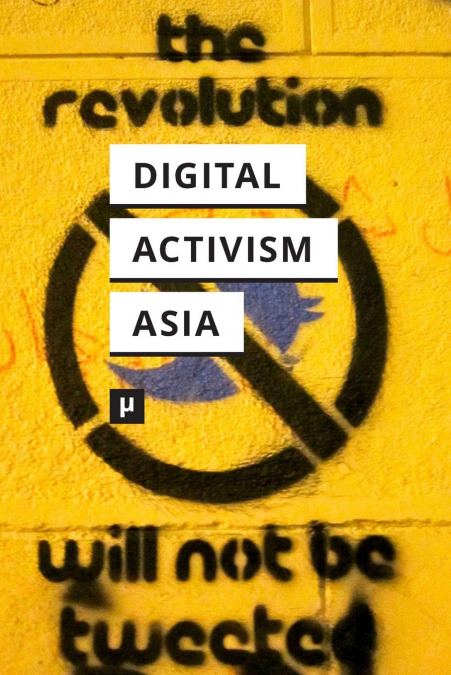
  • Digital Activism in Asia Reader
    The digital turn might as well be marked as an Asian turn. From flash-mobs in Taiwan to feminist mobilisations in India, from hybrid media strategies of Syrian activists to cultural protests in Thailand, we see the emergence of political acts that transform the citizen from being a beneficiary of change to becoming an agent of change. In co-shaping these changes, what the digit...
    Disponible

    22,19 €

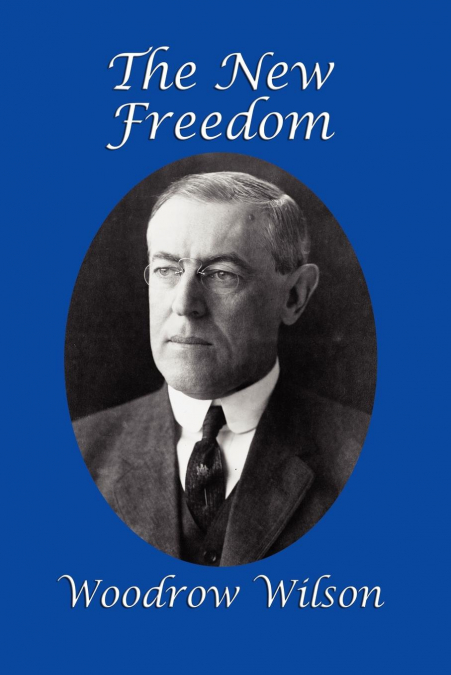
  • The New Freedom
    Woodrow Wilson
    In 1912, Woodrow Wilson was the Democratic nominee for President of the United States. He campaigned against the Republican incumbent, William Howard Taft, and Taft’s predecessor, Theodore Roosevelt, who had split off from the Republican Party to form his own Progressive, or Bull Moose, Party. Much of the campaign focused on the US economy, particularly the candidates’ views of...
    Disponible

    8,67 €