Inicio > Economía, finanzas, empresa y gestión > Economía > Wirtschaftliche Entleerungsgebiete in Industrieländern
Wirtschaftliche Entleerungsgebiete in Industrieländern

Wirtschaftliche Entleerungsgebiete in Industrieländern

Fritz Voigt / Johannes Frerich / Rainer Radel

85,01 €
IVA incluido
Disponible
Editorial:
Springer Nature B.V.
Año de edición:
1969
Materia
Economía
ISBN:
9783663040231
85,01 €
IVA incluido
Disponible

Selecciona una librería:

  • Librería Samer Atenea
  • Librería Aciertas (Toledo)
  • Kálamo Books
  • Librería Perelló (Valencia)
  • Librería Elías (Asturias)
  • Donde los libros
  • Librería Kolima (Madrid)
  • Librería Proteo (Málaga)

I. Begriff und Typologie der wirtschaftlichen Entleerungsgebiete in Industrieländern a) Begriff Seit der Weltwirtschaftskrise stand die Frage der Beschäftigung im Mittelpunkt der wirt­ schaftspolitischen Diskussion. An ihre Stelle ist mit der Wandlung der wirtschaftlichen Gegebenheiten die wachstumsorientierte Fragestellung getreten. Ein Blick in die Wirklich­ keit zeigt, daß das industrielle Wachstum sich im Industrialisierungsprozeß nicht räumlich gleichmäßig verteilt hat. In allen Industriestaaten gibt es besonders stark industrialisierte Gebiete, die den größten Teil des volkswirtschaftlichen Kapitalstocks, der Bevölkerung und der natürlichen Ressourcen sowie des Sozialprodukts auf sich vereinigen. In allen Industrieländern bestehen neben diesen Gebieten aber auch Regionen, die in ihrer Wirt­ schaftskraft und in ihrem Wohlstandsniveau weit unter dem Durchschnitt des jeweiligen Landes liegen. Solche Gebiete sind als Entleerungsgebiete zu bezeichnen: Entleerung ist insofern ein relativer Begriff (1). b) Typologie 1. In der Entwicklung zurückgeworfene Gebiete Die wirtschaftlichen Entleerungsgebiete werden in dieser Untersuchung nach einer Eintei­ lung von VITa (2) unterschieden in Gebiete, die in der Entwicklung zurückgeblieben sind, und in solche, die in der wirtschaftlichen Entwicklung zurückgeworfen wurden. Diejenigen Problemgebiete, die in der wirtschaftlichen Entwicklung zurückgeworfen wurden, haben zwar schon einen hohen Industrialisierungsgrad erreicht, befinden sich jedoch in einem Zustand der Stagnation oder der Rückentwicklung, der sich entweder auf die gesamte Wirtschaft oder aber zumindest auf die tragenden Wirtschaftszweige dieser Räume erstreckt. 2. In der Entwicklung zurückgebliebene Gebiete In unserer Untersuchung befassen wir uns in erster Linie mit der Entstehung von in der Entwicklung zurückgebliebenen Gebieten.
Artículos relacionados

  • Principles of Economics 2e
    David Shapiro / Steven A. Greenlaw / Steven AGreenlaw / Timothy Taylor
    Principles of Economics 2e covers the scope and sequence of most introductory economics courses. The text includes many current examples, which are handled in a politically equitable way. The outcome is a balanced approach to the theory and application of economics concepts. The second edition has been thoroughly revised to increase clarity, update data and current event impact...
    Disponible

    49,73 €

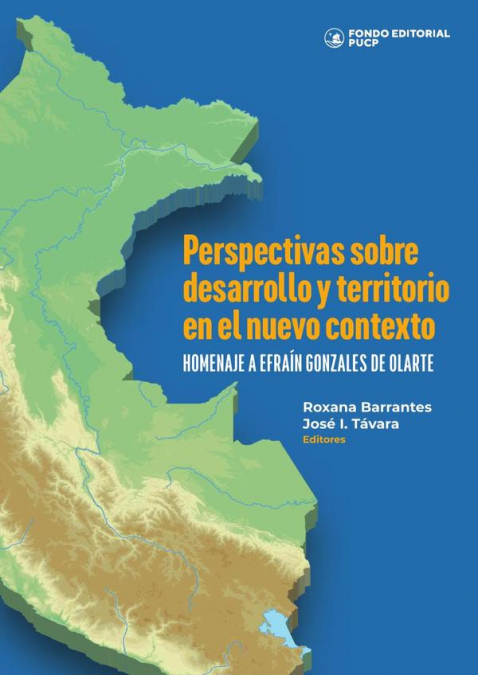
  • Perspectivas sobre desarrollo y territorio en el nuevo contexto
    José I. Távara / Roxana Barrantes
    Las contribuciones de este volumen intentan expresar el reconocimiento y el homenaje a Efraín Gonzales de Olarte, entrañable integrante de nuestra comunidad universitaria, una persona comprometida con la investigación y la formación de varias generaciones de profesionales y ciudadanos, dedicada al fortalecimiento de la educación en nuestro país, tanto dentro como fuera de las a...
    Disponible

    20,75 €

  • Comparable Worth
    Elaine Sorensen
    For decades women working as nurses, librarians, and secretaries have argued that they are paid less than men in jobs requiring comparable skill and effort. By the late 1980s, the notion of 'comparable worth' had become a familiar one, and comparable worth initiatives were being developed to counteract the persistent disparities between male and female pay. In a comprehensive a...
    Disponible

    47,60 €

  • The Social Life of Money
    Nigel Dodd
    A reevaluation of what money is-and what it might beQuestions about the nature of money have gained a new urgency in the aftermath of the global financial crisis. Even as many people have less of it, there are more forms and systems of money, from local currencies and social lending to mobile money and Bitcoin. Yet our understanding of what money is-and what it might be-hasn’t ...
    Disponible

    36,83 €

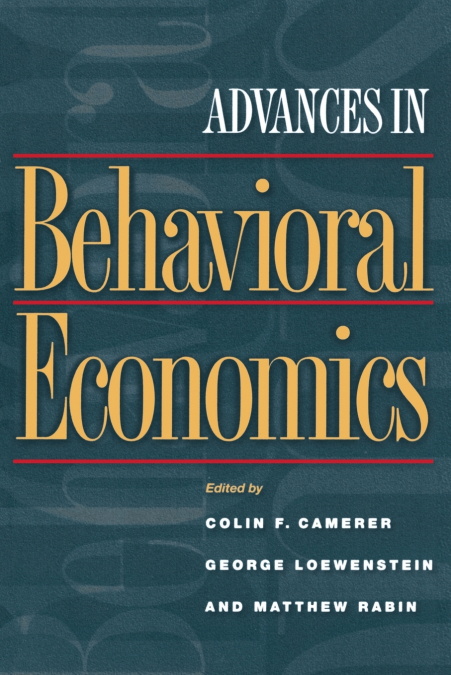
  • Advances in Behavioral Economics
    Twenty years ago, behavioral economics did not exist as a field. Most economists were deeply skeptical--even antagonistic--toward the idea of importing insights from psychology into their field. Today, behavioral economics has become virtually mainstream. It is well represented in prominent journals and top economics departments, and behavioral economists, including several con...
    Disponible

    113,11 €

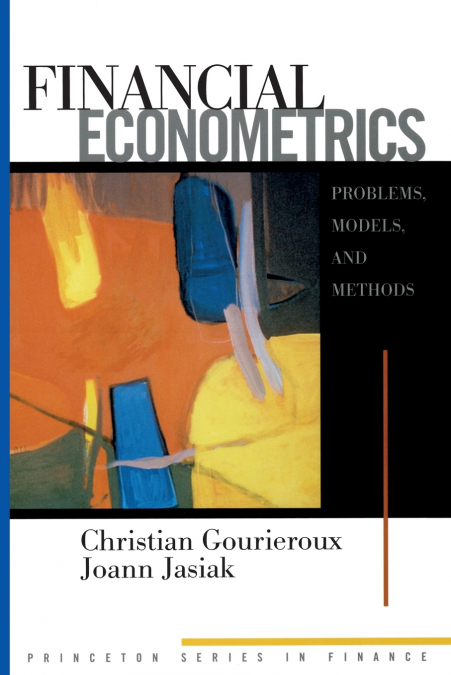
  • Financial Econometrics
    Christian Gouriéroux / Joann Jasiak
    Financial econometrics is a great success story in economics. Econometrics uses data and statistical inference methods, together with structural and descriptive modeling, to address rigorous economic problems. Its development within the world of finance is quite recent and has been paralleled by a fast expansion of financial markets and an increasing variety and complexity of f...
    Disponible

    216,13 €