 Librería Samer Atenea
 Kálamo Books
 Librería Elías (Asturias)
 Librería Kolima (Madrid)
 Librería Proteo (Málaga)
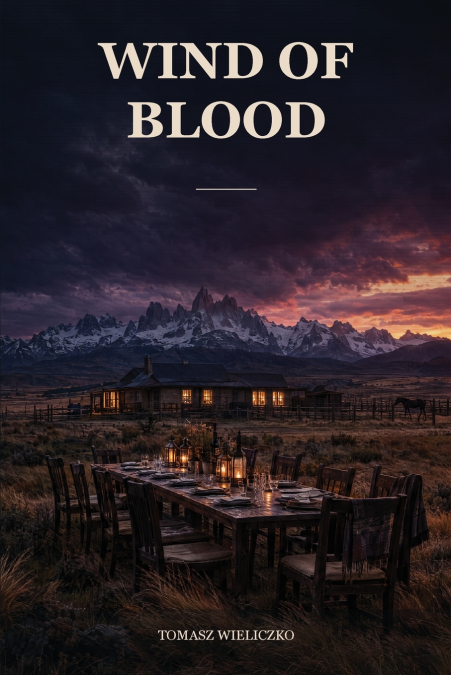
On the Estancia Santa Rosa, the Patagonian wind never stops screaming, and neither does the family’s resentment. Don Hector Moreira, the aging patriarch, has gathered his children to sign a new will-- a document that will decide the fate of the ranch, the water rights, and the mineral claims beneath the land. Then, in the time it takes to refill a glass, he is dead at the table, and the will itself is not what it appears to be. Inspector Carlos Mateo arrives to find a household already sharpening its knives. Martin, the eldest, sees the ranch as a legacy to protect. Tomas dreams of fossils and the Canyon of Bones. Isabel watches the numbers and says nothing. Around them circle a nervous lawyer, a foreign mining representative, and a contract that offers a fortune for what lies under the earth. The clues do not cooperate. The ink tells one story; the carbon paper tells another. A witness vanishes, then dies. A confession surfaces that fits too neatly to be true. As Mateo peels back the layers of forgery, debt, and buried ambition, he must face the hardest truth of all: that a family can be a conspiracy woven from love, fear, and greed. In Patagonia, the wind keeps no loyalty -- and it always brings everything to the surface. The wind in Patagonia is not like other winds. It doesn’t whisper; it screams. It doesn’t caress; it claws. It sweeps down from the Andes, across the arid steppe, gathering dust and resentment until it hits the Estancia Santa Rosa like a physical blow. The ranch house, a low, sprawling building of weathered wood and corrugated iron, hunkered against the onslaught as it had for three generations. Inside, behind thick walls, the air was still and heavy with the smell of old leather, woodsmoke, and something else-an unspoken tension that had been simmering for weeks. Don Hector Moreira, patriarch of the Santa Rosa, sat at the head of the long dining table, a massive piece of furniture carved from native lenga wood. He was a man in his late sixties, but the Patagonian wind had etched his face into something older,