
Inicio > Humanidades > Filosofía > Ética y filosofía moral > Why It’s OK to Ignore Politics
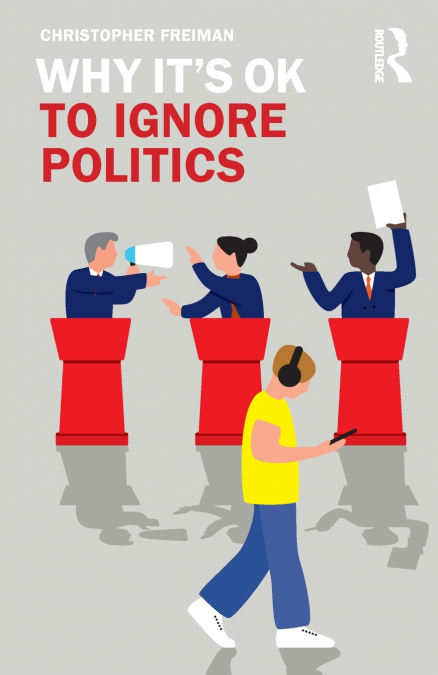
Why It’s OK to Ignore Politics

Why It’s OK to Ignore Politics

Christopher Freiman

42,42 €
IVA incluido
Disponible
Editorial:
Taylor & Francis Ltd
Año de edición:
2020
Materia
Ética y filosofía moral
ISBN:
9781138389007
42,42 €
IVA incluido
Disponible

Selecciona una librería:

  • Librería Samer Atenea
  • Librería Aciertas (Toledo)
  • Kálamo Books
  • Librería Perelló (Valencia)
  • Librería Elías (Asturias)
  • Donde los libros
  • Librería Kolima (Madrid)
  • Librería Proteo (Málaga)

Do you feel like you’re the only person at your office without an 'I Voted!' sticker on Election Day? It turns out that you’re far from alone - 100 million eligible U.S. voters never went to the polls in 2016. That’s about 35 million more than voted for the winning presidential candidate. In this book, Christopher Freiman explains why these 100 million need not feel guilty. Why It’s OK to Ignore Politics argues that you’re under no obligation to be politically active. Freiman addresses new objections to political abstention as well as some old chestnuts ('But what if everyone stopped voting?'). He also synthesizes recent empirical work showing how our political motivations distort our choices and reasoning. Because participating in politics is not an effective way to do good, Freiman argues that we actually have a moral duty to disengage from politics and instead take direct action to make the world a better place.Key Features:Makes the case against a duty of political participation for a non-expert audiencePresupposes no knowledge of philosophy or political science and is written in a style free of technical jargonAddresses the standard, much-repeated arguments for why one should vote (e.g., one shouldn’t free ride on the efforts of others)Presents the growing literature on politically motivated reasoning in an accessible and entertaining wayCovers a significant amount of new ground in the debate over a duty of political participation (e.g., whether participating absolves us of our complicity in state injustice)Challenges the increasingly popular argument from philosophers and economists that swing state voting is effective altruismDiscusses the therapeutic benefits of ignoring politics-it’s good for you, your relationships, and society as a whole.

Artículos relacionados

  • Ka Ab Ba Building The Lighted Temple
    Dr Terri R. Nelson / Dr Terri RNelson
    The book KaAbBa Building The Lighted Temple/Metaphysical Keys to the Tree of Life draws a circle that is inclusive of the Afrikan origin of the Ancient Kemetic/Egyptian wisdom. It reveals the undeniable root and link of Ancient Africa to all the religious systems that would develop worldwide. This book is explosive in its power to convey the meaning of KaAbBa, the Medu Neter  (...
    Disponible

    37,41 €

  • Technoethics and the Evolving Knowledge Society
    Rocci Luppicini
    Recently, there has been a major push to rediscover the ethical dimension of technology across the sciences, social sciences, and humanities. Technoethics and the Evolving Knowledge Society: Ethical Issues in Technological Design, Research, Development, and Innovation examines human processes and practices connected to technology embedded within social, political, and moral sph...
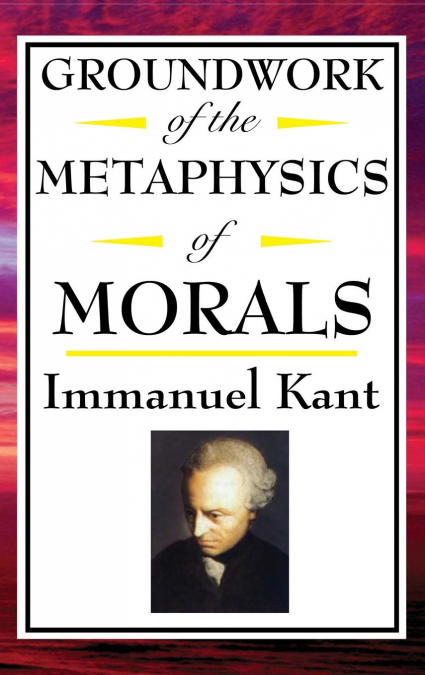
  • Kant
    Immanuel Kant
    Kant’s Groundwork of the Metaphysics of Morals is one of the most important works in modern moral philosophy. It belongs beside Plato, Aristotle, Machiavelli, and Hobbes. Here Kant sets out to articulate and defend the Categorical Imperative - the fundamental principle that underlies moral reasoning - and to lay the foundation for a comprehensive account of justice and human vi...
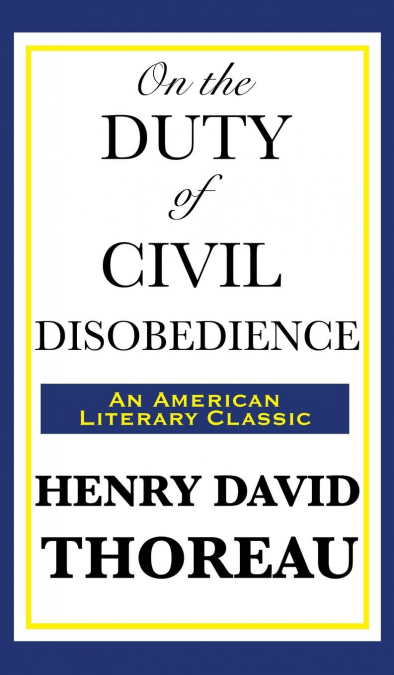
  • On the Duty of Civil Disobedience
    HENRY DAVID THOREAU
    Civil Disobedience argues that citizens should not permit their governments to overrule their consciences, and that they have a duty to avoid allowing their acquiescence to enable the government to make them the agents of injustice. Thoreau was motivated in part by his disgust with slavery and the Mexican-American War, but the sentiments he expresses here are just as pertinent ...
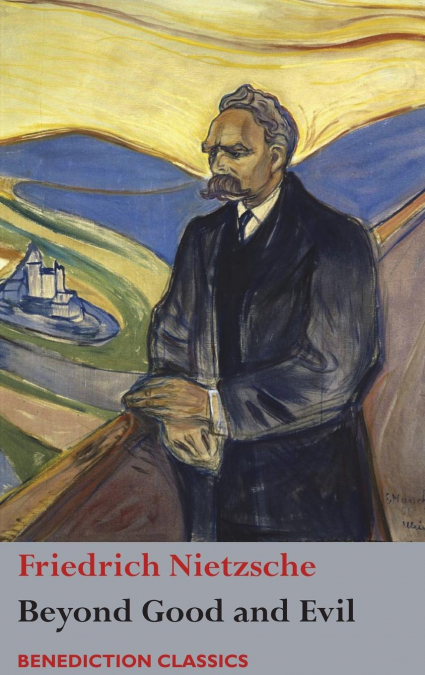
  • Beyond Good and Evil
    Friedrich Nietzsche
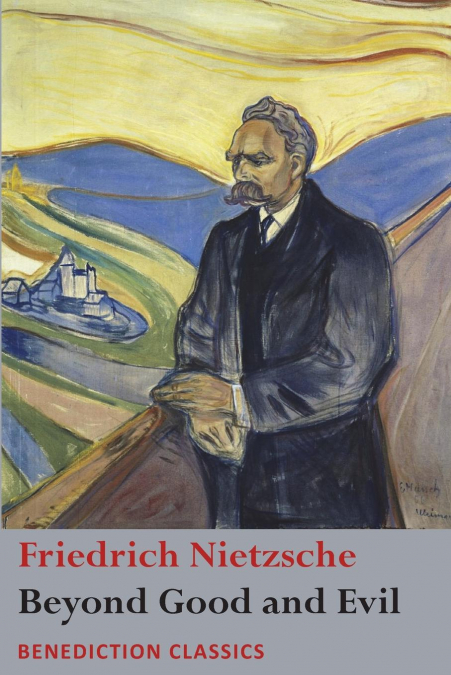
    Nietzsche, though primarily a philosopher, wrote widely on art, philology, history, religion, tragedy, culture, and science.  In 1886, at the height of his powers, he published Beyond Good and Evil.  Here he examines much of the best of human thought--dogmatic philosophy, Judeo-Christian morality, science and democracy – and finds it lacking.  Rejecting “slave-morality” he pres...
  • Beyond Good and Evil
    Friedrich Nietzsche
    Nietzsche, though primarily a philosopher, wrote widely on art, philology, history, religion, tragedy, culture, and science.  In 1886, at the height of his powers, he published Beyond Good and Evil.  Here he examines much of the best of human thought--dogmatic philosophy, Judeo-Christian morality, science and democracy – and finds it lacking.  Rejecting “slave-morality” he pres...
    Disponible

    9,99 €

Otros libros del autor

  • Unequivocal Justice
    Christopher Freiman
    This book challenges the prevailing view within political philosophy that broadly free market regimes are inconsistent with the basic principles of liberal egalitarian justice. ...
    Disponible

    85,81 €

  • Unequivocal Justice
    Christopher Freiman
    This book challenges the prevailing view within political philosophy that broadly free market regimes are inconsistent with the basic principles of liberal egalitarian justice. Liberal egalitarians regularly assume an ideal 'public interest' model of political behavior and a nonideal 'private interest' model of behavior in the market and civil society. Freiman argues that this ...